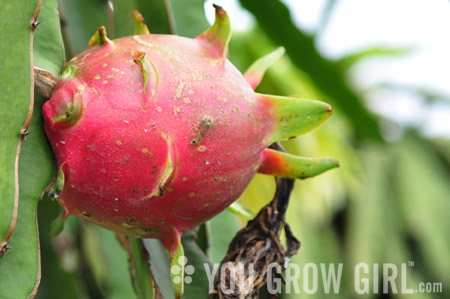
Pitaya, or dragon fruit, is a strange edible that is commonly sold (at a premium) in Asian food markets. The fruit is hot pink on the outside with an edible, white interior flesh that is dotted throughout with tiny, black seeds. The taste is mildly sweet, ever-so-slightly sour, and if I’m being honest, rather bland. Its saving grace are the crunchy seeds as they create a textured sensation that is fun to eat, not unlike a kiwi, but more exotic. I like it fresh and chilled, spooned straight out of that intense fuchsia skin.
The thing that intrigues me most about this fruit is the fact that it is grown on a cactus, and an epiphytic (air plant) one no-less. Hylocereus undatus is a night-blooming, jungle cactus that originated somewhere in the tropics of South America and the Caribbean, but is now most closely associated with South East Asia, where the fruit is grown commercially. Hylocereus is remarkably easy to grow as as houseplant and takes off equally well from seeds or cuttings. I know several gardeners that have successfully grown the seeds harvested from store bought fruit with no special effort or preparation. The plant requires more moisture and nutrition than a typical cactus, but can withstand periods of drought. It takes a tropical climate or a heated greenhouse to grow a plant large enough to produce fruit, but in the right conditions it can be made to produce in cramped quarters or a large pot.
[portfolio_slideshow id=7747]
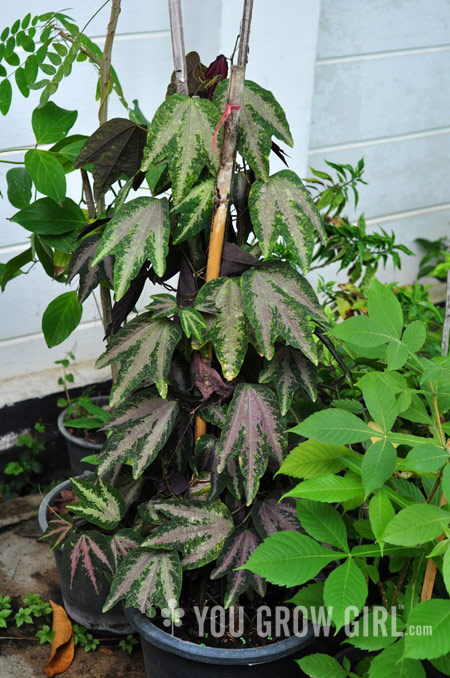
There is a special place in my heart for epiphytic plants, so I was naturally excited about our trip to Thailand last year and the possibility of not just tasting a dragon fruit fresh off of the plant in its local environs, but actually seeing how they are grown for commercial production. As luck would have it, our trip did take us on a fruit farm tour to Suphattra Land in Rayong. Photos of that trip are attached and I will post more this week of some of the other fruit we saw there. I took several film shots as well, but as usual, I am buried in film and haven’t made it that far into the pile.
Read more…