6 Hardy Succulent Sedums for Your Garden and Pots

6sedums

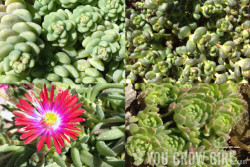
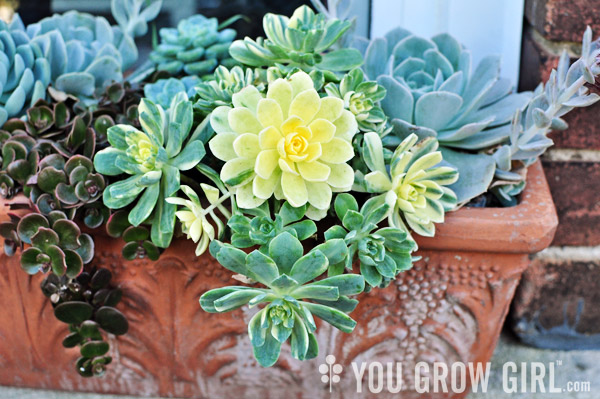
I am always on the lookout for drought tolerant plants that will thrive with little effort through my region’s paradoxical climate (hot summers and cold winters). Cold hardy sedums were a trusted friend through the years when I gardened in a trifecta of challenging spaces: a hot rooftop garden, a community garden plot, and a pocket of poor soil on a very busy urban street. Back then I needed plants that could suffer extreme heat and drought, neglect, poor soil, and sometimes even trampling by passersby both human and non-human. These days my primary garden is a sunny yard with mostly sandy soil and while the challenges are not as great, sedums are still a much-loved go-to plant. In fact, I’d say my love for these rough and tumble, stalwart plants has only grown.

Read more…

Leave a comment

Succulent Fever: Pig’s Ear

pigs ear cotyledon orbiculata by Gayla Trail

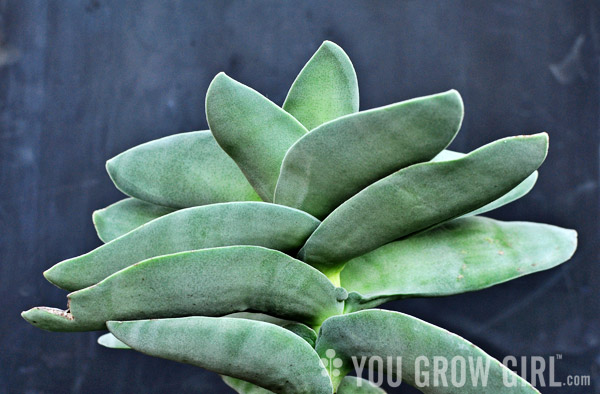
Last Friday, I took a trip out of the city with some friends to buy herbs, and came home with something unexpected. Pig’s Ear (Cotyledon orbiculata) is a pretty grey-blue-green succulent with big, fleshy leaves and orange flowers. According to my favourite go-to succulent identification book, “Succulents: The Illustrated Dictionary” by Maurizio Sajeva and Mariangela Costanzo, it’s from South Africa and not hardy in my zone so I’ll be keeping it in a pot and it will go outside in another month or so with my other tender succulents. Those of you in zones 7 and up will have the good fortune of keeping it outside year-round and may even be able to put it in the soil if you have lots of sun and a dry spot that drains well. It’s look and spreading growth habit reminds me of Flapjack (Kalanchoe thyrsifolia), but with pointier leaves.

Read more…

Leave a comment

Super Freaky Echeveria

No, it’s not a sea creature out of water. It’s a super freak, super freak, super freaky (Rick James approved) mutated succulent!

Fasciation, cristate, cresting, or bundling: all are words for an interesting genetic mutation that causes a plant to grow gnarled and twisted, thick in some parts and thin in others. Sometimes the plants appear super-pumped, almost as if it were doubling and even tripling back onto itself. These mutations, often occurring at the tips in new growth and sometimes even in the flowers, are triggered by a range of traumas ranging from environmental issues such as chemical exposure and frost, to insect attack, over-crowding, and disease.

And then plant breeders take these random mutations and use them to their advantage to produce far-out, freaky, alien varieties, such as this Echeveria runyonii ‘Topsy Turvy Cristata’.

Read more…

Leave a comment

Learning from Nature: Observations on Cold Hardy Cacti

Throughout my gardening life there have been many plants that I tried to grow with middling success, until I observed them growing in the wild. Sarracenia (pitcher plants), venus fly trap (Dioneae muscipula), episcia, and ginger are just a few that come to mind. Seeing them in their natural habitat helped me understand something about the soil, light, moisture, or the communities they grow in that allowed me to better approximate their needs at home in my own garden and pots.

In June 2011 I travelled to Denver, Colorado to speak at the Denver Botanic Gardens. One of many things I was excited to see in the area were cold hardy cactus growing in the wild. I’ve been growing Opuntia humifusa and other hardy cacti in pots for years and had only recently began to have success with them in the ground. But I still felt that there was something that I was missing.


A pretty typical cactus garden with lots of space between plants. Note that I took this photo on the roof of one of the buildings at Denver Botanic Gardens.

Read more…

Leave a comment

In Bloom: Sticks on Fire

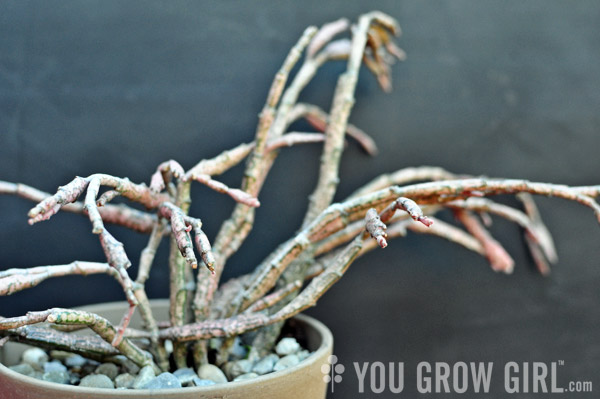
My sticks on fire (Euphorbia tirucalli) is blooming! The flowers are so wee, I almost missed them. They’re not much to write home about (or on a website for that matter), but it was such a monumental occasion, I felt it warranted pulling out the camera and posting about it anyway.

Read more…

Leave a comment