Gift It: Homegrown Herbal Bouquet

Photo by Gayla Trail  All Rights Reserved

I was invited to an apartment warming at my brother’s newish place the other night and since I had already treated him to a whole new garden, hereby known as “The Gift That Covers Me Off for Gift Giving Until 2010,” I decided I wanted to bring something but that that something should be simple and not cost money. The great thing about gardening, beyond the thousands of other more important reasons, is that there is always something available last-minute to gift to friends. I can just step outside and find homegrown edibles or flowers in a pinch that just about anyone will appreciate.

After all, who doesn’t like homegrown food or flowers? Granted, I’m sure if we looked hard enough we could find one or two out there in America but still…

As I was saying, a gift was in order. A gift that says, “Congratulations on your new apartment! Here’s something nice and useful to commemorate a meaningful life step but, you know, you’re my brother and dude, until I get a higher paying job or miraculously unearth a winning scratch ticket buried in the street garden… enjoy some quality homegrown herbs and edible delights.” Of course, I’m saying that cynically because in truth a winning scratch ticket would not change my desire to share the homegrown goodness. I’d just wrap it all in fresh, crisp hundred dollar bills.

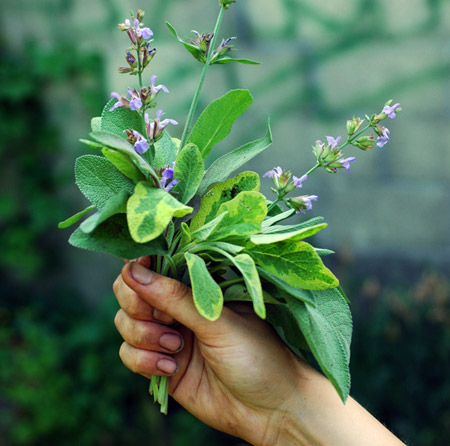
And that is what I did (minus the cash money). My brother has been speaking highly of his new herb garden and all of the delicious herbed omelets he has been enjoying however I knew his plants were still small and were probably strained by enthusiastic and vigorous picking. My plants on the other hand are all well-established. I am actually over-run this year with sage, oregano and marjoram. I have been making herbal bouquets for myself for some time now and it only made sense to harvest a selection of yummy herbs, tie it up like a floral bouquet and give it as a gift. Flowers are nice but this bouquet keeps on giving. What’s more my bouquet was literally free since the butcher paper and twine was recycled from the packaging used to wrap flowers bought at the market. Yes, I have become my grandmother, holding onto every last scrap of packaging in hope of a possible future use.

Photo by Gayla Trail  All Rights Reserved

The bouquet I made for my brother is not the one depicted. That one included garlic scapes I had picked just that day, as well as a selection of assorted thyme varieties and large sprigs of fresh rosemary. The gift was a surprise hit with party goers wondering about that twisted oddity (garlic scapes) poking out of the bundle. I’m sure if my bouquet had included homegrown herbs of another sort I would have made a lot of new friends fast… however it did not and the love fest lasted a total of 10 minutes.

If you make your own, choose whatever you’ve got on hand or try for herbs that compliment one another. Help the recipient unwrap the package as soon as possible and get the herbs into water so that anything that has wilted can be revived. This is also your chance to talk about the herbs so your friend knows a garlic scape from a frightening alien life form and how they can use them in their next meal.

Leave a comment

Sage Flowers at the Community Garden

Photo by Gayla Trail  All Rights Reserved

Leave a comment

Flowering Garden Sage

Photo by Gayla Trail  All Rights Reserved

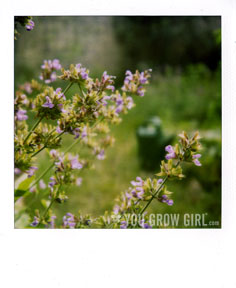
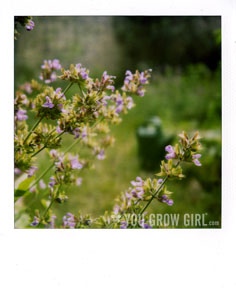
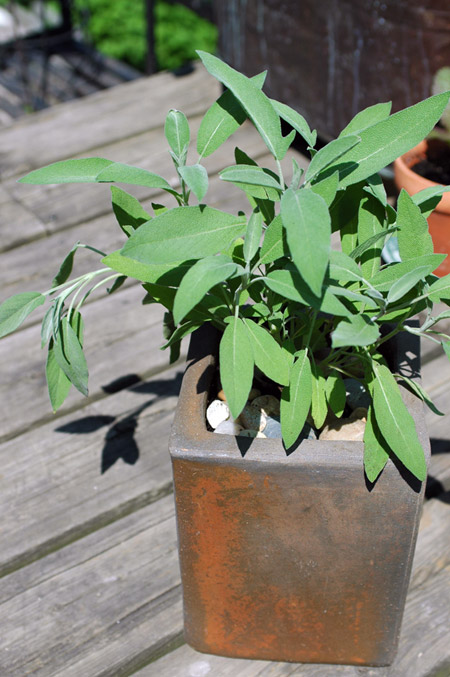
I’ve got an enormous patch of sage plants living in one corner of my community garden plot that have just begun to flower. There are actually four varieties living in that corner but only the common garden sage (Salvia officinalis) is in bloom. It looks and smells amazing! The community garden plot isn’t big and while space in the sun is prized, giving over that spot to sage has been worth it. Plus we’ve got more sage than we know what to do with.

Leave a comment

Edible Fall Container Planting

falledibles_20072.jpg

During the spring and summer months I grow indeterminant tomatoes (large, vine plants) in large garbage bins like this one purchased for $10 each a number of years ago at the local Ikea. The flat grey colour has faded significantly over the years but the containers are still holding up under the wear and tear of hot summers and winter heaving caused by fluctuating temperatures.

I typically fill each container with a single tomato plant and surround it with 4 basil plants. With the weather being warmer this fall I decided to try and keep the rooftop deck productive AND aesthetically pleasing by replacing the spent tomatoes with attractive, cold-hardy edibles previously growing in smaller, individual containers. This also allowed me to get a head start on clean-up bringing in some of the smaller, terra cotta containers that will eventually come indoors for the winter.

falledible_2007.jpg

In This Container:

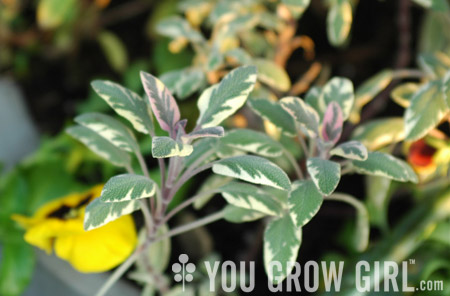
  • Tri-color sage
  • Pansy (will keep flowering. Flowers are edible.
  • ‘Lacinato Blue’ Kale aka ‘Dinosaur’ Kale
  • ‘Red Bor’ Kale
  • Cinnamon Basil (not cold hardy but surprisingly still going strong.)

Everything in this container is edible. Unfortunately, while we were away a squirrel made a hearty lunch of the dinosaur kale but everything else is still thriving and ready for picking whenever we need a bit of sage for our eggs, some flowers for a salad, or kale to flavour a soup.

Leave a comment

Four Types of Sage

salviaofficinalis.jpg

Yesterday afternoon I brought home a first harvest from the four different kinds of hardy sage (Salvia officinalis) I’ve got growing at the community garden. It’s not much, just a handful of clippings that I pinched off to make the plants grow bushier but it’s more than enough to make a whole lot of delicious scrambled eggs. I removed the flowers because I moved the flowering plants from my former plot earlier in the season and would rather they put their energy to getting well established and making lots of lush and tasty leaves than making babies so-to-speak.

The varieties:

  • Garden sage – Your standard, cold hardy, culinary sage. I am making it sound dull here but really you can’t beat the standard variety when it comes to hardiness and productivity. I grew a bunch of plants in my planter box a number of years ago and they survived for years getting larger and more prolific every season. This variety flowers like crazy after its first season — I like to snip a few off to put in a vase on my desk but you can eat them too or brew them into a tea. Leave a few in the garden where they will attract lots of pollinators and beneficial insects.
  • Purple Sage – I find this one to be less cold hardy than the garden sage but it will survive outdoors in colder climates if you give it lots of chance to establish itself and provide mulch or winter protection. I have grown it in the past and it never seems to get as large and bushy as the garden sage but the dark purple colour is just so pretty and makes a great contrast to the golden and tricolor sages. I am a sucker for just about anything purple in the garden.
  • Golden Sage – This variety seems to have the same issues as the purple but the chartreuse splashes in the leaves are hard to resist. Chartreuse is my other colour weakness. I’ve got the chartreuse/gold version of just about every herb (oregano, marjarom, etc) in my community plot this year.
  • Berggarten Sage – Similar to garden sage but with a dense, low growth and big, soft, oval leaves.

I have a fifth tricolor plant growing in a pot on the rooftop deck. I find the coloured sages are best for pots because they tend to stay on the smaller size and develop a really interesting topiary look if you remove the lower leaves and allow the plant to grow a woody bottom stem.

p.s Yep, those are my dirty fingernails in the photo above. Thanks to Davin for taking the photo.

Leave a comment