Birds That Have Flown Away

No doubt if you are growing even one sage plant this year, chances are great that you have enough of this strong herb to flavour a Thanksgiving stuffing so enormous that the Guinness People wouldn’t even bother showing up to authenticate its title. It would win a placement in the book and keep placing now and through eternity by default.

There are not enough people in the world to eat that side dish.

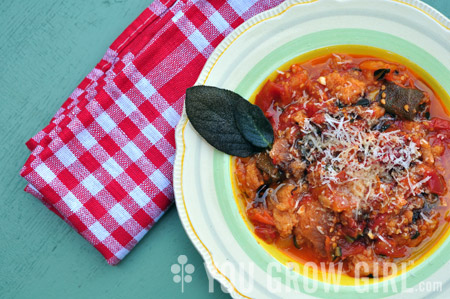
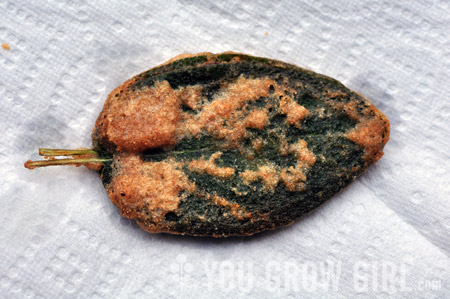
Recently I’ve been on a break of sorts. Naturally, the first thing I did to prepare for the break is stock up on books. I may have gone overboard. One of the books I purchased was “My Tuscan Kitchen: Seasonal Recipes from the Castello di Vicarello,” a collection of Italian home cooking recipes by Aurora Baccheschi Berti. This is a beautiful book, full of warm and tempting photographs of sumptuous Italian treats. The focus is on simple, seasonal foods that will inspire you to use up the gleanings from your garden. I want to cook it all (although the truth is that I never will), but so far one recipe has stood out, and it isn’t even a recipe at all. It was simply instruction to take two sage leaves, sandwich a thin layer of anchovy paste in between, batter and fry. Apparently this is called, uccellini scappati or “birds that have flown away.

Are you intrigued? I sure was. I have fried sage leaves in butter. I have battered sage leaves in oil. I have even sandwiched sage leaves around cheese and fried that, but this is something different. Sage is a strong flavour, but so are anchovies. The two didn’t seem to cancel each other out, or create something too overwhelming to enjoy. They were delicious. Strongly flavoured, but harmonious.

They flew away, alright. Right into my mouth.

Leave a comment

Sage

Beautiful Tricolor Sage.

My tenth and last Globe & Mail Kitchen Gardening article for the 2010 growing season is set to be published this coming Saturday. It is on growing and eating cardoons, an Italian delicacy that I experimented with this year.

Until then, here’s a timely piece that was published in the Saturday paper on August 27, 2010. Even though the hardy garden sage begins producing leaves very early in the growing season, I most associate its warm aroma with the fall. Sage and squash is a classic combination. I suggest steeping some in oil to drizzle on top of warm squash soup or mash. Bloody good stuff.

————————

Warm and pungent, common garden sage is a classic culinary herb most associated with the flavours of the fall harvest – and now is a great time to plant it. Get yourself a year-old transplant on discount at an end-of-season sale and you should have a small bounty just in time to add to Thanksgiving stuffing, steep in lightly warmed olive oil or drizzle on top of a hearty squash soup.

The sage family is huge, but only a few are edible and even fewer still are cold-hardy enough to survive winter across most of Canada. Like other Mediterranean herbs, they like a sunny spot in the garden and prefer poor, dry soil that drains freely. Keeping their “feet” or roots from stagnating in moist soil is the secret to keeping them alive year-round, especially in climates considered slightly out of their zone. Another trick is to plant sage in the shelter of a warm wall, where it will have the greatest chance of survival.

Whatever you do, resist the urge to fertilize at planting time – or at any time for that matter. Culinary sages grown in rich soil tend to lose their spicy edge and can turn out rather bland leaves that are too “soft” and pest-prone. Otherwise they’re a pretty foolproof plant. My biggest hurdle each year is a mid-summer bout of a fungal disease called powdery mildew that is caused by high humidity around the leaves. Well-draining soil will go a long way to prevention, but, since you can’t control the weather, try plucking out excess foliage (and eating it, too) to increase airflow.

The most common variety (Salvia officinalis) is also the toughest of the bunch. Don’t prune it now. Wait until early spring and cut into the green growth only – never go into the woody stems. At its worst, hard pruning can kill the plant or at least prevent it from flowering – and the edible, slightly sweet flowers are one of the best reasons for growing your own. Toss a few into a spring salad or chop them up and infuse into softened butter or vinegar.

Beyond the common type, the remaining culinary sages won’t live past a year in most Canadian gardens, but are still well worth growing for their unique foliage and varied flavours. ‘Berggarten‘ tastes a lot like common sage but is much prettier, with very broad, oval leaves and a low, densely compact growth habit. ‘Purpurascens,’ ‘Tricolor‘ and ‘Golden’ a.k.a. ‘Aurea’ are the best choice for containers, as they stay compact and adapt well to cramped quarters. In fact, you can even bring one indoors to overwinter on a sunny windowsill for fresh sage year-round.

For something even more unusual, try growing a tropical sage such as ‘Pineapple’ (Salvia elegans) or ‘Fruit’ sage (Salvia dorsiana). Both grow edible, sticky leaves and bold flowers with a fruity, sweet taste that is most often used to make tea or garnish desserts. I’m currently hot on Autumn sage (Salvia greggii), a southwestern salvia that produces delectable, nectar-filled flowers in a wide range of interesting colours from subtle peach to hot pink and the deepest, darkest burgundy. I find the highly aromatic leaves are too bitter to eat, but so delicious to run your hands over on a grey winter day when you can use a boost in spirit and a reminder of the spring to come.

Leave a comment

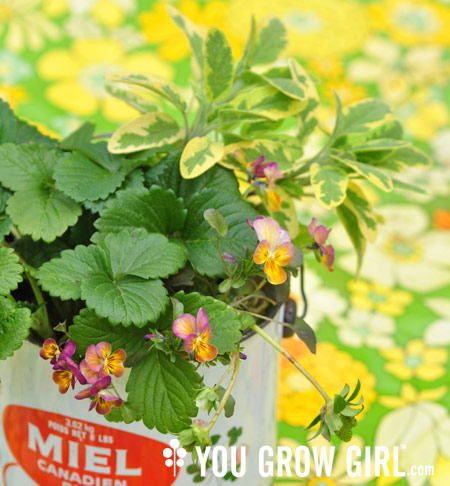
Grow a Mixed Strawberry and Herb Container

Photo by Gayla Trail  All Rights Reserved

When I was in the West Indies, I was surprised to see how much people coveted strawberries. While I was salivating over golden apple and fresh bananas, West Indians were paying through the nose for a basket of pathetic, well-traveled berry-like objects. I don’t think strawberries grow very well in extreme tropical heat. That didn’t stop one gardener I visited in Dominica from trying. As my own strawberries begin to set fruit and ripen I wonder if her little plant has made it and if she was able to savor a few homegrown berries this year.

Here in Toronto, it’s not too late to start strawberries. My first article of the season for the Globe & Mail explains how, but did not include this photo of a mixed planting I put together using an old honey tin I bought at a yard sale. If you are going to use something like this, don’t forget to add drainage holes. I made several in the bottom using a large nail I keep on hand for this purpose. Everything in this pot is edible, including the flowers.

One Each of: An unknown hybrid strawberry (the berries are ripening now!), ‘Golden’ sage (it is not hardy here and does not grow very big), ‘Gem Apricot Antique’ viola (may soon have to be replace for something more heat tolerant as the summer kicks in, or you can just pull it out when it kicks it and let the strawberry and sage spread.)

Leave a comment

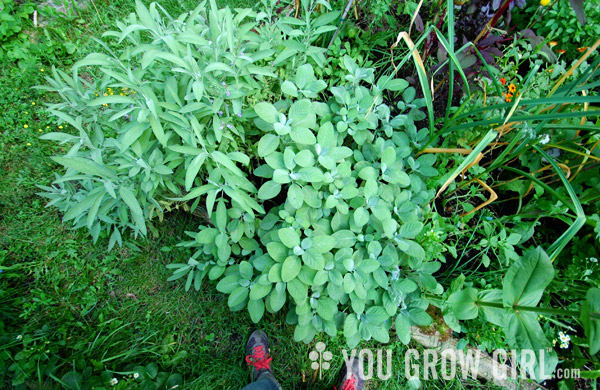
The Sage Corner

Photo by Gayla Trail  All Rights Reserved

This is the patch of several sage varieties that sits in the north east corner of my community garden plot. It’s quite a big patch — I grow more sage than I can possibly use within a year and always end up begging people to take some. In a small space I can’t grow the legions of squash that many gardeners complain about. In all honesty we could really do with more. Sage, on the other hand, is my squash. I love the herb for cooking and it looks fantastic in the garden, but really, there’s just so much of it!

Related Posts

Leave a comment

Gift It: Homegrown Herbal Bouquet

Photo by Gayla Trail  All Rights Reserved

I was invited to an apartment warming at my brother’s newish place the other night and since I had already treated him to a whole new garden, hereby known as “The Gift That Covers Me Off for Gift Giving Until 2010,” I decided I wanted to bring something but that that something should be simple and not cost money. The great thing about gardening, beyond the thousands of other more important reasons, is that there is always something available last-minute to gift to friends. I can just step outside and find homegrown edibles or flowers in a pinch that just about anyone will appreciate.

After all, who doesn’t like homegrown food or flowers? Granted, I’m sure if we looked hard enough we could find one or two out there in America but still…

As I was saying, a gift was in order. A gift that says, “Congratulations on your new apartment! Here’s something nice and useful to commemorate a meaningful life step but, you know, you’re my brother and dude, until I get a higher paying job or miraculously unearth a winning scratch ticket buried in the street garden… enjoy some quality homegrown herbs and edible delights.” Of course, I’m saying that cynically because in truth a winning scratch ticket would not change my desire to share the homegrown goodness. I’d just wrap it all in fresh, crisp hundred dollar bills.

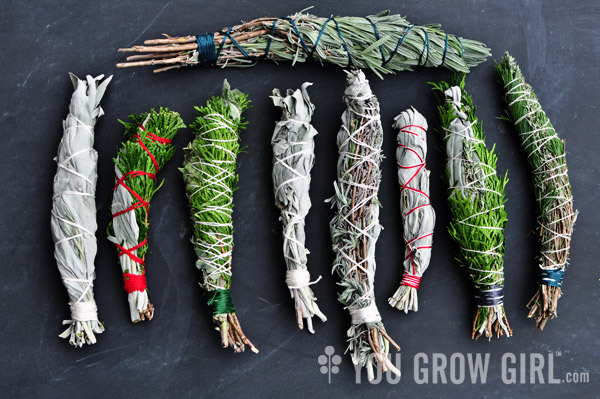
And that is what I did (minus the cash money). My brother has been speaking highly of his new herb garden and all of the delicious herbed omelets he has been enjoying however I knew his plants were still small and were probably strained by enthusiastic and vigorous picking. My plants on the other hand are all well-established. I am actually over-run this year with sage, oregano and marjoram. I have been making herbal bouquets for myself for some time now and it only made sense to harvest a selection of yummy herbs, tie it up like a floral bouquet and give it as a gift. Flowers are nice but this bouquet keeps on giving. What’s more my bouquet was literally free since the butcher paper and twine was recycled from the packaging used to wrap flowers bought at the market. Yes, I have become my grandmother, holding onto every last scrap of packaging in hope of a possible future use.

Photo by Gayla Trail  All Rights Reserved

The bouquet I made for my brother is not the one depicted. That one included garlic scapes I had picked just that day, as well as a selection of assorted thyme varieties and large sprigs of fresh rosemary. The gift was a surprise hit with party goers wondering about that twisted oddity (garlic scapes) poking out of the bundle. I’m sure if my bouquet had included homegrown herbs of another sort I would have made a lot of new friends fast… however it did not and the love fest lasted a total of 10 minutes.

If you make your own, choose whatever you’ve got on hand or try for herbs that compliment one another. Help the recipient unwrap the package as soon as possible and get the herbs into water so that anything that has wilted can be revived. This is also your chance to talk about the herbs so your friend knows a garlic scape from a frightening alien life form and how they can use them in their next meal.

Leave a comment