Heck Yeah! Mint and Rose Petals in Persian Cuisine

There’s so much that I experience on a weekly basis while at home or travelling that is related to plants and food that doesn’t seem to have a place here… but should. As a result of this oversight, I’ve decided to start a regular feature called, Heck Yeah! that’s devoted to the simple, yet wonderful things that are worth a mention.

The inaugural Heck Yeah! comes from an impromptu dinner I enjoyed last Friday here in Toronto at a Persian restaurant called The Pomegranate. The atmosphere and food was inspiring, most especially the use of herbs. I came away from our meal full of enthusiasm for Persian food and some new ways to use up the herbs I grow in abundance in my garden. Luck was on our side and we arrived hoping for a table just after someone had cancelled. If you’d like to experience the food for yourself, I’d suggest making a reservation. Tables fill up fast.

Please forgive the poor quality of these images. They were taken with my phone’s camera in very low mood lighting.

Doogh

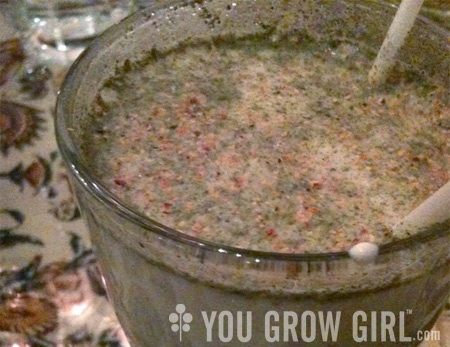
I thought I’d tried every yoghurt-based beverage out there, and then I found doogh. More savoury than sweet, doogh is a refreshing combination of yoghurt and carbonated water, flavoured with dried herbs and spices. I believe mine was topped with dried and ground mint and rose petals, but I have since researched out recipes that include cumin and cardamon. I’m sure there are other secret ingredients and variations as well.

Persian Mint Tea

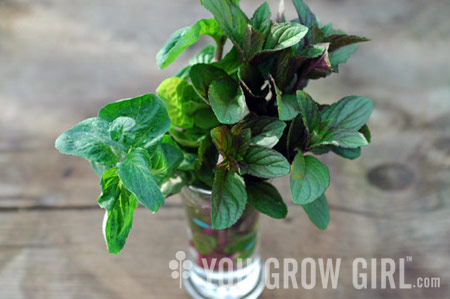
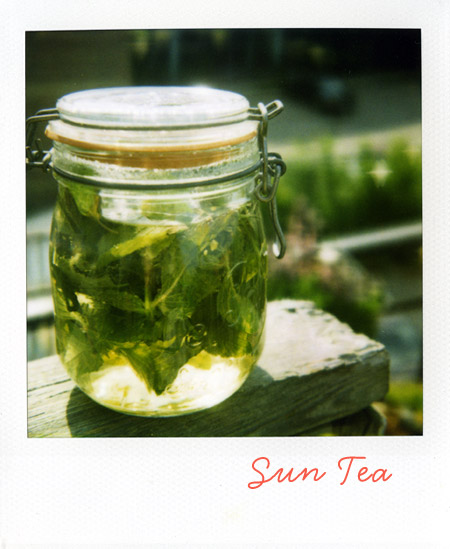
My friend Jen enjoyed a classic Persian mint tea, which is a simple drink (fresh mint leaves brewed in hot water) made special by this beautiful presentation. We both agreed that when it comes to food and drink, the rituals are as important as the food itself.

Rose Water and Pistachio Ice Cream with Pomegranate

After a large and satisfying meal, I didn’t think I had the room left for dessert, yet I could not walk away without trying the house rose water ice cream. The portion was generous — enough for 4 people — but we managed to devour it all between two of us, and on full stomachs no less.

Roses are an under-used flavour in Western cooking. One of my goals for my forthcoming herbs and edible flowers book, “Easy Growing: Organic Herbs and Edible Flowers from Small Spaces” was to encourage more people to make culinary use of the roses that they grow. A scoop of rose petal ice cream at a night market in Oaxaca, Mexico back in April 2000 was my introduction to this fragrant ingredient and the way I would suggest first trying the flavour if you’re unsure about eating it for the first time.

Leave a comment

Pineapple Mint

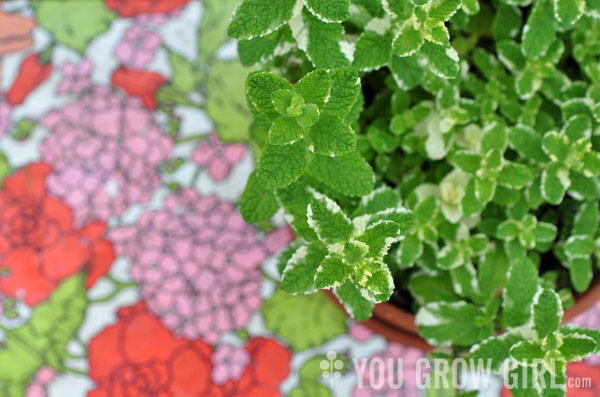
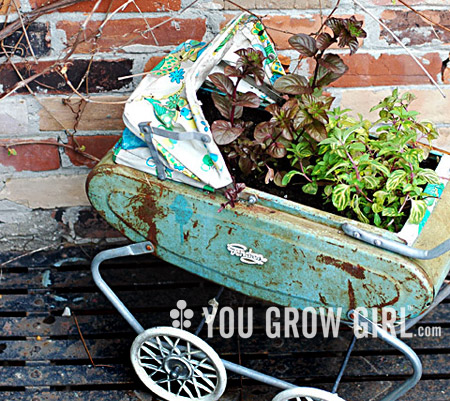
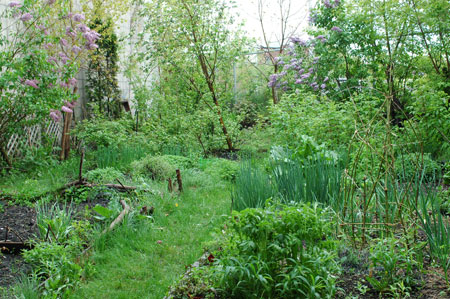
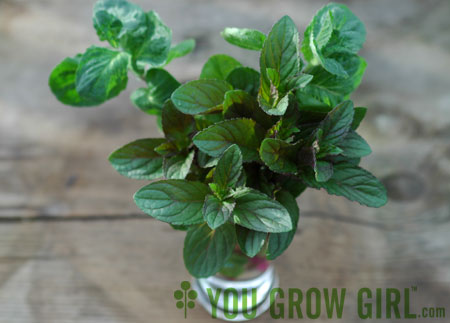
Another corner of my garden. This is fuzzy ‘Pineapple’ mint growing in a pot. I’ve resolved to grow all of my mint in pots this year. Contrary to reputation, mints behave rather well over at my community garden. The trick to keeping them under control seems to be growing them in less than ideal conditions. Plus, over there they have to fight against the wild and alpine strawberries for supreme dominance and guess who’s winning that war?

Here though, I expect mint to flourish and then some so I’m playing it safe for now. Everyone in pots!

The pretty floral design seen in the shot (above) is the top of a foot stool I found in the garbage the other night. Going out on garbage night around here is like going shopping! We’ve done well outfitting the garden with our neighbours’ discards.

The stool is red and the top is covered in this amazingly vibrant plastic mac-tac. I LOVE it! If the previous owner comes across this photo and realizes their mistake: I’m sorry but you can’t have it back.

Leave a comment

Flea Market Mint Pot

About a month or so ago, a friend took me on a fleamarket trip out of town where I picked up several treasures that would find new purpose in my garden, including this old cast iron tea pot.

Drilling a hole for drainage was no easy feat. Uli has lots of experience using cast iron as planters and on her suggestion I used a fast-speed bit meant for steel, starting with a small pilot hole and increasing the bit size slowly from there. I was only able to make one hole as I gave my brother our old drill with a cord. Our newer drill is cordless and just doesn’t have the juice to drill through cast iron. I broke a bit in the process of creating this hole and have since given up on trying to make holes in the other rust cast iron cooking pot that I bought that day. They were $10 each, which was a steal as I saw others going for $30.

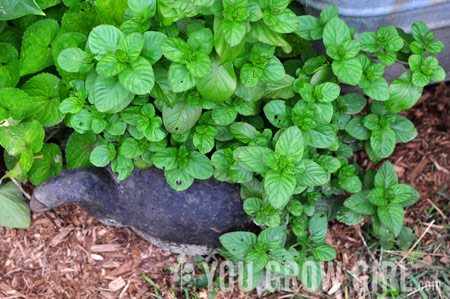
Since the drainage isn’t great I chose a plant that I felt could handle it. I went with this ‘Grapefruit’ mint since I knew it would quickly drape over the sides and soften the look of the pot further.

And this is what it looks like today!

Here’s a shot of it before I drilled a hole and planted it up.

Leave a comment

Making More Herbs

Photo by Gayla Trail  All Rights Reserved

About a month ago, I wrote a guest post for Apartment Therapy/Re-Nest on propagating herbs by cuttings. This is how I quickly double my basil harvest every summer at no extra cost. Basil grows easily from seed too, but stem cuttings are fast and easy — they’ll produce roots in water in about a week or two! By mid-summer my collection of scented geraniums (Pelargoniums) are huge! Why not take a few cuttings and share the wealth with friends?

On the Re-Nest site someone asked a question about taking cuttings from bolting plants. I have not been able to post a comment so I am adding a reply here.

SoRad: We grow basil like an annual in colder climates, but in tropical conditions the plant is a perennial. There are also varieties of basil that are reproduced by cuttings only… they don’t produce seed. Some basil varieties bolt quickly and constantly, while others only do-so when the weather gets really hot.

Bolting when it comes to basil is more about the conditions a particular variety prefers rather than “age.” It is better to take cuttings from plants that aren’t under heat-stress, but I have found that it can be done successfully — your best bet is to move the rooting cuttings to a cooler spot.

Read more…

Leave a comment

Corsican Mint (Mentha requienii)

Photo by Gayla Trail  All Rights Reserved

Project “Let’s Not Kill the Corsican Mint” is well underway and so far so good. You see, I tried to grow one in my community garden plot last year and failed. If I can manage to move from not-killing the plant to encouraging it to grow lush an over the sides of it’s pot I will be very happy indeed.

Looking back I have a few theories around that failure that I am testing on plant number two, the sequel. I was naive and a bit lazy with plant #1. I just shoved it into the part of my garden where the other mints grow and called it a day.

Done and done. Literally.

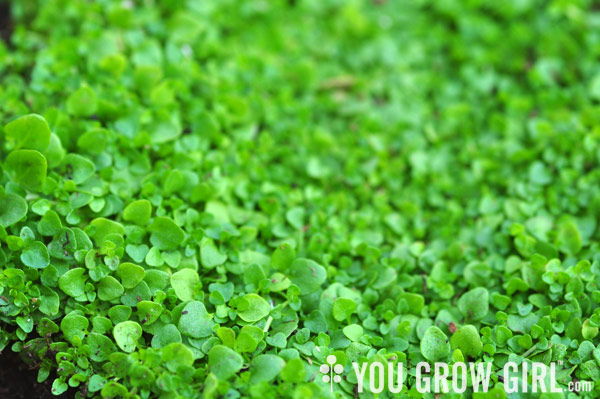
But Corsican mint (Mentha requienii) is not the same as tough as-nails mint. It is very diminutive, spreading plant — more like a moss than a mint. It has delicate roots, while regular mint can bust through all sort of barricades.

  1. Good Drainage: Corsican mint is the sort of creeping plant that grows well between paving stones. It is sometimes used as a ground cover and can take a bit of foot traffic. This leaves me with the impression that it requires very good drainage. Regular mints like good drainage too, but they are less picky. I have worked hard on the soil at my community garden and it is good. However, I lost a thyme (also requires good drainage) in that exact spot so I think the drainage may not be as good as other parts of the plot where thyme has survived. Although, wild strawberries live there now and they have overwintered and happily spread themselves about. Go figure.

    My strategy with Corsican mint #2 is to grow it in a pot in which I have added a bit of sand and grit for extra drainage.

  2. Dappled Light: Mistake number 2 was planting the Lilliputian Corsican mint (they don’t grow more than an inch tall) nearby much taller mints. Over the course of the summer, the monster mints grew and took over the space as mints are want to do. Corsican mint likes dappled light, but I do not believe it likes to be shaded out completely. I am currently keeping plant #2 on this shelf, which resides in the partial shade portion of my roof. So far it looks happy and is growing. Life on the roof is hot but it is protected in that spot and I can check on the plant daily. I only visit the community garden plot weekly or twice weekly. The most fruitful observations are made when you can check on a plant every single day.
  3. Soil Moisture: This was the one thing I did right, but without the proper drainage. Corsican mint likes to be kept moist, but not too moist. It should never dry out. In a word, it is finicky. It likes things just so. The trick is to figure out what that means exactly and keep doing it.
Leave a comment