A Pleasing Combination: False Roselle and Double Cosmos

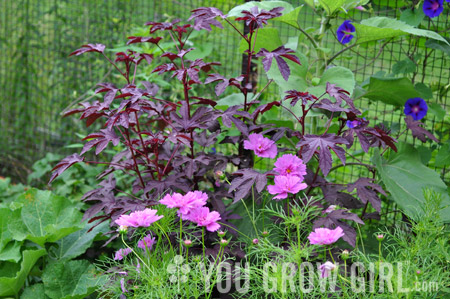
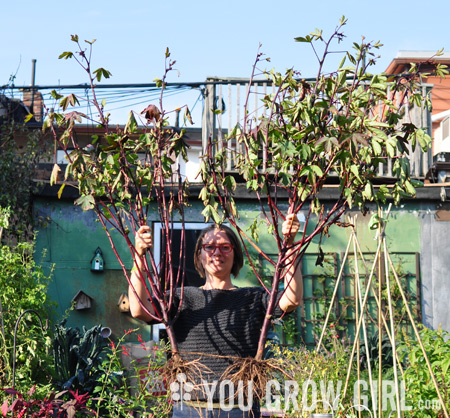
I wrote about the cosmos recently when the flowers were just starting to open. Well, they’re coming up full force now and I’m loving them even more. The soft, double blooms have begun to poke through a false roselle (Hibiscus acetosella) plant that is growing alongside — it has proven to be an unexpected combination that I would repeat again.

Eventually, if all goes well, the false roselle will bear its own soft pink blooms. It’s a long season tropical — I started the seeds underneath lights back in January with the hopes that the plant would have enough time to make flowers before the killing frost comes. I am loving this plant in it’s own right, even without flowers. I first encountered it in St. Lucia where my friend David was growing a stand of them. Here it is a struggle to get 7-foot-tall plants — mine are not there yet and may never make it, but even still, it’s been beautiful at every stage. Both the flowers (if they ever come) and the young leaves are edible. They taste a lot like their namesake, sorrel (Rumex acetosa), and have that slightly acidic bite.


Read more…

Leave a comment

Making Sorrel with Fresh Hibiscus

Photo by Gayla Trail All Rights Reserved

Sorrel or rum punch (sorrel spiked with rum) is a popular, refreshing drink in the Caribbean, especially during the holiday season.

Knowing this, I was particularly excited to get to the market and get my hands on some fresh sorrel so that I could find out how the drink compares when the flower calyces are fresh rather than dried.

In my minds eye I imagined market tables piled high with bright red blooms. Unfortunately, this wasn’t the case. Instead the fresh flowers seem to be sold in bagged portions. It’s only day one as I am writing this (you will read this a few days later) so I’m holding out hope that there is a market stand somewhere on the island where the blooms are beautifully display instead of bagged.

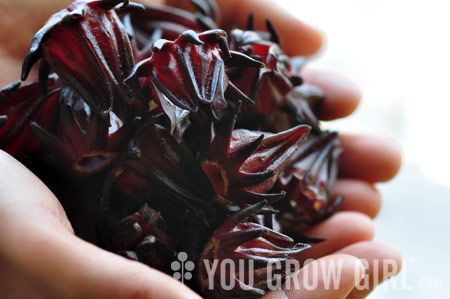
The good news is that the flower calyces I bought were still fresh and crisp inside the bag. I paid about $2 EC (roughly $.80 US) for about 5-6 cups of flowers.

Photo by Gayla Trail All Rights Reserved

Photo by Gayla Trail All Rights Reserved

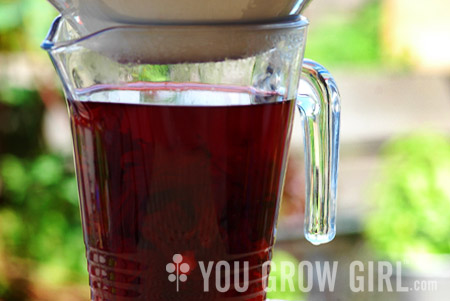
Turns out they make the most incredibly colourful, intense, and tangy drink. It’s so much more vibrantly red than the drink I make with dried flowers at home.

Photo by Gayla Trail All Rights Reserved

And look at the colour of the calyces when they are removed from the liquid!

Photo by Gayla Trail All Rights Reserved

It might be difficult to go back to dried next summer.

Here’s my standard recipe and the one I made today, but with so many tropical fruits and fresh spices available here I’m thinking of experimenting with some flavour combinations.

Do you have a favourite hibiscus/sorrel/rum punch/agua de jamaica recipe? Please share it.

Leave a comment

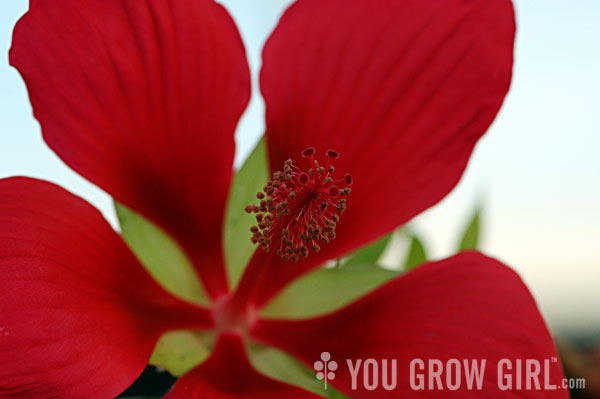
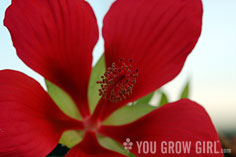
Red Water Hibiscus (Hibiscus coccineus)

Photo by Gayla Trail  All Rights Reserved

About a month ago, I came upon this flower in the pond and water garden section at Humber Nurseries. I was quite surprised to find a hibiscus that thrives in swampy wetlands where its roots are submerged underwater most of the year.

The price tag was too steep for my wallet ($41.99) and the plant too big (they grow very tall) and water-loving for any space I can provide, but I am told it will survive here (about zone 6b).

Surprising, don’t you think?

Leave a comment

Hibiscus Drink

Photo by Gayla Trail  All Rights Reserved

The rooftop garden is finally set up for outdoor living and the heat has suddenly cranked up, which means it’s summer drink time. I’ve taken to making up bright red batches of roselle, aka sorrel (not to be confused with the cold hardy herb Rumex acetosa), a tangy and refreshing ginger infused hibiscus drink popular in the West Indies. I first learned how to make the Mexican version, agua de jamaica, about 10 years ago on a trip to Oaxaca City, but prefer the addition of ginger for extra zip.

Photo by Gayla Trail  All Rights Reserved

Whatever the name, both drinks are made using the flower calyces of the tropical, heat-loving plant Hibiscus sabdariffa. About the closest climate for growing is Florida, so the drink doesn’t exactly qualify as local eating way up here in Toronto. If you’re making it in a tropical country then you’ll have access to fresh flower parts, but here in Toronto we’ve got a large Caribbean community so it’s easy enough to find packages of dried flowers in West Indian food shops. I get mine from a store that’s only a block away.

Optional variations on the drink include adding fizzy water (we like this best), orange zest, cloves, lime, or a couple of shots of rum to make rum punch.

Ingredients

  • 1 cup hibiscus calyces (dried or fresh)
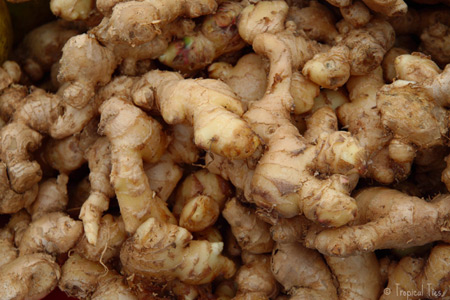
  • 1 tablespoon chopped, fresh ginger
  • 1 tablespoon cane sugar, honey, or agave syrup (or to taste)
  • 4 cups hot water

Method

  1. Steep hibiscus calyces, ginger, and sugar in hot water for several hours.
  2. Once cooled, place in the fridge and continue to steep for as little or as long as you prefer (up to 2 days).
  3. Strain out the plant parts and serve with ice.

Makes approx. 4 cups.

More Summertime Drinks

Leave a comment

Hibiscus Rosea

Hibiscus rosea

I bought this Hibiscus rosea plant back in May at the Parkdale Horticultural Society Annual Plant Sale. At the time the plant was a wee cutting but just today it opened its first bloom with two buds on the way. I generally dislike the over-bearing tackiness and waxy leaves of tropical hibiscus plants, reserving my interest for ‘Red Burgundy’ okra, a relation that produces delicious fruit and beautiful, yellow flowers with crimson centers. The delicacy of the Hibiscus rosea plant and its’ pretty variegated foliage (white and green with pink splashes) is what drew me in, and, well, the frantic nature of the plant sale is very conducive to out-of-character impulse buys.

The tag states that the plant has variegated foliage with pink flowers but I would describe the flower more closely as shades of red. It has a dark red spot in the center, gradating from light pink to pale red along the edges. Don’t be fooled by the photo, my plant is only 12″tall with 3″ wide flowers. Isn’t it cute? And with its red, white, and green coloration it makes a slightly-less-than-typical change from the usual holiday season plant fare.

Leave a comment