We’ve Got Greens

Back in late April I mentioned our plans to become self-sufficient in salad fixings. I said, “Starting next month (or so), I don’t want to buy a single head of lettuce ever again, if I can help it.

A month or so later and we are on the way. Over the last few weeks we’ve harvested bits and pieces here and there, but today I am harvesting the first two of eight fully formed heads of lettuce from the raised bed that is dedicated to greens. Unfortunately, I can’t take full credit for these plants as I bought them as transplants and did not sow them from seed. We were so behind this year between travel, bad weather, and building the garden that I decided to buy a few to give us a push.

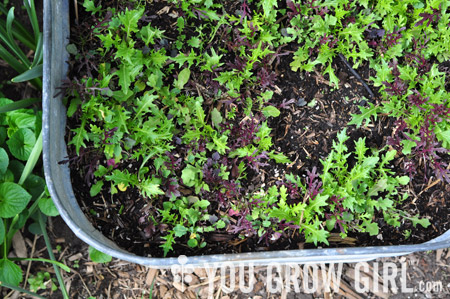
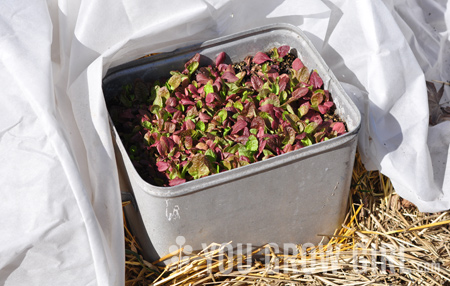
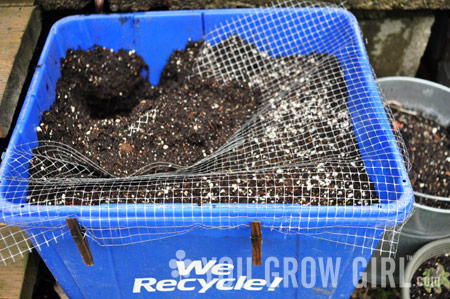
Meanwhile, the recycling bin salad garden is coming along swimmingly. Changing the clamps kept the squirrels out and we haven’t had a problem since. Eventually the greens grew big enough that I was able to remove the chicken wire without any further digging. Unfortunately, I had to resow some seed after the squirrel digging debacle and this resulted in a very tightly sown bin. I’ve been carefully removing seedlings from the bin and transplanting them elsewhere in the garden (as well as pots) to make use of the extra plants and provide some space for those that are still in the bin.

We now have several lettuce plants on the go all around the garden, tucked in underneath and around this and that, as well as in the raised bed. I have also planted several mustard greens and lots of edible flowers throughout.

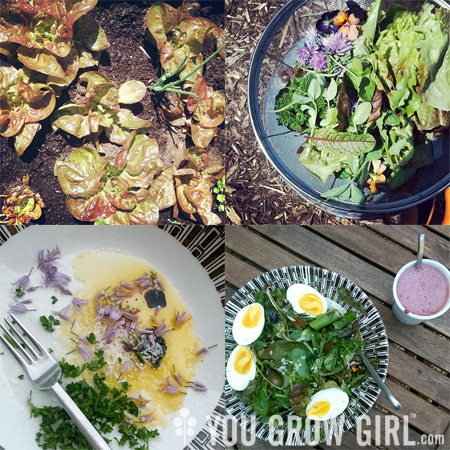
We are coming into a windfall of salad fixings. For the time being, I’ve bought my last bag of lettuce from the market. I just hope the summer heat doesn’t come on too strong, too quickly!

Leave a comment

Those Squirrels Sure Showed Me

On the bright side, none of the clothespins had been tampered with. The problem was that I had run out of foraged-from-the yard clothespins and figured I could just tuck the back in against the wall. I’m laughing at myself now as I write this. It’s as if I am new to this here gardening thing and didn’t just spend well over a decade trying to thwart the efforts of squirrels.

Tucking it in against the wall… PLEASE with that lazy, naive ridiculousness.

Lesson learned. Again. I’m now employing buffalo clips to hold down the remaining sides. Take THAT squirrels! I’m an adult human with opposable thumbs and even I have a difficult time operating buffalo clips. I’d like to see them work their way around that business.
Read more…

Leave a comment

Italian Edibles

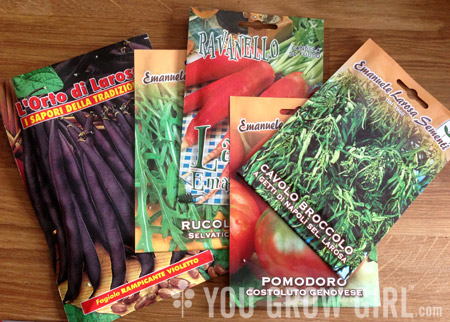
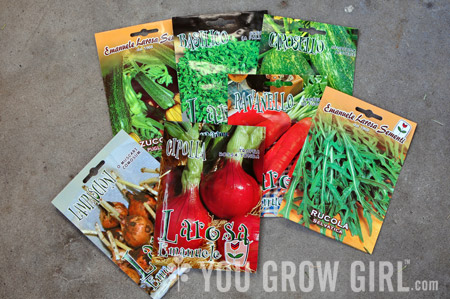
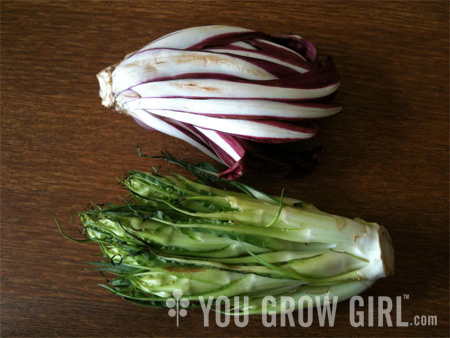
I have begun to purchase seeds for the 2011 growing season, and because I now live in an Italian neighbourhood, I have easy access to Italian edibles. The above photo represents my first, in-store (as opposed to online), impulse seed purchase of the year.

Most of the seeds I bought were varieties of radicchio (Cichorium intybus) aka cicoria, or cultivated chicory. I have grown a few varieties over the years, but was inspired to purchase seed and try out a few more by a recent trip to my local Italian grocer, where I purchased two varieties I had never tried before. The one on top is ‘Rosso di Treviso’ and ‘Catalogna Puntarelle di Galatina’ the bottom is (more info on both to follow).

Radicchio is a bitter green and an acquired taste so it is not as popular in the home garden as it could or should be. Not only are the colourful heads a beautiful addition to the garden, but the plants are perennial, although I have found the second season harvest are sometimes more bitter.

Here’s what I bought the other day:

Radicchio ‘Triestina da Taglio’ – This is described as a cut and come again variety. I have sown other radicchio varieties thickly and grown them in a cut and come again fashion, but it was interesting to find a variety that is especially suited to it. The leaves are green and not particularly exciting, but perhaps it will make up for what it lacks aesthetically in flavour.

Chicory ‘Catalogna Puntarelle di Galatina’ – Large, dense, segmented heads that remind me of conjoined spears of asparagus, with dark, indented, dandelion-like leaves. Very bitter. Over the weekend I prepared it by thinly chopping the whole thing fresh, with a splash of olive oil and lemon juice on top, a dash of Balsamic vinegar, and a pinch of salt. I also tried roasting it whole in the oven, and ate it plain. It was equally good this way, but in the future I think I will reserve young, newly harvested plants for eating fresh.

Radicchio ‘Rosso di Treviso’ – Apparently, there are two types. The one I bought to eat from my local Italian grocer is ‘Precoce’, but the one I bought as seed is ‘Tardivo.’ The latter is said to be the tastier of the two, but I would prefer to grow the first as it is prettier, and I am sometimes too vain about the edibles I give preference to in the garden. Here’s a great article that says much more than I can about the history of the plant, including links to recipes worth trying.

Radish ‘White Tip’ – I have a hunch that this is just another name for a variety called ‘Sparkler’ that looks like a round ‘French Breakfast.’ This is a great short variety, suitable for container growing.

Cucumber ‘Carosello Barese’ – They are described on the package as a hairy cucumber that is crunchy and fresh on the inside, but I found this site, where the author suggests that it may be a melon, not unlike the Armenian cucumber that is eaten as a cucumber (Cucumis sativa), although botanically a melon (Cucumis melo). This should prove to be an interesting addition to the garden, and I look forward to growing, and eventually tasting it.

Leave a comment

Hanging Colander Lettuce Pot

Photo by Gayla Trail  All Rights Reserved

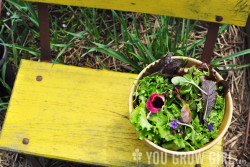
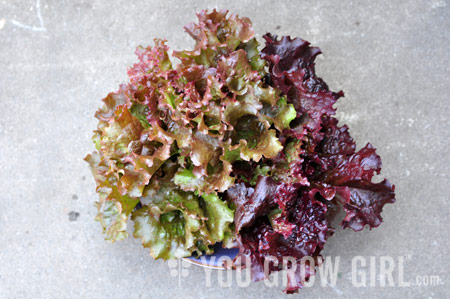
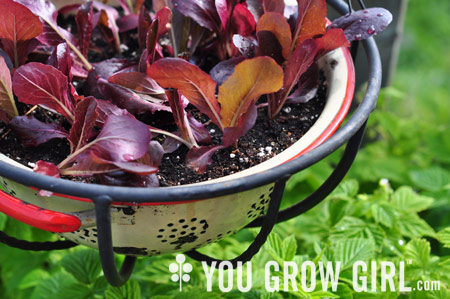
You are looking at one of this year’s serendipitous brainstorms. I feel perhaps a little bit too genius for coming up with it, when really, it’s just an enamel colander filled with ‘Sea of Red’ cutting lettuce and hanging in a wire basket. I quite like it. So much so that I haven’t had the heart to harvest it! Yet.

Here’s how this happy marriage came about. I had this heavy wire hanging basket sitting around, going unused. It’s the sort that is typically lined with coir, which is fine in most gardens but hard to keep hydrated on a hot and sunny roof. While, I’ve found it difficult to use as-is, I’ve kept the basket waiting for a new use to present itself. Despite the issue with hydration, stylishly understated and black hanging baskets made of a sturdy materials are hard to come by so I wasn’t about to get rid of it.

I bought the colander at a local secondhand store with the expressed purpose of growing greens in it. I liked the pairing of butter cream with bright red trim. The holes are small enough to hold soil without adding an extra liner, and the drainage they provide is perfect for growing small greens or herbs.

Photo by Gayla Trail  All Rights Reserved

Once I had planted up the colander, I thought it might be better served sitting up off the ground. Low and behold it fit perfectly inside the otherwise useless wire basket. As an added bonus our digging mammal visitors (squirrels, raccoons, etc) have not been able to get at it, while a second pot of ‘Sea of Red’ cutting lettuce has been dug up several times over the season.

Incidentally, I have experimented with this particular variety by growing the heads spaced at a distance from one another and tightly clustered as you see it here. I prefer it grown together and like the way the spear-like leaves create a literal sea of rich, mahogany that lights up when the sun hits it just so. It’s as satisfying to look at as any flower basket I have grown and I might even eat it for lunch sometime soon before the plants bolt.

Leave a comment

Sierra Spring Beauty (Claytonia nevadensis)

Photo by Gayla Trail  All Rights Reserved

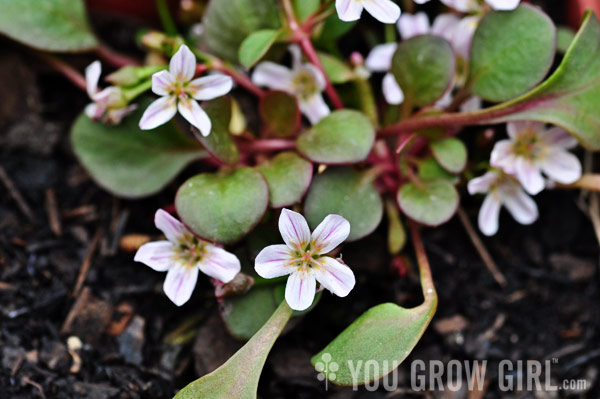
I bought this plant Claytonia nevadensis, also known as Sierra Spring Beauty, a few weeks ago on a trip to Lost Horizons, a nursery located in the town of Acton. The plant is endemic to California, growing along rocky streams high up in the Sierra Nevada mountains.

I bought the plant hoping it is edible like others within the genus (sometimes called Montia). Unfortunately, there isn’t much information about this species available and I haven’t found proof either way. The mystery continues, although I ate a leaf recently so… On the positive side of things, I haven’t come across a poisonous claytonia, so there is still hope. And I am neither sick nor dead. That too.

I do not recommend or condone this method of identification.

Edible or not, buying this plant has opened my eyes to a whole new world of claytonias. I have grown the most common types and have identified them growing wild in parks on trips to California, but I had no idea there were so many different species — some much more beautiful and intriguing than c. perfoliata aka ‘Miner’s Lettuce’.

The education I sometimes glean from the acquisition of a single plant and the new worlds it can open up still surprises me. Worth the insane $9 price tag.

On the flip side of things, I’m a bit concerned about my ability to keep this little gem alive. It grows in very free draining soil or scree, alongside flowing mountain streams. Clearly these are not the conditions at my community garden plot. So for the time being, I’m keeping it in a pot until I can figure something out.

Leave a comment