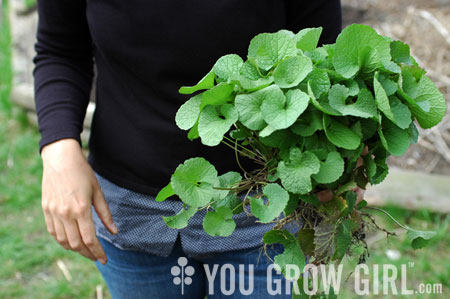
Garlic Mustard (Alliaria petiolata)

Photo by Davin Risk All Rights Reserved

The garlic mustard population is really getting out-of-hand at the community garden this year. I’ve discovered loads of it in unused areas of disturbed, lousy soil and it is expanding rapidly into the edges around plot beds. I was diligent in removing much of it last year so the population isn’t big enough yet to really get under my skin, but this plant is so prolific, and such an evil overlord taking over wherever it sets roots that I’m going to have to get at it with due diligence to avoid disaster next year.

For those who’ve had the good fortune of avoiding it, garlic mustard is an extremely invasive, biennial plant that was probably brought to North America by European settlers, most likely to be cultivated for food and medicine. And I can see why. It’s delicious stuff and the herb books are filed with useful garlic mustard-based remedies. The plant also over-winters nicely under snow, even in my region, which for settlers probably meant something green in the cold months. Unfortunately the plant got loose and has since become a bit of a botanical menace, encroaching on native woodland plants in many parts of the Eastern United States and southern parts of Ontario, Canada (where I live). In fact it’s become such a pain that local communities are starting to band together on special garlic mustard eradication days, going out into woodland areas in groups with the sole purpose of removing the plant.

But like I said, there is a bright side to this — we can use our mouths and stomachs to help keep this bad ass botanical in check. The leaves have a strong garlic flavor and the roots have a bit of a kick making them a good substitute for horseradish (incidentally also a menace). When pockets of it started to turn up in my own gardens last year I figured I might as well figure out some use for it while going through the pains of pulling it out. We’ve tried a few recipes but I am finding that I am as sensitive to this plant as I am to garlic itself. We’ve enjoyed it, but in much smaller quantities than are harvested. The other key to use that I have found is to mix it up with other ingredients. This tempers the bitterness, and in my case prevents digestive upset.

Photo by Gayla Trail  All Rights Reserved

While the leaves are bitter, young leaves can be eaten fresh in salads if you remember to harvest in the early spring. The plant is generally tastier BEFORE the flowers and seeds appear which is a good thing because it’s advised to get them out of the ground before the seeds have a chance to spread. It can also be sautéed or wilted like spinach. The garlic flavor goes nicely with butter. And mushrooms. Maybe with a pinch of salt and a splash of lemon. Yum. Pesto is a popular use since the bitter garlic flavor works nicely on pasta, no additional garlic required. Making pesto is also a good way to use up and store the plant for long term use. Just package it up and keep it in the freezer. Don’t worry about running out, for better or worse there will be plenty more next year.

Related:

Leave a comment