Edible “Weeds”: Lamb’s Quarters and Orach

lambs quarters and orach
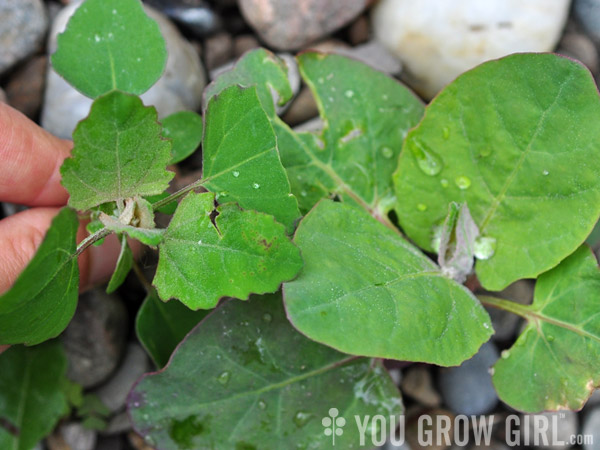
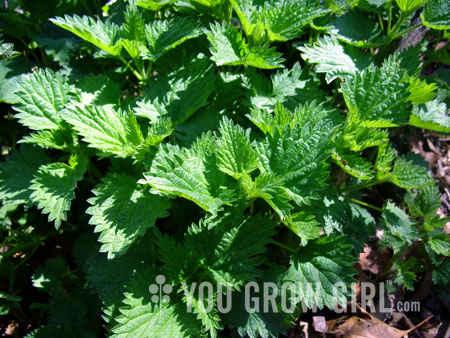
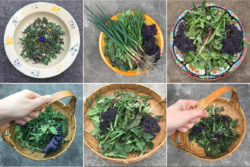
Left to Right: Lamb’s Quarter (Chenopodium album) and Garden Orach (Atriplex hortensis).

It was overcast and warm this morning, so I took advantage of the mild conditions to harvest and wash greens for salad. A combination of rain and warmth has the greens going gangbusters over the last few days and I am starting to really reap the benefits of several, generous sowings that I did early in the season.

In among the greens that I harvested were two nutritious greens that I did not need to sow. The first (shown on the left in the above photo), lamb’s quarter aka goosefoot (Chenopodium album) is a common North American and European “weed.” It comes up abundantly in my garden regardless of how diligently I weed. Chances are good that you’ve got it growing in your garden, too.

Read more…

Leave a comment

Stinging Nettle Tea

Photo by Gayla Trail  All Rights Reserved

In my world, foraging goes hand-in-hand with gardening. Maybe it’s because the compulsion to do both comes from the same place in my brain (a fascination with the natural world and an interest in knowing how things work). Or maybe it’s because I am thrifty and can’t stand the idea of so much good stuff going to waste. I’m able to save money and find a second use for discarded objects by foraging for bits and bobs for my garden. I forage for fertilizers too. And come to think about it, it might also be because I am interested in how wild foods that were once valued have been denigrated and demoted through history from nourishing wild food to a lowly, undesirable weed and I want to know for myself if they really deserve that indictment (two words: they don’t).

Whatever my reasons, I can’t imagine gardening without foraging and vice-versa.

This year I’m making more of an effort than usual to keep on top of foraging for early spring plants. There are several that are only edible within a short window of time and I don’t want to miss any of them, as is often the case. This year I got started harvesting stinging nettle (Urtica dioica) earlier than ever, since this is one herb that absolutely MUST be harvested in the early spring while the plants are still young and tender, and BEFORE flowers start to appear. I want to stress the importance of that fact since you can damage your kidneys consuming mature nettle parts.

Unfortunately my secret spot is no longer accessible. I am often able to harvest bags of the stuff, but this year could only get half of one bag. I had intended to glean enough for a big batch of nettle soup and a couple of bundles to dry for tea. I managed to get enough for tea, but do not have enough to make soup.

And now this is where I introduce a disclaimer about how I am not a medical professional and am not certified to dish out medical advice, yadda, yadda, yadda.

That said, nettle tea is said to be a mineral-rich tonic that can help allergy sufferers fight the symptoms of seasonal allergies. It’s the kind of remedy that has to build in your system — you can’t expect to drink one cup of tea and find yourself symptom free. This year I decided that I would get an early start on the tea and see what happens. So far so good, but in all honesty I haven’t been drinking it long enough to consider any positive effects.

Be advised that the “stinging” in stinging nettle is there for a reason. Merely brushing bare skin against the plant can hurt. A lot.

If you plan to go out picking nettles I suggest bringing along the following:

  • A pair of leather gloves. I use the cheap workman’s gloves you can buy for just a few dollars at the hardware store. They’re bulky but the sting can not penetrate. It can penetrate through thinner cotton gloves. Take my word for it.
  • A sharp pair of scissors or pruners for harvesting.
  • A bag or bags for collecting the plants.

Wear the gloves whenever you handle fresh nettle parts (leaves or stems). The sting only goes away once the plant has been dried or cooked. Don’t wash the leaves if you intend to dry them or they’ll go brown. I bundle mine up, wrap with twine, and hang in a dark, well-ventilated spot. I do wash the parts that are used in soup, but only if I intend to cook them up immediately upon returning home with a harvest.

You can find out more about stinging nettle and foraging in general under the newly added “Foraging” category.

Leave a comment

Together, Let’s Fight the Spread of Invasive Garlic Mustard (and Eat it Too)

Photo by Gayla Trail  All Rights Reserved

Another spring and a new crop of garlic mustard (Alliaria petiolata) is setting up camp for the season. We found a few small plants in the street garden cleanup last week and several at the community garden, many that were already much larger and lusher than any of the other cold hardy perennials growing there. And all of that despite the fact that this is my third year diligently removing every plant I find!

Now is the time to remove this highly invasive plant while it is still small and easy to pull. We learned the hard way last year that by May the roots are already enormous and deeply set. I took the above photo of an entire plant just a few days ago and the roots were already substantial.

Photo by Gayla Trail  All Rights Reserved
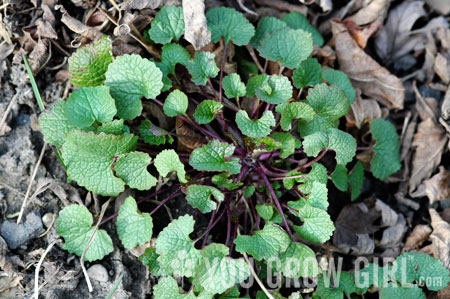
Here’s what the plant looks like right now. In the early stages it looks more like a common violet, but the distinctive garlic smell is unmistakable. Here are some photos of later stage plants for identification.

When removing the plant, be sure to pull up as much of the root system as possible. Pull when the soil is moist and loose and use a weeding tool if you have to. Destroy the plant, roots and all — do not put it into the compost bin! Or better yet, eat it. As I’ve mentioned before, that distinctive garlicy smell and flavor lends itself to all kinds of uses.

Free food!

Photo by Gayla Trail  All Rights Reserved
A jar of garlic mustard root “horseradish” that we made last spring.

My favorite way to eat it is lightly sautéed with some butter; however, we have tried making it into pesto by simply whizzing the leaves up in a food processor with a splash of olive oil and salt, and grating the roots into a horseradish substitute. The pesto is a bit bitter raw, I prefer it cooked. I’m thinking of using this year’s harvest to make “garlicy” mashed potatoes. The fake horseradish was okay, but since it took us several hours work washing and grating thin roots, I wouldn’t recommend it.

Leave a comment

Japanese Knotweed (Fallopia japonica)

Photo by Gayla Trail  All Rights Reserved

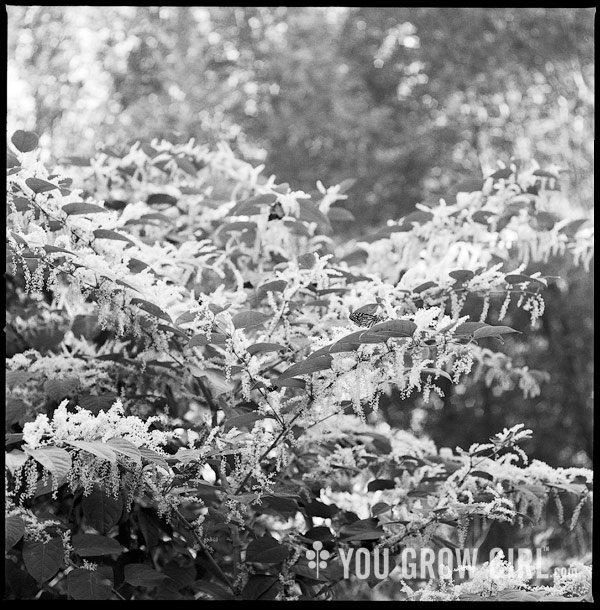
A gorgeous plant, but oh so invasive. Once you’ve got it, good luck getting rid. On the plus side, the butterflies love the flowers (you can see one in this shot) and the young shoots that come up in the spring can be dug and used like rhubarb.

Leave a comment

Garlic Mustard (Alliaria petiolata)

Photo by Davin Risk All Rights Reserved

The garlic mustard population is really getting out-of-hand at the community garden this year. I’ve discovered loads of it in unused areas of disturbed, lousy soil and it is expanding rapidly into the edges around plot beds. I was diligent in removing much of it last year so the population isn’t big enough yet to really get under my skin, but this plant is so prolific, and such an evil overlord taking over wherever it sets roots that I’m going to have to get at it with due diligence to avoid disaster next year.

For those who’ve had the good fortune of avoiding it, garlic mustard is an extremely invasive, biennial plant that was probably brought to North America by European settlers, most likely to be cultivated for food and medicine. And I can see why. It’s delicious stuff and the herb books are filed with useful garlic mustard-based remedies. The plant also over-winters nicely under snow, even in my region, which for settlers probably meant something green in the cold months. Unfortunately the plant got loose and has since become a bit of a botanical menace, encroaching on native woodland plants in many parts of the Eastern United States and southern parts of Ontario, Canada (where I live). In fact it’s become such a pain that local communities are starting to band together on special garlic mustard eradication days, going out into woodland areas in groups with the sole purpose of removing the plant.

But like I said, there is a bright side to this — we can use our mouths and stomachs to help keep this bad ass botanical in check. The leaves have a strong garlic flavor and the roots have a bit of a kick making them a good substitute for horseradish (incidentally also a menace). When pockets of it started to turn up in my own gardens last year I figured I might as well figure out some use for it while going through the pains of pulling it out. We’ve tried a few recipes but I am finding that I am as sensitive to this plant as I am to garlic itself. We’ve enjoyed it, but in much smaller quantities than are harvested. The other key to use that I have found is to mix it up with other ingredients. This tempers the bitterness, and in my case prevents digestive upset.

Photo by Gayla Trail  All Rights Reserved

While the leaves are bitter, young leaves can be eaten fresh in salads if you remember to harvest in the early spring. The plant is generally tastier BEFORE the flowers and seeds appear which is a good thing because it’s advised to get them out of the ground before the seeds have a chance to spread. It can also be sautéed or wilted like spinach. The garlic flavor goes nicely with butter. And mushrooms. Maybe with a pinch of salt and a splash of lemon. Yum. Pesto is a popular use since the bitter garlic flavor works nicely on pasta, no additional garlic required. Making pesto is also a good way to use up and store the plant for long term use. Just package it up and keep it in the freezer. Don’t worry about running out, for better or worse there will be plenty more next year.

Related:

Leave a comment