It Came from the Compost Bin

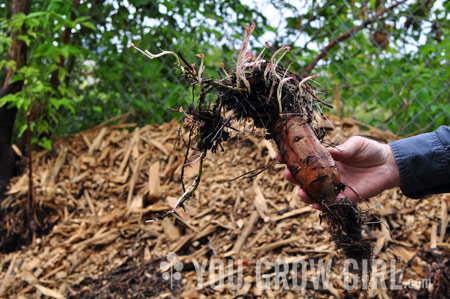
I’m not even sure how a whole sweet potato got in there in the first place, but this one really wanted to grow.

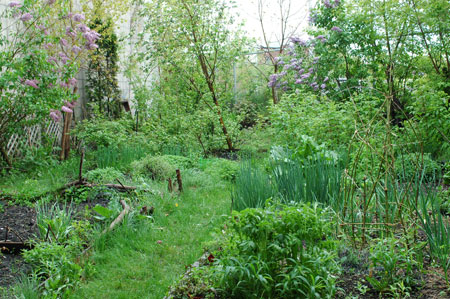
That giant pile of wood chips in the background is the result of a large weed tree that fell down and flattened a portion of our community garden, including our ramshackle compost bin. But Davin, our resident Compost Technician keeps plugging away at it, undeterred. Proof positive that one does not require a proper bin with four sides and a top to turn garden and kitchen waste into compost.

Leave a comment

First Lunch Courtesy of the Garden

Photo by Gayla Trail  All Rights Reserved

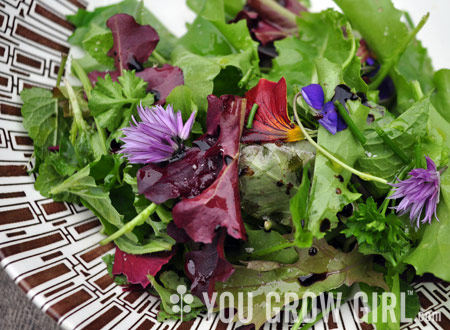
Recently, our meals have been peppered with ingredients gleaned from the gardens; however, today’s lunch is the first that is all garden grown.

Here’s the breakdown:

  • Chive Blossoms: A hardy perennial that has been growing for about a decade in a big container on the roof.
  • Lemon Balm: Eat the fresh leaves in the spring. This is a hardy perennial that self seeds all over the community garden.
  • Parsley: From the roof.
  • Pansy petals: Also from the roof.
  • Three types of lettuce: All of which self-seeded in various containers on the roof. I didn’t have to do a thing, although I did transplant a few to the community garden plot.
  • ‘Egyptian Walking Onion’: Just the greens.
  • Borage sprouts: I got this idea from Julianna, who brought a salad to our Saturday afternoon transplant trade/potluck that included borage from her garden. Borage self-seeds like nobody’s business and is coming up like mad right now. why not use the tender, fresh sprouts rather than tossing them in the compost? The first set of true leaves are prickly but the cotyledon leaves are smooth, with a fresh cucumbery taste.
  • Baby kale
  • Purple Mizuna: More on this soon. This is my new favourite edible!
  • Assorted mustard greens
  • Violet leaves and flowers: I have a small patch over at the community garden that is going to expand this year once I add the three additional varieties I have acquired this spring. Eat the young, new leaves and the flowers.
  • Bloody Dock: If you’d like to know more, I wrote an article on spring greens including bloody dock, for Garden Making magazine.

Photo by Gayla Trail  All Rights Reserved

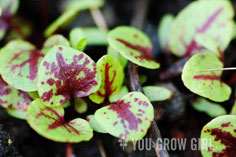
For identification purposes, here’s what the borage seedlings look like. You can also identify them by their cucumber scent. The seedling in the top left corner is anise-hyssop. You can eat that too.

Leave a comment

February at the Community Garden

Photo by Gayla Trail  All Rights Reserved

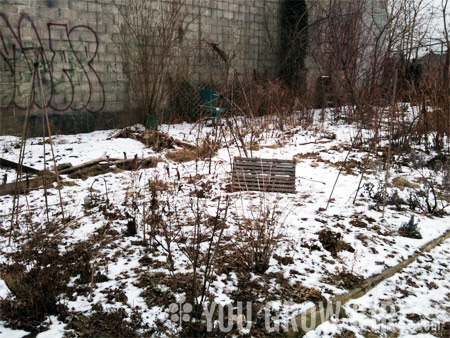
We popped over to the community garden yesterday afternoon with a frozen pail of compost. I thought I would take some pictures so you can see what it looks like in the middle of winter.

As you can see, not much is happening. Drab and dull. We stop using our plots between October/November and March/April depending on the season.

Photo by Gayla Trail  All Rights Reserved

If I wanted to really maximize the space, I could construct some cold frames within my plot and grow cold hardy greens like kale, mache, and spinach. And I would, but unfortunately the lane-way that leads to the garden is typically treacherous terrain through the winter months. We haven’t had much in the way of snow and ice this winter — it’s the first year since joining the garden around seven years ago that I’ve been able to get to the garden gate with relative ease.

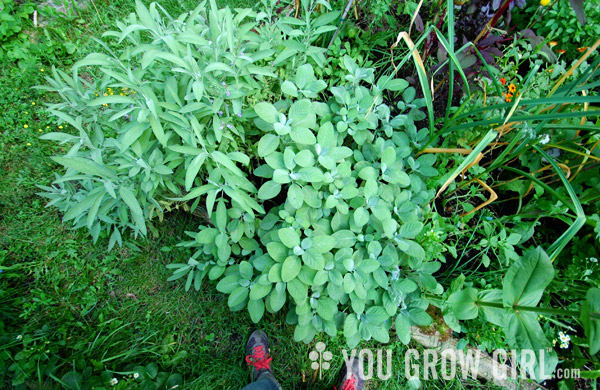
Instead, I grow edible perennials as a strategy for extending the season. Cold hardy, perennial herbs such as garden sage, oregano, marjoram, chives, garlic chives, mint, and ‘Egyptian Walking’ onion function as the bones of the garden, holding in the soil and offering up a harvest that starts in the early spring and lasts straight through to the late fall.

Here’s what it looks like in April.

There are also a few self-seeders including calendula, chervil, bloody dock, lovage, shiso, lemon balm, and chamomile that pretty much grow themselves. They can be a curse or a blessing of plenty depending on how you look at it.

Over the years I’ve also added a few small fruit bushes including gooseberries and American black currant, and several strawberries (wild and alpine types) as a way to get garner yearly crops that don’t require seasonal planting.

Photo by Gayla Trail  All Rights Reserved

This is a wild geranium that showed up one day. I always let a few survive since they’re not too invasive and I like their pretty little pink flowers. As you can see, it is also proof that plants don’t necessarily “die” during the winter, but stay alive in a dormant stage underneath the snow.

And it looks like we’ve had a visitor in our absence. I noticed new graffiti in a couple of spots along The Beer Store wall.

Leave a comment

American Black Currant (Ribes odoratum) ‘Crandall’ Flower

Photo by Gayla Trail  All Rights Reserved

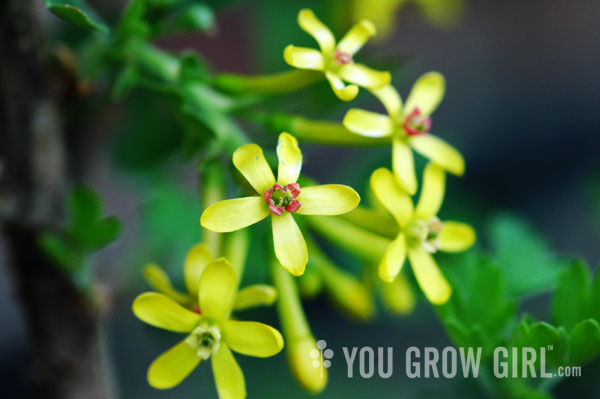
Can you believe these flowers belong to a black currant bush?

It recently occurred to me that I have a red currant bush and a gooseberry bush, but do not have a black currant bush. This despite the fact that I like the idea of gooseberries and red currants more than I like to eat them. Black currant on the other hand is divine.

Anyways, I actually do sort of have a black currant bush growing in my community garden plot right now. I say sort-of only because I’m not entirely sure it’s a black currant. A seedling that looks like a black currant came up as a volunteer a few years back so I stuck it in a corner and let it grow, waiting to find out what it is and hoping that it is indeed a black currant. I have absolutely no idea where the plant came from. Two years in and it is now taller than my gooseberry bush and continues to look like a black currant with the possible exception of the leaves that seem a bit too big, but it’s hard to say because some varieties do have slightly bigger leaves. Also, while at the garden centre, I noticed jostaberry, which is not unlike a black currant bush but with larger leaves. So perhaps it is a jostaberry. But who can know? Until it flowers and produces fruit, I remain in the dark. That could take another few years yet, but I like a good mystery and am willing to wait it out despite a lack of space.

Meanwhile, I have been longing for a real and true black currant and had decided I was just going to suck it up and get one. And then I almost didn’t, again. Because the bushes at the store were $14.99 each and not particularly big. And because I am cheap and figured I should just wait until the fall when they are on sale, which is how I got the gooseberry bush. However, while browsing the selection I found this one, called ‘Crandall’, with beautifully ornamental yellow and orange flowers. That sealed the deal.

You’ll note that ‘Crandall’ is not a regular black currant (Ribes nigrum), but is another species, Ribes odoratum. Apparently the berries have a spicy or clove flavor, and I can tell you that the flowers certainly do. Unfortunately, I did not choose well for my small community garden plot and managed to find the largest bush going (4ft at maturity). Some people say you need two bushes to produce fruit but other more reliable sources say you don’t. I guess I’ll find out soon enough.

And there you have it. I am now the proud, albeit tentative owner of a black currant bush. Jam to come in another 12 to 24 months.

Leave a comment

Bloody Dock Seedlings

Photo by Gayla Trail  All Rights Reserved

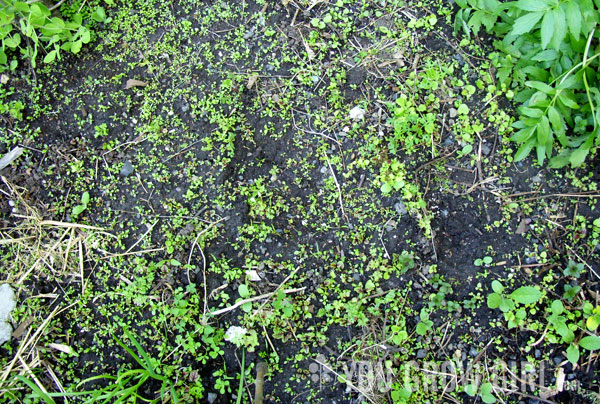
Meanwhile, over at the community garden, I allowed a single bloody dock (Rumex sanguineus) plant to go to seed last fall and this is the result…. gazillions of baby plants are taking over the section of the garden that plant once occupied.

And to think I actually considered buying a replacement this year. HA! Turns out I’ve got enough to feed the world. In case you’re unfamiliar, bloody dock is related to sorrel and tastes like a tangy spinach. And of course, since they are so beautiful, I can’t bear to toss a single seedling into the compost bin. I dug a few out this weekend to try on the roof, but the rest…. Look out friends and neighbours…

Here’s what that section of the garden looked like last night:

Photo by Gayla Trail  All Rights Reserved

It’s not just bloody dock in there but they make up the bulk of it. There are also borage, calendula and chervil seedlings vying for space, albeit in more manageable quantities. Even the chocolate mint was better behaved.

Leave a comment