Growing and Eating Cardoon

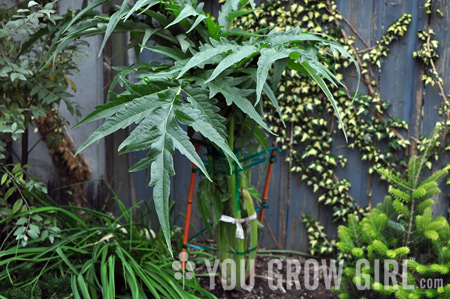
My final Globe and Mail article for the 2010 growing season was on growing and eating cardoon. Cardoon is lesser-known relative of the artichoke that is considered a delicacy in Mediterranean cuisine. Like artichokes it grows into a stately and somewhat dangerous thistle-like plant, but unlike artichokes you eat the stems, not the flower buds. It tastes a lot like artichoke, too.

Back in the spring, I started a few cardoon plants from seed, eventually growing one in my community garden plot and the other at my friend Barry’s.

His spot was ideal, whereas mine fell a bit short. My cardoon grew well enough, but stayed small. The plant at Barry’s got just want it needed and then some. It was really sunny, warm, protected, and in soil that was well watered but very free-draining. Mine was in rich soil with lots of organic matter, but watering was inconsistent (we ran out of water at the garden for a time), and the only spot I could afford was a bit cramped with a taller, more robust plant that shaded out the young cardoon a bit too much.

Last weekend we finally went to Barry’s to harvest the cardoon. It turned out to be the biggest I have ever seen. The yield from one plant was a lot more than I’ve seen in stores or purchased myself. We actually got enough out of it to make 2 batches of cardoon gratin (see recipe below), whereas a typical stalk yields only one.

Many cardoon growers say that going to the trouble of blanching the stems is unnecessary, but now that I have done it, I disagree. For such a large and fibrous plant the stalks we blanched were tender and delicious. I didn’t have to overcook them the way I’ve had to with some of the bunches I have purchased in the past.

I stick by my original assessment. Cardoon is a bit of a pain, and an absolute nightmare to prepare and cook, but it is a stunning plant and a delectable, but acquired taste. What can I say? Some of the best things in life don’t come easy.
Read more…

Leave a comment

Meanwhile, Over at the Greenhouse

Photo by Gayla Trail  All Rights Reserved

We have been enjoying an unseasonably warm March here in Toronto that has lead into the warmest early April I can recall, ever. Temperatures are supposed to soar this weekend, sending gardeners (including me) into a flurry of activity. I have already sown spinach and mâche into containers on the roof. The chives have been shooting up slowly over the last few weeks, and I am starting to identify lettuce seedlings that have self sown where I let mature plants go to seed last season. I intend to spend this weekend cleaning up, amending the container soil, and getting all of the gardens into shape.

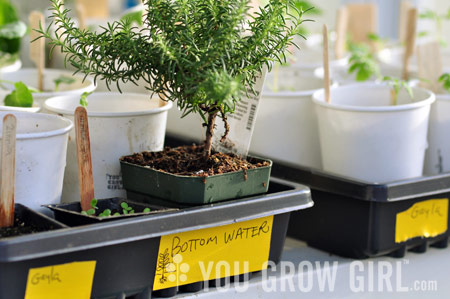
Meanwhile, over at the greenhouse, my little seedlings are go. I started tomatoes and peppers on March 5 and have sown the odd thing here and there since. I’m enjoying the simplicity of this stage of the growing season very much. I’ve been through this stage countless times now and you’d think it would get dull, but it never does. Every year there is something new and even the same old same old haven’t lost their appeal. On a basic level I am amazed by my plants’ progress every time I visit the greenhouse. I am relishing just observing the beauty of new seeds as they come out of the package and discovering the early growth stages of plants I have never grown from seed before. This is a happy time all around.

Photo by Gayla Trail  All Rights Reserved

These are a pansy called ‘Caramel Spice’ from Botanical Interests. It’s a little late to start pansies and violas from seed as they are typically started in January. In fact, I just bought the first pansy cell-packs of the season yesterday. Unfortunately, these seeds came late but I figured I might as well give it a shot anyways. I can always try tucking them into a cooler spot once the summer heat hits and hope they make it to the fall cool-down.

Photo by Gayla Trail  All Rights Reserved

This is cardoon (Cynara cardunculus), one of my fun experiments for the 2010 growing season. Cardoon is a gorgeous, and rather massive plant that looks an awful lot like an artichoke or giant thistle. In fact, they’re related. What’s interesting is that you eat the stems of the plant, not the flower bud as you do with an artichoke. But before you harvest it you’ve got to “blanch” it, much like celery, by covering the stems with a large box or some other cover to keep light out and soften the leaves. Perhaps a bit complicated but my curiosity has got the better of me so here we go. Another fun fact: cardoon is often used as a vegetarian rennet substitute in cheese making.

I like the seedlings at this stage; so perfect.

Read more…

Leave a comment