Barry’s Garden in January

No matter the season, there is always something of interest (many, many things of interest) going on in Barry’s garden and even though I know not to show up without a proper camera, I can’t deny that sometimes (most times) I am lazy and the camera stays at home. Of course, I always regret it later as I did when I visited his place on Friday to see what was new.

And what was new was everything. It was the day of the epic thaw. One day our city gardens are buried in snow, the likes of which we haven’t seen in ages, and the next the sun is shinning, the birds are getting busy, and some guy is traipsing down the street in a T-shirt and flip-flops like it’s August, except that it isn’t August it’s January, and it may be unseasonably warm, but it’s nowhere near Spring Break in Cancun 2013 (Spring Break! Woooo!). That dude is going to regret it next week when he’s stuck in the bathroom suffering the symptoms of the NoroVirus, I tell you what.

I love these first big thaws. First of all, they are a desperately needed reminder that the winter isn’t forever. Spring will come again. They also reveal that life has not ceased underneath the snow. Plants are alive. Some of them are green and fresh. Take this lush and very alive hellebore (above) in Barry’s garden. Before meeting Barry, I had never paid hellebores much mind. Now I can appreciate their merits, the main one being that they stay green year-round!

Some of them, like this Helleborus niger ‘Praecox’ bloom in December and January when most plants are months away from breaking dormancy, let alone making flowers. Let me repeat: I took this photo just a few days ago. In January. In Toronto. What a plant!

Read more…

Leave a comment

A Succulent Oasis in My Office

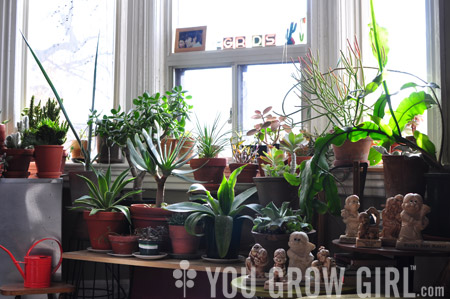
We shuffled all of the remaining houseplants inside last Friday just before the hard frost returned. And so began the arduous process of stuffing potted plants into windows and underneath lights in preparation for a long winter indoors.

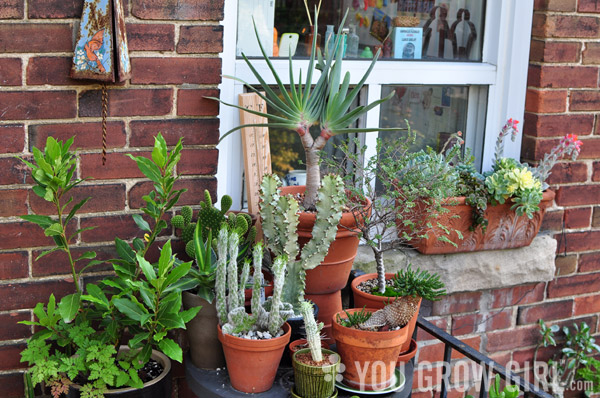
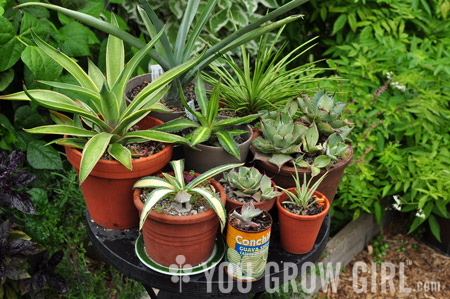
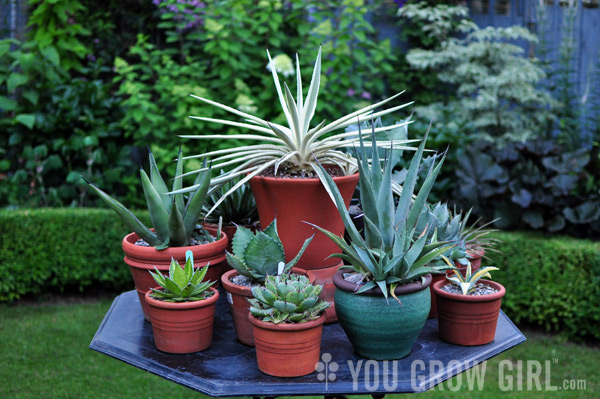
This year I decided to go for an all succulent mix in my office window, which wasn’t difficult given how many I have. I haven’t counted, but my best guess is TOO MANY. I usually put most of the agave into this prime spot where I can see them at a glance from my desk chair all winter long. However, this year I decided to mix things up a bit and have instead situated my new collection of unusual opuntia within reach.


A few of my tender paddle cactus (opuntia).

Chances are good that a few of the smaller plants will end up in the basement should the windowsill get too cold and draughty come mid-winter. I also plan to move this year’s Offfice Tomato Experiment 2012/13 once it gets too cold in the unheated front porch “greenhouse.”

Read more…

Leave a comment

Botanical Display Cabinet

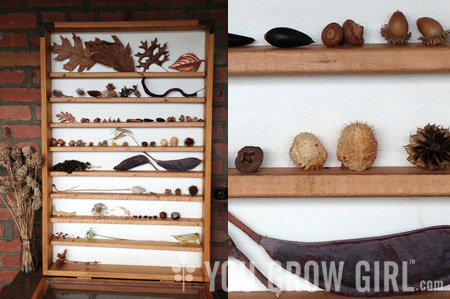
I can’t seem to help myself from bringing home plant bits from here and there whether its on a trip, out on a walk, or from my own gardens. I am in awe of the architectural shapes and designs found in nature and I want to have their beauty around me at all times of the year. It is the same with rocks, shells, and sticks. The world is full of beautiful and incredible things and I am constantly amazed by it all.

I bought this homemade display cabinet rather impulsively for $15 at the flea market a few months back. It’s meant to sit flat on a table rather than propped up as I have it now. Davin could not see its potential and wasn’t particularly excited about carrying it all the way to the car, but I persuaded him to give it a chance. I could see his point as the plexiglass front is scratched and worn from its original use as a flea market stall display (it sat flat on a table rather than upright), and the thing is awfully large and heavy. Still, I think he was eating his words once I got it set up and filled with random seedpods, leaves, and dried flowers we have collected over the years.

Read more…

Leave a comment

Book Roundup: Wherein I am Inspired to Transform a Kombucha Mother Into Candy

How is it that my last book roundup was published all the way back in April? Just today I was remarking to Davin that this gardening season feels like it is going by in a blink of an eye, and this proves it. One minute I am waiting impatiently for the winter to recede, and the next it is mid-July and I am eating the year’s first ripe tomatoes off of the plants.

They say (whoever they is) that time moves faster as you get older and/or also when you are having fun. My birthday is in two weeks. One more year before I am officially confirmed as OLD. Fortunately, I am having fun.

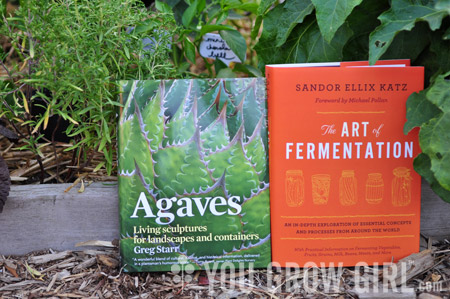
Agaves: Living Sculptures for Landscapes and Containers by Greg Starr

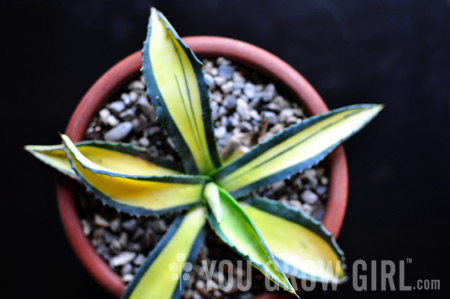
This first book showed up at my door as a review copy from the publisher. I may be repeating myself here, but I rarely include review copies in my book roundups (they are typically personal purchases) because the publishers tend to get it wrong and send me the strangest titles from their catalogues. Not this time. I gasped aloud when I opened up the envelope and this book popped out. I was headed out to an appointment at the time and brought it along in my bag because I simply could not wait until later to dive into it. If you’re an agave lover (as I am) or just have an interest in learning more about them, I think you’ll love this book. It would be especially useful to those of you in warmer climates who can actually grow some of these beauties outside year-round. I should note here that the topic of sort-of hardy agaves is covered in the first chapter called “Growing Agaves.” This section also includes a list of the hardiest species, of which there are two that can withstand my zone given the right conditions: Agave toumeyana and Agave utahensis. Note to self that I must try to get one to test in my Dry Bed! An agave outside year-round, in the ground would make my life. I noted on my trip to the Denver Botanic Gardens last year that they had several Agave parryi growing year-round in their alpine garden and it has had me thinking since about the possibilities here at home.

The book is full of useful information as well as photos of gorgeous plants that had me drooling and itching to expand my potted collection even though I can barely handle the nearly 20 plants I have as-is. Many shots in the book depict agaves in their element set against gorgeous mountain-scapes and dry scrubland. It has brought the wanderlust back full force. Another field trip to the desert where I can see fully mature agaves in their majesty is imperative! And because the book is first and foremost about using agaves in the garden, there is plenty about that, too.

The Art of Fermentation: An In-Depth Exploration of Essential Concepts and Processes from Around the World by Sandor Ellix Katz

In case you are wondering, the fermentation addiction is still going strong. I continue to juggle several cultures at once — a feat that is at times tedious and tiresome and other times exciting and challenging in the best possible way. And yet I struggle everyday with the eagerness to start another. Alas, there is so much to ferment and not enough time!

To make matters worse, Sandor Ellix Katz, author of “Wild Fermentation: The Flavor, Nutrition, and Craft of Live-Culture Foods” has come out with an impressive, nearly 500 page tome that dives down much more deeply into the world of fermented foods and beverages. This book is a real achievement. There must be hundreds of accounts of fermented products from around the world within the books pages. I haven’t had a lot of time for reading lately and have found myself stealing glances whenever I’ve had a few spare moments. It has served to increase what was already a fervent enthusiasm for the subject. I really can’t say enough good things about this book.

Read more…

Leave a comment

Leaving California with an Aching in My Heart

The trip to Rancho la Puerta begins and ends at the San Diego airport. This was my first time to Southern California, and since it turned out to be cheaper (due to the New Year travel rush) to stay a few days in San Diego than fly home straight away, we took advantage to enjoy a bonus day and a half in the city.

Having now had a chance to see first hand what gardening is like in Southern California, I can say with authority that I would move there in a heartbeat to enjoy that luscious, long-season growing. I spent the last few minutes before we had to head to the airport running from one neglected front yard citrus tree to the next screaming (mostly on the inside), “Dear god, look at all of these oranges!”

If it were not for the state of traffic and poor public transportation options, I would be cranking up the Zeppelin and packing my bags right now. I can’t live in a car dependent city, never mind the fact that my stomach was in my throat every time we got on the road. Since I’m being honest, the earthquakes freak me out a bit, too.

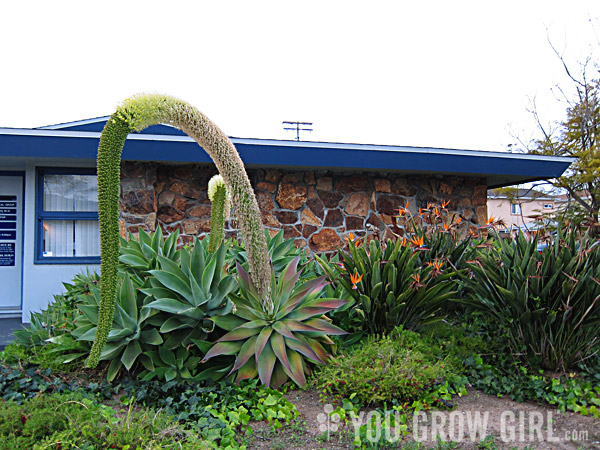
This garden was the first I saw when we arrived at our hotel. You’ll recognize the large clumps of blooming bird of paradise (Strelitzia). It seems to grow like a weed here and I noticed that it was a public garden planting favourite. But the real show-stopper, the plant that I could almost leave my bike-riding, public transportation utopia for is the giant Dr. Suess-like Fox Tail Agave (Agave attenuata).

My god, that is the most phenomenal agave I have ever seen in my life! Alas, I try my best to keep my little collection of potted agaves healthy, but what I wouldn’t give to grow a massive cluster like this.

There are several benefits to living and gardening in a southern climate, but it’s the promise of a killer agave garden that gets to me most.

Leave a comment