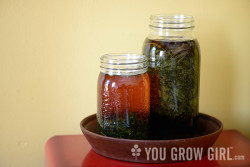
Homegrown Fertilizer Tea
Use old herbs to make a springtime tonic for houseplants, outdoor potted plants, young seedlings, and to help newly planted transplants get established outdoors.

Use old herbs to make a springtime tonic for houseplants, outdoor potted plants, young seedlings, and to help newly planted transplants get established outdoors.
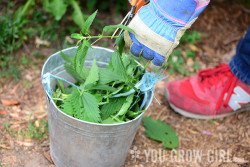
The little patch of stinging nettle (Urtica dioica) that I’ve got at the back of my garden is starting to emerge from its winter dormancy. Years ago, when I was first “bit” by this plant, I never could have imagined that one day I would grow it in my garden, or that I would be …
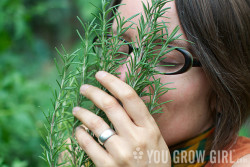
Many years ago, not long after gardening came to me* and stuck, I read a statistic that said something to the effect that just looking at a plant lowers our heart rate. This was so long ago now that I no longer recall the exact phrasing, nor where I read it, or why. Regardless, it …
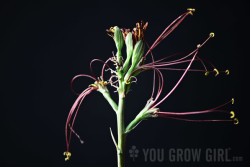
What a surprise when a flower stalk suddenly appeared on the Manfreda undulata ‘Chocolate Chip’ that currently resides in the jungle of potted succulents that is my office window! Manfreda is closely related to the agave (Family Agavaceae), a favourite genus that I have mentioned here and there on this website. Like agaves, manfredas grow …
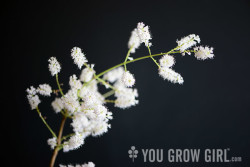
Last spring a friend with a car took me out of town to Richters Herbs, an all herb greenhouse that is about an hour or so outside of Toronto. As a non-highway driver without a car, I am always grateful for any opportunity to go out of town to a far flung greenhouse, garden centre, …
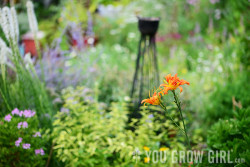
We call them ditch lilies here, a disparaging double entendre that eludes to their place in the proper garden plant hierarchy as well as their preferred wild landscape. It came into my garden uninvited, an opportunist that hitched a ride in some little pot of earth alongside another plant, probably something gifted or bought at …
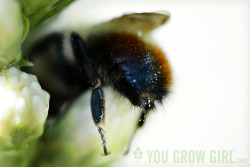
I found this photo today while searching through folders of summer images on my computer and felt compelled to post it. This was a common sight in my garden last summer, especially over the weeks that liatris was in bloom. It’s a pollinator magnet and I’ll never have another garden in this climate without at …
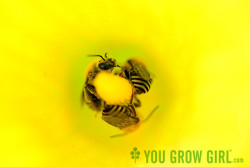
Year Start to End Despite a very long and cold winter that had many of us bemoaning life in the northeast, the first six months weren’t so bad. In February I celebrated 15 years publishing this website. It still shocks me to think that so much time has passed. I organized my massive seed collection …
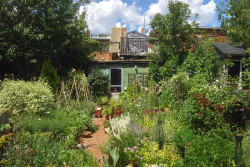
Here it is, the seasons of my garden for the calendar year 2015. If you follow me on Instagram or Facebook, I regularly post overhead shots of the garden taken from an upstairs window. Well, my spouse Davin Risk records the garden from a different vantage point via the kitchen window nearly every day and …
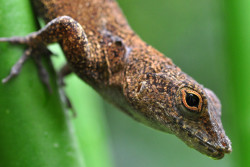
Lizards. What impressed me most about the little cottage we stayed in was the population of lizards that lived on the property. I noticed them immediately. Upon arrival, I ran up the stairs that lead to the highest cottage (the one we were staying in) and was startled by lizards of all sizes and colours …

There is of little interest botanically to write about today, as December 14 was all about walking into town to see about procuring a copy of my grandmother’s birth certificate. After a brief side trip to check out the library, we headed to the government courthouse where I was disappointed to find out that my …
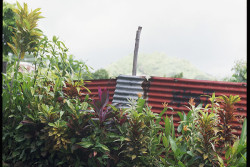
So far, I have approached each of these looking back trip posts without a plan. Sometimes I can recall exactly what occurred and I start writing straight away. Other times I go through the folders of digital and film photos taken that day and build a story around the images. Before looking at images, I …