Canning Tomatoes: 3 Recipes

Photo by Gayla Trail  All Rights Reserved

This article and the accompanying recipes originally appeared in print in the Globe & Mail on September 5, 2009. I thought I’d repost it here today since the season is so ahead this year and my large, indeterminate tomato plants are on the verge of a first round of ripening. CAN NOT WAIT! If you’re in a warmer climate, you’re probably enjoying them already and wondering how to use up the extras that are quickly rotting in a bowl and breeding fruit flies on your kitchen counter.

Perhaps that was not the image I should have left you with. Now I am obsessing about my own bowl of small tomatoes and the fruit fly colony I am potentially raising as I write this.

[At which point I did get up to go inspect my bowl of fruit that was in fact housing one rotting tomato and a few fruit flies.]

Photo by Gayla Trail  All Rights Reserved

The article below includes some brief canning instruction and three recipes: Gayla’s definitive green tomato chutney, Superior heirloom tomatoes, and Old-fashioned tomato ketchup.

If you’re itching to dive in further, I’ve included more detailed instructions in my book Grow Great Grub: Organic Food From Small Spaces, along with a few extra recipes.

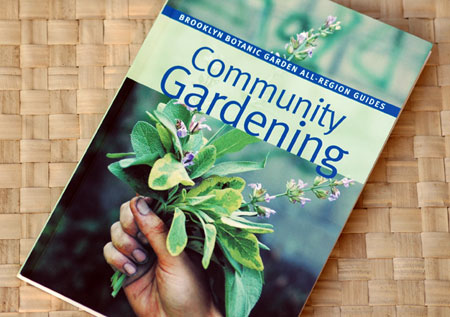
The Ball and Bernardin (in Canada) books are highly regarded as the most popular tomes, but I have to admit that I find them a bit dull and have never made a single recipe from these books. I personally recommend Well-Preserved by Eugenia Bone. Her writing is conversational and entertaining, and is written from the perspective of a New York apartment dweller with real-world ingredients and realistic, small-batch quantities. I do not have a copy nor have I read it, but someone brought a copy of Canning & Preserving with Ashley English to my spring canning class and on a quick flip-through it looked very thorough, inviting and engaging.

I’m practically writing another article here, but since I’m on the subject, there are three contemporary British canning books that I would also highly recommend: Jellies, Jams & Chutneys, Preserves (This is the copy I have but it is listing at $206!!), and Fruits of the Earth The recipes are a bit more unusual than the stuff I have found in American books, using ingredients and combinations I had never thought to try.

Enjoy!

Read more…

Leave a comment

Making More Herbs

Photo by Gayla Trail  All Rights Reserved

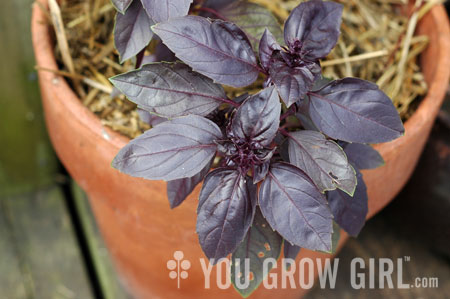
About a month ago, I wrote a guest post for Apartment Therapy/Re-Nest on propagating herbs by cuttings. This is how I quickly double my basil harvest every summer at no extra cost. Basil grows easily from seed too, but stem cuttings are fast and easy — they’ll produce roots in water in about a week or two! By mid-summer my collection of scented geraniums (Pelargoniums) are huge! Why not take a few cuttings and share the wealth with friends?

On the Re-Nest site someone asked a question about taking cuttings from bolting plants. I have not been able to post a comment so I am adding a reply here.

SoRad: We grow basil like an annual in colder climates, but in tropical conditions the plant is a perennial. There are also varieties of basil that are reproduced by cuttings only… they don’t produce seed. Some basil varieties bolt quickly and constantly, while others only do-so when the weather gets really hot.

Bolting when it comes to basil is more about the conditions a particular variety prefers rather than “age.” It is better to take cuttings from plants that aren’t under heat-stress, but I have found that it can be done successfully — your best bet is to move the rooting cuttings to a cooler spot.

Read more…

Leave a comment

Growing Sweet Potatoes in a Bag

Photo by Gayla Trail  All Rights Reserved

My most recent Globe and Mail Kitchen Gardening article is on sweet potatoes and chronicles an experiment I took up by chance, growing sweet potatoes in a shopping bag.

While in Dominica I learned that when there is not enough soil fertility to produce tubers, sweet potato leaves are cooked or steamed like spinach. I haven’t tried it yet, but think this would be a good option when starting the plant too late in the growing season. I have some slips on hand right now that I might plant for this reason.

Read more…

Leave a comment

Growing Beans

Photo by Gayla Trail  All Rights Reserved

My second article of this season’s Globe & Mail column was published last Saturday: BEANS! It’s still not too late to get started. When I wrote and submitted the article we were experiencing a very hot and dry spring: great weather for planting beans. Immediately after the article was published the weather turned cold and wet: not so great weather for planting beans. What? Regardless, the beans I planted are popping up through the soil and look great. No rot or germination problems. Get those beans going!

Oh and if you’re wondering what I narrowed it down to: ‘Royal Burgundy’, ‘Dragon’s Tongue’, ‘Trionfo Violetto’, and two types of ‘Yard Long’ beans (green and ‘Red Noodle’). Basically everything I wrote about in the article. Writing the articles tends to renew my own excitement about plants or specific varieties I haven’t grown in a while.

Photo by Gayla Trail  All Rights Reserved

This is me back in January in St. Lucia standing next to a gigantic tripod of ‘Red Noodle’ beans and holding one up against my arm for length.

———————-

While I’m on the topic of the Globe & Mail: I’ll be doing a live web chat tomorrow, Friday, June 11 at noon EST over here.

Read more…

Leave a comment

Growing Strawberries: The Globe and Mail

Photo by Gayla Trail  All Rights Reserved

Like last year, I will be putting together a series of edible gardening articles (writing and photography) for the Globe & Mail that will be published in both the national portion of the printed paper and online every other Saturday until fall. The following, on growing strawberries is my first article of this season. If you’d like to see what I wrote last year, it looks like articles have been archived on the Globe and Mail website (scroll down the page to the title “How to Grow Veggies”).

While I’m being self-promotional: My next Toronto-based workshop (and likely my last until the fall.), “Growing Tomatoes in Containers” is this coming Saturday and there is still one or two spaces left.

The Summer 2010 issue of Country Gardens Magazine (which I love because my gardens are about as urban as one can get) has an interview with me in their “Over the Garden Gate” feature. Hello, if you have come from this mag!

Edible Toronto also recently featured a really lovely piece on Grow Great Grub that includes a photo of me in/on my roof garden taken by Laura Berman.

The talented and prolific Julie Jackson (of Subversive Cross Stitch and Kitty Wigs) recently interviewed me for her Craft magazine column Subversive Finds.

Okay, enough of that. Here’s the article.

Next week I will post a strawberry/herb container planting that didn’t make it into the newspaper or online versions.

————————————-

First published in Saturday’s Globe and Mail (Friday, May. 21, 2010.)

The Real Dirt: Bigger isn’t better when it comes to strawberries

A really good or even decent strawberry needs to be slow-ripened in the sun: They are literally tiny buttons of distilled sunshine. This is why the store-bought imposters, picked while still under-ripe to maximize time on the shelf, will never pass.

Fortunately, strawberries are probably the easiest fruit crop to grow. Anyone with a small patch of sun, whether it touches down on a backyard, a front stoop or a window ledge, can grow a little taste of summer. Individual strawberry plants are generally pretty small, with shallow root systems. As a result, they’re adaptable to growing in tight spaces and even smaller containers where few other fruits will thrive. I once grew a strawberry plant in a repurposed soup can. Sure, it produced only a couple of berries, but by God they were delicious little morsels — and better to have a taste of the good stuff than none at all.

Growing up in the fruit belt of Ontario, I was under the mistaken impression that all strawberries were the same: the bigger the better. But it turns out that the tiny, wild types are superior when it comes to taste. It’s as if all of the flavour of a big berry is super-concentrated and then jammed into a smaller package. Wild strawberries (Fragaria vesca) and their cultivated cousins, known as alpines or frais des bois, last forever in the garden too, while the gigantic hybrids (Fragaria x ananassa) tend to fizzle out and stop producing after a few years. Of the hybrids, try a day-neutral variety that will set fruit throughout the growing season (‘Seascape’ is one) or ‘Mara des Bois’ for a flavour and fragrance bred to compete with wild types. For something decorative, choose varieties that have colourful flowers — such as ‘Lipstick’ and ‘Pink Panda’ — rather than the typical white.

To get ripe berries this season, buy a hanging basket of mature plants that will be ready for picking through the summer. To grow a long-term crop, begin in the spring with mature bare rootstock or leafy plants — don’t bother with seed unless you want to grow a big crop of alpines. Dig the plants in so that the crown (where the leaves meet the roots) is just above the soil line. If it’s too deep, the crown will rot; if it’s too high, it will dry out.

Strawberries require a bright and sunny spot with excellent drainage — they are one of a few edibles that will thrive in moderately sandy soil. In a less than sunny spot, try the ‘Mignonette’ variety, an alpine that turns out loads of charming, pointy little fruit set against toothy, ornamental leaves.

More important than sun, strawberries grow best when the soil is kept moist, but not soggy. Lay a thick blanket of straw mulch around the plants to moderate the soil moisture and keep weeds out. Add a little bit of compost at planting time but don’t overdo it with fertilizer or you’ll end up with boring, bland berries.

Except for alpines, all strawberry plants reproduce aggressively by setting off tiny plantlets known as runners. Come fall, you can encourage runners to take root and quickly double your initial investment with a bigger crop next year. Keep your plants alive through the winter by tucking them in with a new blanket of straw. Shallow window-box plants probably won’t survive, but you can transfer them to the garden or into much deeper planter boxes or plastic pots and repot next spring.

Leave a comment