Here I Am. This is Me.

I loved school as a kid. It got me away from the stresses of the house and into a place where I was free to indulge in my love for reading and learning. While the social dynamics of the playground are rarely easy for any of us to navigate, school opened my mind to possibilities, to a world I couldn’t have imagined from within the fear-filled confinement of a dysfunctional family. What I loved most, more than free time in the library or the hours we spent huddled on the floor as the teacher read aloud, was Show and Tell. While, I know that giving presentations was a part of all grades, I remember Show and Tell in grade one best.

Mine was an open-concept school, wherein the grade one class was an amalgamation of two classrooms and two teachers. We sat at tables of six students rather than individual desks, and you had to wait patiently for the weekly Show and Tell presentations to come around to your table. The wait was gruelling and I would spend the weeks and days before my turn came up assessing the contents of my room, searching for the perfect thing — the thing I loved most — full of the hopeful anticipation of the moment when I would have the opportunity to share it with the class. There was so much that I couldn’t share and say as a kid, so many silences that needed to be observed carefully; pain and joyfulness that I could not reveal. Show and Tell was sometimes fraught with fear and anxiety, but overall it was a safe context in which I could reveal myself.

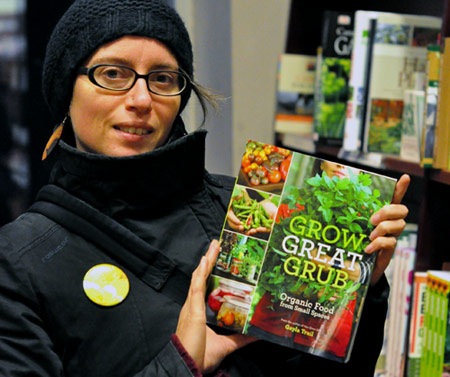
Jump ahead, oh, a few decades or so, and here I am doing a job that in many ways feels a lot like Show and Tell. The only difference being that instead of holding up an item of someone else’s making and proclaiming, “Here I am. This is me. This is what I love.” I have encapsulated it (me) within a creation that came from my own heart, mind, eyes, and hands. All of the hopeful joy, excitement, anxiety and fear is still a part of it.

In order to keep making things I need them to sell. Unfortunately, I am not the world’s greatest self-promoter. I may have loved presenting things in grade school, but as an adult, I find no joy or comfort in showing off my own work. Talking about it makes me sweat. It makes me feel slimy and narcissistic. I pretty much hate it.

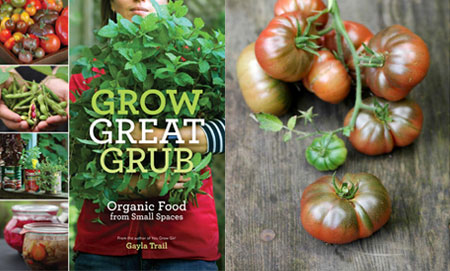
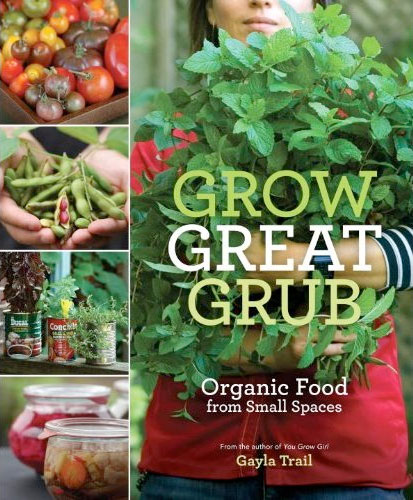
So here I am, less than two weeks left until my third book, “Easy Growing: Organic Herbs and Edible Flowers from Small Spaces” goes out into the world and I am feeling the usual mix of emotions: excitement meets nausea. The trick I’ve found, and the one I am struggling to employ again is to focus on the making part of the process. I think back to the good times I had while I was imagining what this book would be. I recall in my mind the times I spent in the garden planting, taking pictures, harvesting, and testing recipes. I try to tap into my child brain and ask myself how she would feel and what she would say while standing up in front of the class with this book in hand.

I think she would like it very much. I think she would say, “Here I am. This is me. This is what I love.

I hope you like it, too.

———–

My publisher, Clarkson Potter, has agreed to do a prelaunch giveaway of two copies of the book. I thought that in the spirit of my story it would be fun to make it a Show and Tell of sorts.

To Enter:

Simply post a comment via the box below. Please be sure to use a valid email address as I will be using that to contact the winners.

Please include a comment or link to a photo or post online of a plan or plans that you have this year that include herbs or edible flowers. It can be a picture or post about your garden from the last season, your garden as it is right now, or a garden grown by someone else. Garden season is underway for some and on the horizon for the rest of us. Let’s inspire each other and get excited about the forthcoming growing season!

If you’re feeling uninspired or uncomfortable sharing, you can always just type in, “Count me in” or something similar and that will work as your entry.

I will choose 2 winners at random on Friday, February 3, 2012 at 6pm EST.
Please note that this contest is only open to addresses in Canada and the Continental USA. (Sorry.)

Leave a comment

Easy Growing: Coming Soon

Black and white galley copies of my new book, Easy Growing: Organic Herbs and Edible Flowers from Small Spaces arrived on my doorstep late last week, signalling that we are one step closer to the publication date in early February 2012. If you’re a long-lead publication that would like to write a review or do an interview with me, please get in touch with my Publicist at Clarkson Potter/Random House, Anna Mintz, 212-572-6186.

I am also in the process of scheduling appearances/workshops/presentations for the 2012 growing season. If you’d like to have me come out to your event, shop, etc next year please do get in touch via the contact form with any pertinent information.

The book is currently on sale as a pre-order through several online vendors, but will not be shipped or hit bookstore shelves before February. Since this idea went over so nicely with the last book, I’ve gone ahead and made hi-res promissory notes that you can print out and slip into a card to let friends know that you’ve pre-ordered a copy for them as a holiday or birthday gift.

The full book website is not available yet, but we’re working on it!

Leave a comment

Garden Making Magazine (Plus Giveaway)

One of my paying gigs is writing (and some photography) for a new gardening magazine called Garden Making. This last week, the magazine celebrated a year in publication with four issues in print. That is no small feat for a specialized print magazine, on the topic of gardening (in Canada, no less), in the age of screen versus print reading, and IN THIS ECONOMY. Big congratulations to the Fox family who are working together to grow a quality gardening publication one issue at a time.

My article in the latest issue, called A Perpetual Feast is on growing a perennial food garden and includes a bit of background as to how I stumbled away from the annual vegetable model (aka the Scorched Earth approach) while experimenting in my community garden.

I have written three other articles for the magazine all on the topic of food gardening. The topics I have covered so far include: A profile of 5 of my favorite unusual vegetables, 6 edibles that thrive through the cooler months, and an in-depth piece on growing garlic that includes a few unusual types of garlic that are seldom written about.

The magazine has agreed to give away a one year subscription to one of you. Just tell us in the comments about one interesting edible you are growing or hope to grow next year and I’ll pick someone at random on Friday.

UPDATE: The winner is Kathi from Toronto.

Please keep telling us about the edibles you are growing or hope to grow. Your stories are great!

Leave a comment

Sage

Beautiful Tricolor Sage.

My tenth and last Globe & Mail Kitchen Gardening article for the 2010 growing season is set to be published this coming Saturday. It is on growing and eating cardoons, an Italian delicacy that I experimented with this year.

Until then, here’s a timely piece that was published in the Saturday paper on August 27, 2010. Even though the hardy garden sage begins producing leaves very early in the growing season, I most associate its warm aroma with the fall. Sage and squash is a classic combination. I suggest steeping some in oil to drizzle on top of warm squash soup or mash. Bloody good stuff.

————————

Warm and pungent, common garden sage is a classic culinary herb most associated with the flavours of the fall harvest – and now is a great time to plant it. Get yourself a year-old transplant on discount at an end-of-season sale and you should have a small bounty just in time to add to Thanksgiving stuffing, steep in lightly warmed olive oil or drizzle on top of a hearty squash soup.

The sage family is huge, but only a few are edible and even fewer still are cold-hardy enough to survive winter across most of Canada. Like other Mediterranean herbs, they like a sunny spot in the garden and prefer poor, dry soil that drains freely. Keeping their “feet” or roots from stagnating in moist soil is the secret to keeping them alive year-round, especially in climates considered slightly out of their zone. Another trick is to plant sage in the shelter of a warm wall, where it will have the greatest chance of survival.

Whatever you do, resist the urge to fertilize at planting time – or at any time for that matter. Culinary sages grown in rich soil tend to lose their spicy edge and can turn out rather bland leaves that are too “soft” and pest-prone. Otherwise they’re a pretty foolproof plant. My biggest hurdle each year is a mid-summer bout of a fungal disease called powdery mildew that is caused by high humidity around the leaves. Well-draining soil will go a long way to prevention, but, since you can’t control the weather, try plucking out excess foliage (and eating it, too) to increase airflow.

The most common variety (Salvia officinalis) is also the toughest of the bunch. Don’t prune it now. Wait until early spring and cut into the green growth only – never go into the woody stems. At its worst, hard pruning can kill the plant or at least prevent it from flowering – and the edible, slightly sweet flowers are one of the best reasons for growing your own. Toss a few into a spring salad or chop them up and infuse into softened butter or vinegar.

Beyond the common type, the remaining culinary sages won’t live past a year in most Canadian gardens, but are still well worth growing for their unique foliage and varied flavours. ‘Berggarten‘ tastes a lot like common sage but is much prettier, with very broad, oval leaves and a low, densely compact growth habit. ‘Purpurascens,’ ‘Tricolor‘ and ‘Golden’ a.k.a. ‘Aurea’ are the best choice for containers, as they stay compact and adapt well to cramped quarters. In fact, you can even bring one indoors to overwinter on a sunny windowsill for fresh sage year-round.

For something even more unusual, try growing a tropical sage such as ‘Pineapple’ (Salvia elegans) or ‘Fruit’ sage (Salvia dorsiana). Both grow edible, sticky leaves and bold flowers with a fruity, sweet taste that is most often used to make tea or garnish desserts. I’m currently hot on Autumn sage (Salvia greggii), a southwestern salvia that produces delectable, nectar-filled flowers in a wide range of interesting colours from subtle peach to hot pink and the deepest, darkest burgundy. I find the highly aromatic leaves are too bitter to eat, but so delicious to run your hands over on a grey winter day when you can use a boost in spirit and a reminder of the spring to come.

Leave a comment

It’s About Thyme

I’m way behind on posting past articles from my Globe & Mail column. This profile of thyme was published on July 19, 2010. I thought I’d go with it first since the article set to be published this coming Saturday is a profile of another favourite garden herb: sage.

—————–

Most of the country, including Toronto, has just now survived a heat wave. It was hot, especially out on the roof garden, my little piece of heaven turned to hell by the scorching sun. It was only inhabitable after dark – we spent the week offering emergency critical plant care by flashlight.

In that heat, some containers required watering three times per day! The lettuces, violas (miraculously still alive), and even typically resilient basil and tomatoes growing in larger pots put up a fuss of dramatic fainting, fretting, and impromptu wilting when the heat was at its worst. My once lush and healthy lemon tree mysteriously dropped all of its leaves on one side. But trusty, tough-as-nails thyme never once complained. I simply shifted a few pots into slightly less intense sun and it was business as usual.

For a tiny plant, thyme has got it all – looks, an easy going nature, a deliciously warm aroma, a pungent, complicated flavour, and it makes an impact in a cramped space. It is one of only a few edibles that can survive a full growing season in the 4” transplant pot it came home in. In fact, thyme will grow just about anywhere and in anything. In the wild, thyme grows among rocks in very free-draining and poor, often sandy soil.

It’s a very hardy plant that can survive a cold zone 4 winter, as long as the soil is not dense or soggy. I inexplicably lost several plants in my community garden’s premium soil, until I finally hit on the key – thyme simply will not tolerant life in wet soil through a wet winter. This plant doesn’t do nutrient rich, gorgeous soil well. To keep it alive, add lots of rock, sand or grit to increase your soil drainage in-ground. I recently visited a garden filled with happy thyme, all grown directly on top of driveway gravel!

Soil drainage is generally easier to achieve in pots. Most thyme varieties will adapt to pots too small or difficult for anything but cacti and succulents as long as there are lots of holes for water to flow straight out. Potted plants won’t survive outside year-round throughout most parts of Canada but a little pot in a sunny window can provide some fresh greenery here and there until it is warm enough to go back out in the early spring. Otherwise it is new transplants each year. Don’t bother growing from seed unless you intend to grow a lot of any one variety.

Speaking of variety, thyme is an incredibly versatile herb and far beyond the woody and pungent common type (Thymus vulgaris) available at most grocery stores. I’ve got about 12 varieties in a surprising breadth of flavours, smells, colours, and growth forms growing on my roof right now, yet my collection if far from complete.

Next to the common English thyme, deliciously fragrant lemon and lime citrus types (Thymus x citrodorus) are probably most popular and widely available in garden shops and corner markets. There are several varieties that qualify in this category – they come in shades of green, gold, variegated gold ‘Aureus’, and variegated silver ‘Silver Lemon Queen’. ‘Doone Valley’ is very low growing, with round, green leaves spattered with pale gold and cream. ‘Orange Balsam’ and ‘Orange Spice’ have a sweet and spicy orange peel smell and pointy leaves that strike me as a bit conifer-like.

Next up are the creepers: Mother-of-thyme (Thymus serphyllum), Thymus ‘Coccineus’, and woolly thyme (Thymus psuedolanuginosus). They aren’t particularly edible, but they make an aromatic, drought tolerant lawn alternative that you can actually walk on. There are also very diminutive types that form a soft, plush carpet over and between cracks in cement and stone walls. If you’re going to go this route, be sure to grow several varieties together so that you have different textures, smells, and flower colours in bloom together and at varying intervals.

The most compelling are the mimics; thyme plants that smell convincingly like other herbs. I’m currently growing ‘Lavender’, ‘Nutmeg’, ‘Oregano’, ‘Caraway’ (Thymus herba-barona), and ‘Rose Petal’. While I am still finding culinary uses for some of the more unusual flavours, I’ve found that all types seem to pair well with onions. Roast a couple of summer onions in the oven along with thyme leaves and stems, and a splash of olive oil. Don’t forget to dry a few sprigs at the season’s end so you can enjoy this warming dish through the winter.

Leave a comment