Edible “Weeds”: Lamb’s Quarters and Orach

lambs quarters and orach
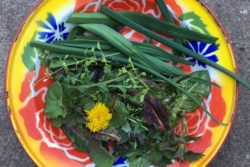
Left to Right: Lamb’s Quarter (Chenopodium album) and Garden Orach (Atriplex hortensis).

It was overcast and warm this morning, so I took advantage of the mild conditions to harvest and wash greens for salad. A combination of rain and warmth has the greens going gangbusters over the last few days and I am starting to really reap the benefits of several, generous sowings that I did early in the season.

In among the greens that I harvested were two nutritious greens that I did not need to sow. The first (shown on the left in the above photo), lamb’s quarter aka goosefoot (Chenopodium album) is a common North American and European “weed.” It comes up abundantly in my garden regardless of how diligently I weed. Chances are good that you’ve got it growing in your garden, too.

Read more…

Leave a comment

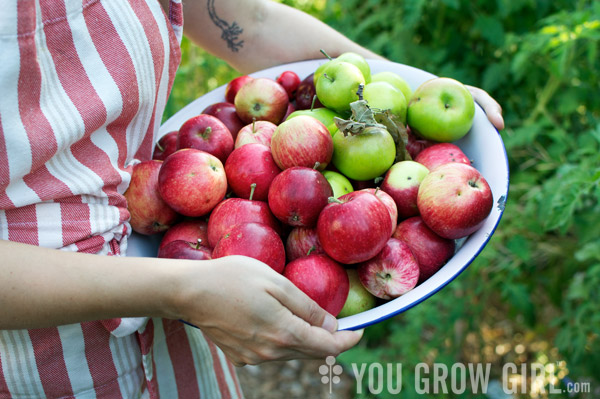
Almost Free Foraged Hard Apple Cider

One of the first homemade brews I made last year when the bug for fermenting things caught me was a jug of hard apple cider. I played it safe that first time out of fear and trepidation, which in hindsight could have entirely ruined those good bottles of expensive, unpasteurized, organic cider had it not worked out in the end. The process I followed had me boil the cider to kill off any naturally occurring yeasts and then add grains of commercial yeast. The reasoning behind this process is that the commercial yeasts are a known quantity, while allowing the cider to ferment from the yeasts that naturally occur in it and the air in your home is an unknown that can result in a nasty, undrinkable batch of hooch.

Since then every natural yeast brew I have made in this house has turned out wonderfully so I’m moving away from a dependancy on the commercial stuff and prefer to give over to the magic and surprise of the unknown.

Despite those early fumblings, my first batch of hard cider was a hit with friends and I was eager to make more this fall. Unfortunately, local apple crops suffered this year due to an abnormally warm early spring followed by a sudden and severe cold snap. Cider hasn’t hit any of the markets that I frequent yet. Fortuitously, I discovered a couple of large crabapple trees on derelict land this year. The fruit had recently fallen off of the trees but were still in very good shape with only light bruising and few that were too far gone or rotten to bother. They smelled sweet and were only slightly sour — not great for eating, but certainly worth foraging and brewing into some kind of apple wine/cider-like drink. Worst case scenario I waste time, but the actual cost to try is pretty much negligible.

I don’t have a cider press and did not have the ambition to construct one. My goal with this brew was to go as simple and straight forward as possible. No fuss and minimal work. I consulted my country wine making books and found Andy Hamilton’s Sort of Cider in his fantastic homebrew manual, Booze for Free [Note that this is a yet-to-be-released paperback and Kindle edition. I was able to get the original on Kindle but could not find it on Amazon.]. You can see the ‘Sort of Cider’ recipe online here. I did not follow Andy’s instruction exactly. I did not want to use packaged yeast and I did not want to add flavouring (although the ginger does sound good).

Here’s how I did it:

Read more…

Leave a comment

The Gleaners and I


Foraging dandelion blossoms.

This was originally written as a guest post on Free Range Chicken.

“My mother’d say, “Pick everything up so nothing gets wasted.” – from The Gleaners an I

I recently stumbled upon “The Gleaners and I,” a documentary that I first saw several years ago about the ancient tradition of gleaning, or rummaging for unwanted stuff. In the film, Agnes Varda follows many different types of people as they glean a variety of different things: primarily food that has been tossed away by farmers, city dwellers, and so forth, as well as objects, furniture, and whatnot that is used by people for their subsistence or turned into art. Through the film, the filmmaker herself is revealed as a gleaner of sorts: a gleaner of gleaners. And in gleaning these stories and experiences, she asks a lot of interesting questions about how we assign value to food and objects within a culture of commodification and over-commodification. Is commercial value meaningful, or arbitrary and shallow? What is beautiful? What is waste?

The story that is most poignant to me as an eater and a gardener is the first one that takes us to a potato field where tons of perfectly good, edible potatoes have been cast aside to rot as waste because they are too big, too small, or misshapen. The value placed on the potatoes that make it to market is purely aesthetic–they are unblemished and therefore deemed beautiful and commercially viable. It has nothing to do with nutritional value or taste.


Foraging early spring wild edibles in the pathways at my community garden. That’s my plot behind me.

As a gardener, I have hands on experience with food. I have a hand in its development and I see its progress from seed to harvest. I know what food looks like, feels like, and tastes like. Through this process, I am given an insight into what good food is and how to define it. Through the experience of being a producer, I become an educated consumer, and at times, the lessons of the garden have helped me to redefine “value” outside of the parameters of commodity in general. Beauty is messy, mangled, and imperfect. Some of the best things in life are free. My yearly income has absolutely no bearing on my value as a person. The fact that I can grow my own food is a skill that I can use for the rest of my life. Its value is limitless.

Watching this film again was a good reminder of these lessons that gardening has taught me. It was a reassertion of where I’ve been, who I am, and the life I have created for myself. It was a gift.

What life lessons has being a gardener taught you?

Leave a comment

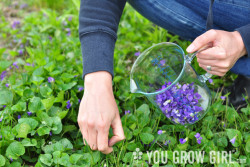
Violets Galore

The new yard came with violets… lots and lots of violets. They’re blooming now and even though the yard continues to look like the excavation site of a dead body on a television police procedural…

I’m in heaven.

I have longed to have the space to grow enough violets to make cheerful springtime jellies. A few years ago I set about making this dream real by installing white and purple violet plants into a shady corner of my community garden plot. I began growing them in a large trough on the roof, too. Then we moved here and I inherited a yard of them.

Between all of these locations I should have more than enough to candy, make my jellies, and eat fresh in salads. I like the young leaves, too. Of course, we are currently in the process of digging up the yard, but I’ve been careful to dig around the violets and set each one (barring a few casualties) for replanting. I plan to carefully extract the plants from the grass that is growing around them, and replant them into their own swath along with the three other colour varieties I have collected over the last few years. You think I’m crazy for taking so much care with a plant that spreads like a weed, but I can’t wait for you to see it.

Man, do I ever love having a yard.

Leave a comment

Thrifting the Garden

I grew up in a household that frequented thrift shops out of necessity, and like many kids in that economic bracket I was deeply embarrassed by our sorely out-of-date second hand outfits and household goods. Somehow between ages 14 and 16 and I did a mental 180° and found myself embracing thrifting as a lifestyle and a thrill rather than a cross to bear. Buying my clothes used meant that I didn’t show up at school wearing the same shirt or dress as every one else… being different was suddenly a good thing. When I moved away from home at 17, I began buying my home goods there as well, and for a time, thrifts stores became my answer to one-stop shopping and cheap afternoon entertainment rolled into one. Where else can you see the bizarre, discarded detritus of decade’s past?

Thrift stores are magic.

I still love thrifting, but my frequency reduced significantly over the last 10 years as our urban shops became more and more picked over and filled up with completely useless garbage. We recently moved into a new neighbourhood and I don’t know what it is about this area, but the stores are pretty good. As a result I’ve starting looking in the shops again, pretty much weekly.

Scouring the stores for items that I can transform or use in the garden this spring has been one way that I’ve made it through the grim days of winter when I was practically scratching at the walls with the urge to get outside and get started making my scrappy yard into something.

I’ve picked up an assortment of obvious garden items including an assortment of high quality terracotta pots, a well-made orange metal watering can for just a dollar, a number of plates to be used as saucers, glassware for terrariums, a cloche, a vintage windowsill herb gardening set (complete with very old seeds), and several very good canning supplies that aren’t really for gardening but it’s all one and the same to me.

The two items shown above are my most recent acquisitions. I garbage picked the wooden fruit crate from my therapist’s neighbour’s garbage. I’m probably crossing some kind of therapist-client personal boundary there, and if I am, I don’t want to know about it as the box is not the first thing I’ve dragged home from their curb side discards! Recently, there have been other items that I wanted to take, but didn’t because I “didn’t want to be too weirdly inappropriate”.

I’m planning to use the crate as a box for holding transplants. Although, it would make an excellent box for starting outdoor seedlings, I’ve decided against that use as I don’t want to damage its integrity. Those plastic trays that come free from the garden shops are flimsy and often don’t hold a tray full of transplants well.

The larger item on the left that looks like a doll crib is actually a small shelving unit. I bought it the other day for $5.99. The plan is to line the insides with landscaping fabric or screening and use it as a planter. It looks crappy now, but just you wait and see.

What crazy items are you upcycling for use in the garden this spring?

Leave a comment