‘Gezahnte’ Tomato

Photo by Gayla Trail  All Rights Reserved

Behold, the first of the non-cherry, indeterminate tomatoes that has reached maturity for 2009. And it’s a beauty. Incidentally, I’ve managed to grow several ruffled tomato varieties this year purely by happenstance. Well, that and the fact that I have a very obvious preference for that shape.

I’m yet to try it out, but I believe this tomato is a stuffer, which means it is fairly hollow on the inside and great for stuffing with veggies and rice and baking in the oven. I’m waiting for another to ripen so it can be put to the test.

Photo by Gayla Trail  All Rights Reserved

And this is where I admit that my rooftop, container-grown tomatoes are doing pretty well this year despite the troubles that most in-ground gardens are facing with so much rain and cool weather. Don’t hate! These are the sort of conditions under which rooftop and container gardens have the upper hand (finally). I can regulate excess water, I rarely have to pull out the watering can to keep things moist enough, and the garden is warmer than gardens on the ground because it’s up high and exposed. In a typical year I am fighting the excess heat, sun, and drought but this year is almost too easy.

Leave a comment

‘Mini Purplette’ Onions

Photo by Gayla Trail  All Rights Reserved

Every year I go a little nuts growing large crops of onions such as ‘Egyptian Walking’ over at my community garden plot.

Onions grow easily in the ground, but they tend to take up a lot of space in containers. In the past I have grown smaller, bunching onions in pots as a way to have the odd onion on hand without wasting the kind of space that could be dedicated to coveted crops like tomatoes and basil. I like onions well enough, but nothing, not even a batch of slowly caramelized onions is coming between my mouth and a caprese salad.

Photo by Gayla Trail  All Rights Reserved

Speaking of which, I made my first caprese salad of the season last night.

But I’m always on the lookout for something different to try, just in case. In the early spring I nabbed a pack ‘Mini Purplette’ onion seeds with the promise that I would have bulbous, miniature yet mature red onions come late summer. [I got mine from Urban Harvest however, Seeds of Change has them in the U.S.]

Photo by Gayla Trail  All Rights Reserved

And sure enough, this afternoon I reached my hand into the soil of a medium-sized pot and discovered several round, golf ball sized red onions.

Photo by Gayla Trail  All Rights Reserved

I’m very pleased with them and plan to grow more next year. I grew mine in fairly deep containers (about 10″) but am absolutely certain they would size up well in a window box. In fact, I would like to see that — several little onion tops neatly lined up in a row.

Or not. Because really, who am I kidding? My gardens are anything but neat.

Leave a comment

Mid and Late-Season Planting

My latest Globe and Mail Microfarming article came out on Saturday. I’ve included the text below.

My editor sent a photographer out this time so there are some pictures in the printed version not taken by me, and one of me planting arugula online. I didn’t lay chickenwire over the flat as protection after planting, and that night the raccoons dug it up. They’ve been busy diggers this summer! What are they looking for?

————–

The time is ripe for mid-season planting

A gardener friend recently gave me a few pinches of wild Italian arugula seed, Rucola selvatica, the most fantastic arugula I have ever seen or tasted. The leaves are peppery and pungent yet delicate, unlike the hairy self-seeder I inherited at my community garden plot from its former resident. I can’t wait to grow those seeds into salads; fortunately, I don’t have to wait until next year to get started.

Contrary to popular belief, spring is not the only season for planting. In fact, arugula is one of several crops that actually prefer conditions at the end of the growing season, when the climate shifts to progressively cooler temperatures.

By contrast, trying to grow arugula and other tender, leafy greens as the summer heat rises is an exercise in futility. The leaves grow bitter and tough (if they grow much at all) and the plants rush to produce seeds like their life depends on it.

And that’s because it does. Just like us, plants get rather antsy about procreating before their time comes. Living with the stress of heat and drought signals cool-loving plants to get on with the business of reproduction sooner rather than later. Root veggies suffer a similar fate. They go straight to the flower-making stage, completely skipping the part you want most, the bulbous root.

The good news is that the end of summer isn’t the end of the gardening season but the beginning of another chance to reap further rewards from your garden before the year is out.

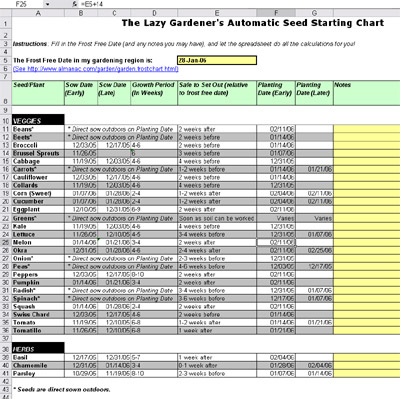
When to sow a late-season crop depends on how long that plant takes to reach maturity. To begin, check the number of “Days to Harvest” listed on the back of the seed packet. For example, arugula takes about 40 days. Tack on a week or two to the total time to account for the slower growth rate of plants as the days and nights get progressively cooler. Next, calculate the sow date by subtracting the total number of days from the “First Frost Date” for your region (www.almanac.com provides listings).

Fast-growing lettuce, spinach, chard, radicchio, endive, mâche and mustard greens can be sown into September or later if you’re on the West Coast. Broccoli, kale, cauliflower, cabbage, turnips, kohlrabi, Brussels sprouts, collards, peas, beets, carrots, parsnips and radishes love the last half of the growing season. When to sow varies wildly among veggies, so calculate individually.

Sow annual herbs including basil, cilantro, pansy and viola seeds right now. Better yet, speed the process up and double your bounty by taking cuttings from basil, mint, oregano, rosemary and other herbs that sprout roots easily in a glass of water.

Early fall is also one of the best times to make a permanent home in the edible garden for hardy perennial herbs, fruit bushes and trees. The cooler season is much more forgiving on new transplants and gives the roots a chance to get established before the winter forces the plant into dormancy. It just so happens that most garden stores are eager to get rid of their stock in the fall. Take advantage of end-of-the-season sales to get big discounts on oregano, marjoram, thyme, sage, sorrel, mint, blueberries, strawberries, currant bushes, grapes and apple, plum, peach and pear trees. While the bounty will be meager to nothing this year, you’ll get a bumper crop of fresh herbs in the earliest spring straight through to the following winter and beyond.

- Originally printed in The Globe & Mail (July 25, 2009)

Leave a comment

Currant Worm on My Gooseberries

Photo by Gayla Trail  All Rights Reserved

These gooseberries aren’t from my garden, although judging by the chewed up state of its leaves I’d hazard a guess that they have suffered a similar plight.

A week or two back, what was supposed to be a quick trip to the community garden turned into a caterpillar squishing marathon. The gooseberry bush and the unknown bush that I think might be a black currant were teaming with teeny, tiny, very hungry currant worms, the larvae of a sawfly that specifically target currant bushes.

The little worms are pretty near impossible to detect since they are the same colour as the foliage they feast on. We found that the easiest way to find them was to follow damaged leaves — the larvae sat perfectly along the margins, hugging the curve of the leaf where they were eating.

How did we get rid of them you ask? Well, this is the first time any of my currant plants have been infested by this pest so we were caught unawares at the community garden without the usual tools: bucket, water, and soap. My usual response to this sort of situation would be to pick the worms off by hand and drop them into a bucket of soapy water. Many sites suggest spraying in these sorts of situations but I find that sprays don’t help, even the organic and supposedly safe ones. When you spray, you always run the risk of killing beneficial insects. The other problem with sprays is that they really have to get on the larvae directly in order to kill them. It just makes more sense to pluck them off by hand. It’s the same amount of work without the risk of damaging the plant or the ecological balance of your garden.

Unfortunately, we were stuck at the community garden without any supplies and had to make due with our fingers alone, squishing the little worms one at a time. I initially tried squishing them under my shoe but this proved to be time consuming since I had to crouch down low to get to the worms where they were hiding out in the shady and cool lower regions of the plant. I probably squished about hundred or possibly hundreds even (I wasn’t counting) this way. DELIGHTFUL!

Even weirder, when we were done, a bunch of carnivorous insects flew over and ate the wormy residue off the leaves!

Then I went to the liquor store to pick up a bottle of wine carrying my compost pail and covered in dirt, larvae residue lingering underneath my fingernails.

The good news is that we seemed to catch them before any real damage was done. The plants have sustained only minor defoliation and there are loads of berries ripening on the bush. On a positive note, the presence of the currant worm on the possible black currant bush proves that it is definitely some kind of currant.

It turns out that insect infestations can serve a useful purpose!

Leave a comment

A Word to the Water-wise: Irrigate Well

Photo by Gayla Trail  All Rights Reserved

The following article was printed over the weekend as a part of my food gardening series in The Globe & Mail. Summer has been a late arrival around these parts — heavy rains and thunderstorms have been in the forecast regularly since spring. It’s been great in some ways since many of my plants are lush, and the cool season crops are continuing to produce well past their season.

On the other hand, the basil is a lot smaller than usual and even the indeterminate (vining) tomatoes appear to be slightly shorter than I remember them around this time in other years. My biggest worry is the ‘West Indian Sour Gherkin’. It is alarmingly tiny and appears to be laying in wait for some real heat to make it grow.

Despite the fact that today’s forecast is calling for rain, we are beginning to experience a shift towards higher temperatures with a reduction in wind. And as you’ll read, containers dry out quickly regardless of how much rain is in the forecast. A couple of days of intense sun can put the roof garden on high alert for drought conditions.

And as for the pepper plant that I mention in the second paragraph? I found it in a similarly withered state yesterday afternoon (it was very hot on the roof) and have since repotted it into a much larger container.

I do try and take my own advice, sometimes.

———————————–

Nature has been minding the gardens for me this spring. Cool, wet conditions have significantly reduced my usual watering routine, even on the roof where a trifecta of sun, heat, and wind conspire to create a sometimes-punishing state of affairs.

It’s been easy, too easy really — I’d nearly forgotten what it is supposed to be like at this time of year until I plodded outside one afternoon and discovered my most prized variegated hot pepper plant completely collapsed and withered in its pot.

With some fast action on my part and the plant was standing upright again within the hour. Crisis averted. But that’s not to say that it wasn’t affected.

On the whole, food gardens tend to be more vulnerable to drought than their ornamental cousins. If the soil is too dry, too often, plants stress out and become susceptible to insects and disease.

Fruit producers including tomatoes, cucumbers and squash require more water, especially when they start to set fruit. They’ll grow dry, hard, undersized, or not at all without adequate moisture to sustain the watery fruit. Herbs and leafy greens rush to produce seed too quickly, and grow tough and bitter tasting.

Newly planted seedlings and seeds are even more demanding than mature plants. This is one reason why most vegetable planting comes to a halt during the hottest part of the summer. If you do need to plant during a drought, dig a hole and fill it up with water. Wait for the water to sink in and fill the hole again before planting as usual. Saturating the soil beforehand will keep the soil moist longer and support the seedling as it gets established.

Photo by Gayla Trail  All Rights Reserved

‘Red Rubin’ basil planted in a big pot with a thick layer of mulch on top.

Container gardens are notoriously water hungry, sometimes requiring a good drink as much as twice a day during a heat wave. Gardening in plastic pots instead of terracotta and using big pots instead of small will prevent the kind of catastrophe my pepper endured. Add a thick layer of mulch using straw, grass, or shredded paper to the top of pots to create a cooling, protective barrier against the drying effects of the sun and wind.

In-ground gardens don’t dry out as quickly as containers and will reap the same benefits from a mulch blanket. You can further reduce your need to water by adding lots of compost to the garden since loamy, crumbly, soil retains water well.

Photo by Gayla Trail  All Rights Reserved

This determinate (bush) tomato is planted in a big pot with a drip irrigation system and mulch applied to the surface.

How you water can actually impact how often you need to do it. Drip and slow-flow irrigation systems such as soaker hoses distribute water slowly, allowing the soil and plants to soak everything in right at the roots where moisture is needed most. Lee Valley sells affordable watering spikes that slowly release water deep in the soil from an attached water bottle reservoir. These are handy for weekends away! You can make your own by drilling tiny holes into the cap and sides of a used water bottle. Cut off the top (like a funnel) and bury it cap-side down right next to the roots of your water-hungry tomatoes.

Photo by Gayla Trail  All Rights Reserved

This device also serves as a great reminder to direct the stream of water at the soil and not up into the air or on the leaves of your plants. Watering this way creates excess humidity around dense foliage — the perfect breeding ground for fungus and blight. It also means that while the foliage is damp, the soil may be too dry.

When you do water, always give the soil and roots a good, deep drink. Your plant (including the roots) will grow healthier and more productive for it and will inevitably be more disease, pest, and drought resistant as a result.

Leave a comment