I Bought a Cleaver. In Fact, I Bought Two!

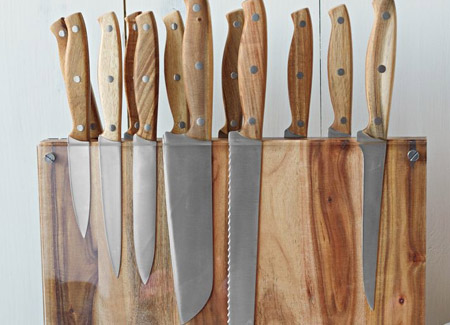
Emboldened by a cleaver buying guide in the book, “Vietnamese Home Cooking,” I set off to Chinatown on Friday afternoon with the intent to buy a cleaver.

As a teenager, I worked a handful of sweaty kitchen jobs where I was taught proper knife skills and somehow, through the experience of chopping a hell of a lot of produce, developed an interest and appreciation for kitchen knives. Twenty plus years later and I find that I genuinely enjoy chopping vegetables and herbs, and as long as I am not slogging my way through a pile of teary onions, I can chop and chop all day long. It’s a meditation in motion.

Read more…

Leave a comment

Making Botanical Cellphone Macros

I recently purchased the wide angle/macro lens to use with my iPhone. I bought it specifically for the macro lens as I find that the built-in camera lens is wide enough. There are other cellphone lenses available; however, I bought this one because it was affordable at $20 for the pair and looked to be of good quality.


Delosperma


Japanese Maple and Persicaria virginiana flower

Here’s how it works:

Read more…

Leave a comment

Historical Re-Creation Programs for Flu Season

I’ve been sick with a virus this last week, hence the lack of posting. As it is hard to do much when you are laid up in bed with the plague, I spent much of my quarantine watching historical re-creation reality shows on YouTube. It began with a re-watch of my favourite show in this genre, Tales From the Green Valley and spiralled into a marathon viewing of every one that I could find online: The 1900 House, The 1940s House, and Coal House at War. I even made my way through the less educational and more socially dramatic American programs Frontier House and Texas Ranch House.

Unfortunately, these shows (other than Tales of the Green Valley) are disappointing in their lack of information, re-creation, or experimentation with historical garden practices. I would have loved to have seen the people of the “Texas Ranch House” using the garden that was provided for them and exploring the wild edible possibilities in the landscape around them. There are a few shows that do delve into gardening and kitchen gardening more specifically. The Victorian Kitchen Garden is one that I have enjoyed in the past. Also in this series are The Victorian Kitchen, The Wartime Kitchen Garden and The Victorian Flower Garden that I am yet to watch in full.

If you’re interested in farming shows that are also educational and along the lines of “Tales of the Green Valley” (including cast members) I’d also recommend The Wartime Farm, The Victorian Farm, and The Edwardian Farm.

Plenty to entertain and educate yourself as you lay on the couch choking up a lung or blowing your brains out through your nostrils this fall and winter season.

Leave a comment

Book Roundup: Wherein I am Inspired to Transform a Kombucha Mother Into Candy

How is it that my last book roundup was published all the way back in April? Just today I was remarking to Davin that this gardening season feels like it is going by in a blink of an eye, and this proves it. One minute I am waiting impatiently for the winter to recede, and the next it is mid-July and I am eating the year’s first ripe tomatoes off of the plants.

They say (whoever they is) that time moves faster as you get older and/or also when you are having fun. My birthday is in two weeks. One more year before I am officially confirmed as OLD. Fortunately, I am having fun.

Agaves: Living Sculptures for Landscapes and Containers by Greg Starr

This first book showed up at my door as a review copy from the publisher. I may be repeating myself here, but I rarely include review copies in my book roundups (they are typically personal purchases) because the publishers tend to get it wrong and send me the strangest titles from their catalogues. Not this time. I gasped aloud when I opened up the envelope and this book popped out. I was headed out to an appointment at the time and brought it along in my bag because I simply could not wait until later to dive into it. If you’re an agave lover (as I am) or just have an interest in learning more about them, I think you’ll love this book. It would be especially useful to those of you in warmer climates who can actually grow some of these beauties outside year-round. I should note here that the topic of sort-of hardy agaves is covered in the first chapter called “Growing Agaves.” This section also includes a list of the hardiest species, of which there are two that can withstand my zone given the right conditions: Agave toumeyana and Agave utahensis. Note to self that I must try to get one to test in my Dry Bed! An agave outside year-round, in the ground would make my life. I noted on my trip to the Denver Botanic Gardens last year that they had several Agave parryi growing year-round in their alpine garden and it has had me thinking since about the possibilities here at home.

The book is full of useful information as well as photos of gorgeous plants that had me drooling and itching to expand my potted collection even though I can barely handle the nearly 20 plants I have as-is. Many shots in the book depict agaves in their element set against gorgeous mountain-scapes and dry scrubland. It has brought the wanderlust back full force. Another field trip to the desert where I can see fully mature agaves in their majesty is imperative! And because the book is first and foremost about using agaves in the garden, there is plenty about that, too.

The Art of Fermentation: An In-Depth Exploration of Essential Concepts and Processes from Around the World by Sandor Ellix Katz

In case you are wondering, the fermentation addiction is still going strong. I continue to juggle several cultures at once — a feat that is at times tedious and tiresome and other times exciting and challenging in the best possible way. And yet I struggle everyday with the eagerness to start another. Alas, there is so much to ferment and not enough time!

To make matters worse, Sandor Ellix Katz, author of “Wild Fermentation: The Flavor, Nutrition, and Craft of Live-Culture Foods” has come out with an impressive, nearly 500 page tome that dives down much more deeply into the world of fermented foods and beverages. This book is a real achievement. There must be hundreds of accounts of fermented products from around the world within the books pages. I haven’t had a lot of time for reading lately and have found myself stealing glances whenever I’ve had a few spare moments. It has served to increase what was already a fervent enthusiasm for the subject. I really can’t say enough good things about this book.

Read more…

Leave a comment

Review and Giveaway: Jora JK125 Tumbling Composter

Building an outdoor compost bin was the very first thing we did when we started working on the new yard last spring. We made our bin on the cheap by upcycling a busted futon frame that was left in the yard by former occupants. So far the bin has worked beautifully, but like all one-bin systems it has its downsides. Keeping the bin aerated is a chore, and the fresh, ready-made compost is a pain to extract from the very bottom of the pile. The bin is also open to vermin, and while nesting rodents can be discouraged simply by keeping a well-maintained pile, I have had at least one unwelcome occupant in my years working with D.I.Y compost piles.

Homemade bins are very viable and often far superior to the cheap black plastic contraptions sold by the City (our kept falling apart and eventually housed a wasp nest), but they are not ideal. For that reason I have longed to try a really good composting system, specifically a tumbler that makes easy work of turning a heavy pile. Still, when eartheasy contacted me about trying out the Jora JK125 Tumbling Composter I was intrigued but extremely hesitant as I wasn’t sure where or how I would cram a second composting unit into an already jam-packed, narrow urban yard.

Over the years, my motto as an obsessive plant hoarder working within exceptionally tight spaces has been, “I’ll make it fit.” And somehow, magically, I always do. The only reason I was able to to manage it here is because the Jora is a self-contained unit. It smells a bit when the balance of greens and browns is off, but even then we’re only subjected to a marginally funky smell when the lid is opened. Beyond that, it’s a really easy composting system to live with. I specifically located my D.I.Y bin way at the back of the garden, away from the house, but I was able to cram the Jora into our outdoor seating area, nearly touching the table I eat at. So far so good. Some people decorate their outdoor living areas with decorative water features, attractive container plantings, or charming woodstoves. I sit down to dinner next to an industrial-green, powder-coated steel, 33 gallon compost bin.

Read more…

Leave a comment