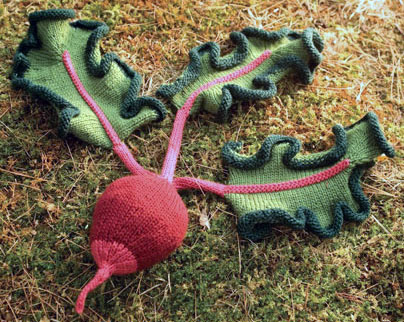
Your Questions Answered: Watermelon Radish

Photo by Gayla Trail  All Rights Reserved

Question: I am in South Mississippi and my Mother wants to know where you get the pink watermelon radish seed and how she can get some? – Betty

Hi Betty,

Watermelon radish are a fairly unknown winter radish that are beginning to gain popularity. The seeds themselves aren’t particularly easy to find; however, the radishes have begun to show up in farmers’ markets. Look for them in the fall.

While chances are slim that you’ll be able to buy seeds at your local garden shop, they are readily available online. Search for them by one of their many names, including: Red Meat radish, Beauty Heart, Chinese Red Meat, Asian Red Meat, Watermelon radish, Rose Heart, Misato radish, Xin Li Mei (心里美), Shinrimei, or Roseheart.

I found my pack of seeds back in the spring at a local seed sale. The company I purchased them from, Greta’s Organic Gardens is Canadian and located in the Ottawa area. I’m pretty sure they ship to the U.S.

A few other online sellers include:

Back in the spring, I mentioned in an interview that I would be growing these radishes for the first time this year. What the interview doesn’t include is that ‘Watermelon’ is a large, winter radish that does not fair well in the spring. The best time to start them is in the late summer/early fall as the days grow cooler. There’s still lots of time to order seeds and get on growing a crop this year!

Oh, and if you’re wondering how to eat them, the flesh inside is deceptively sweet and tender. We eat them raw, just like a regular radish, but chop the harder skin off first. We also grate or slice it thinly on top of salads, and they also taste yummy pickled.

Leave a comment

Your Questions Answered: Tomato Thieves

Question: We always love your articles and website. Keep it up!!

In this past weekend article on tomatoes, you didn’t answer the burning question: what did your brother do about the squirrels??????? They have already chomped the small tomatoes that were forming on our one plant and I know they are just waiting for more. The plant is doing very well, is covered in blossoms, but the furry thieves are lurking and watching. I have thought of making a chicken wire cocoon to go over the plant, but I wondered if you had any other suggestions. Lots of wildlife in the centre of the city!

- Virginia

Answer: Hi Virginia,

The quick answer is nothing. He did nothing, and consequently only managed to get a taste of a single homegrown tomato. On the flip side, he did say it was the best tomato he’d ever tasted in his life and it has made him eager to try again this year, but with some kind of security measure in place.

When it comes to dealing with mammalian critters I find that there are no hard and fast solutions. Cities are not the lifeless concrete jungles we’ve made them out to be, which is a very good thing. I appreciate the surprise and awe that comes from discovering a bit of wildlife up on my third floor roof in the sky, even if it means we have to share space and an inevitable loss of food. However, I will admit that it is easier to take this generous attitude in June when my tomatoes haven’t yet begun to produce. I’ll be shaking my fists and raging come July when half-eaten tomatoes start appearing on the vine. Why must they taunt me by only eating half? If you’re going to take my hard-won food, eat it all!

Mammalian critters have complex brains and personalities. Like us, there is a lot of variation in temperament and taste between them, even those of the same species. What works for the raccoons around here, might not work for raccoons across town, let alone across the country, or the continent. In fact, what works this year might not work next year when the local posse have had time to figure out their own solutions to your trickery.

Feeling optimistic yet?

Of course, you could always luck out. The squirrels are particularly ravenous in my brother’s part of the city, whereas I can get away with less protection and still come out at the end with a decent crop and only a few tomatoes lost. I pout and whine, but in comparison to some I don’t lose much. If your garden is in an area like my brother’s, I suggest doing exactly what you mentioned above — wrap the whole thing in a chicken wire cocoon and call it a day. It’s not the prettiest solution, but it does seem to keep the critters off the goods. My brother only has one plant so there’s no point in messing around. Chickenwire may be ugly but it does lend itself to interesting shapes. I like to use lots of extra and sculpt those bits so it’s not just a big blanket of wire around the plant and pot but something almost interesting that looks intentional.

If your critters aren’t great climbers, you can try wrapping just the bottom of the pot so they can’t get in. I’ve never seen a squirrel climb an actual plant, but that’s not to say it can’t happen. They do tend to prefer a perch, whether that’s inside the pot, a chair next to it, or a railing where they can easily sit and get at the fruit near the top.

If you’ve got multiple plants, then you’ve got an opportunity to do some testing to see what works and what doesn’t. There are lots of other solutions that others have employed. Most of these don’t worked for me, but that doesn’t mean they won’t work for you.

  • Pepper flakes and pepper sprays: There’s a lot of contention about this one. Some say the critters touch the pepper and eventually get it in their eyes — not a nice feeling to experience. Some say that’s a load of garbage and the animals aren’t that dumb. I have no answer one way or the other so I don’t use this method. Do know that to be effective, you’ll have to be diligent about reapplying regularly.
  • Obnoxious music: Set a small radio next to your plants and set it to an AM station that plays something grating, like ABBA. Let it be known that I enjoy a little ABBA now and again, but even I will agree that it grates after a while.
  • Things that smell like your pet: Used pet bedding and hair are popular deterrents. Simply spread bits around the soil, hang around plants, or clip it to stakes. This has never worked for me and our immune city critters — they’ve attempted to raid the garden when all of us, including the cat, were sitting right there!
  • Vinegar soaked rags: This is another homemade trick, but you’ve got to contain the rag from dripping vinegar (a natural herbicide) onto your plants and soil. A small margarine container should do the trick.
  • Pinwheels and whirligigs: Set them in the pot with your plants. I find that the constant motion scares away the birds but doesn’t seem to phase our city squirrels and raccoons — they’ll think you’re cute for trying!
  • Sprinkle bloodmeal around the plants: This can work, although I can’t say I love the smell. Coffee is also used but tends to do more to deter digging animals than those looking to score a free meal.


What do you do to keep the squirrels, raccoons, possums, and other mammalian creatures from dining on your tomatoes?

——————–

p.s This week’s Globe & Mail article is on basil.

Leave a comment

Lost Email

For some inexplicable reason I have lost a BIG chunk of unanswered email. If you sent me an email between last Wed and today and have not heard back please get in touch again. Chances are your email disappeared!

Comments Off

Assorted and Sundry for 09/04/29

Leave a comment

Up and Coming Events

Photo by Gayla Trail  All Rights Reserved

Spring is (supposedly) here in Toronto, which means it’s time to start talking about gardening! As a result, I’ve got a bunch of confirmed events on the roster in Toronto over the next few weeks.

Seed-Starting Plant-Along:

Saturday, March 28, 2009. 1:30 pm

I’m calling this a plant-along rather than a workshop since the aim of this workshop is primarily to walk members of our Seedling Growing Collective as well as members of the greenhouse we are sharing through the ins and outs of starting seeds and caring for seedlings. I will be starting my own seeds as well, so in that sense it is not a workshop but more of a communal effort with some discussion and instruction added on.

I’m not yet sure if this is only open to our group and greenhouse members, but I will confirm for future dates. However, if you are curious about the greenhouse, it will be open to the public that evening at 8:30pm in celebration of Earth Hour.

———————

Toronto Horticultural Society: Small, Urban Potager
Monday, March 30, 2009. 7pm

I’ll be speaking about growing beautiful food gardens in small and difficult spaces. I’ve been told that non-members are welcome to come out for this event and it is free to attend.

———————

Seeds of Diversity 25 Year Celebration:

Sunday, April 5, 2009. 9am-4pm

I’ll be talking about growing urban food gardens, telling stories, and showing photographs of my own gardens as well as other urban food gardens I have visited.

This talk is a part of a larger event with other speakers and costs $35 to attend (includes lunch).

You’ll need to register ahead of time with Seeds of Diversity in order to attend.

Leave a comment