Yes Virginia, There is a Blue Tomato

Photo by Gayla Trail  All Rights Reserved

And I am growing it!

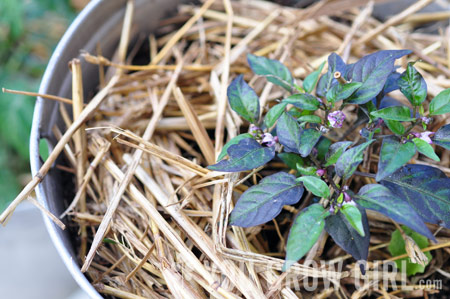
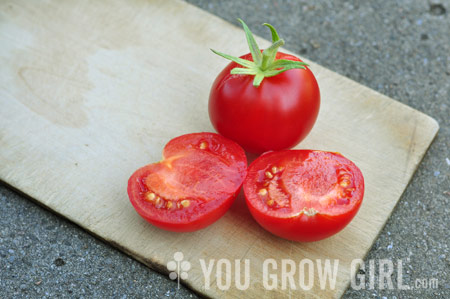
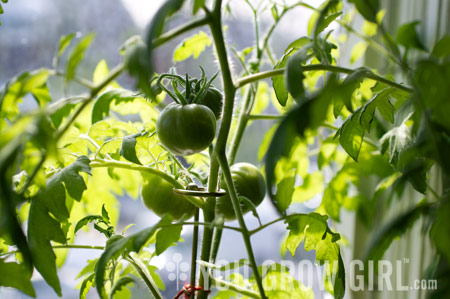
Back in February a secret somebody, whose identity I will not reveal (pinky swear), gifted me a package of seeds of the only open-pollinated (OP) blue tomato to have been raised by natural plant breeding techniques (not GMO). I was under the impression that this yet-to-be-released tomato was so secretive that I didn’t plan to write about it at all and was extra careful not to show it in photos until last week when I did an internet search and discovered that everyone and their second cousin has been growing and writing about it willy nilly.

Perhaps it is not so secretive after all.

Photo by Gayla Trail  All Rights Reserved

This experimental blue tomato (sometimes going by the name P20) is being produced by Oregon State University in an attempt to create an uber-healthy tomato with a high level anthocyanin, the powerful antioxidant found in blueberries.

Read more…

Leave a comment

Update on the Morelle de Balbis

Photo by Gayla Trail  All Rights Reserved

When I wrote about the Morelle de Balbis (Solanum sisymbrifolium) last it was on April 30, 2010 when the seedling was still living in the greenhouse. It had just begun to produce its thorns and I was beginning to get a glimpse into what I’d signed on for.

It is now July 1 and the plant has been living outdoors in soil for just over a month or so. When it came time to plant, I decided to grow it in a large pot, rather than in the ground. The final mature growth of this thorny Tomato Family plant is estimated to come in at around 5′ tall. I had a feeling it was going to be fairly treacherous to grow. Planting it into a garden bed meant there would be a greater chance of scratching myself on the thorns. I am not a particularly graceful person. I bash into door frames fairly regularly. I live in small spaces and I garden in cramped quarters, which means I regularly come into close contact with plants whether I want to or not. As the Morelle de Balbis grows it becomes more and more apparent that this is not a plant I want rubbing up against my skin.

Photo by Gayla Trail  All Rights Reserved

Shortly after planting. I used straw mulch to help lock in moisture and keep weed seeds from sprouting.

I did not have any room left in the big pots on my roof, so I decided to plant it in a container in “the new space.” Oh, didn’t I tell you? There is a FOURTH garden this year. The fourth is a yard share, located through a secret door in the back garden of friend. One of my goals for this year was to get a bigger garden space. And when it didn’t happen through the City allotment garden network, a friend stepped up and asked me to join their space. I am so grateful.

Photo by Gayla Trail  All Rights Reserved

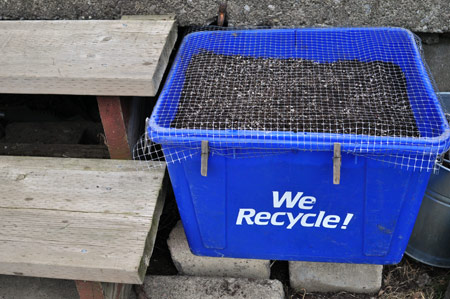
With other gardeners in the space, I had to be especially mindful of this plant’s placement. As a part of the garden’s revamp in the spring, we decided to make use of a sunny spot along a fence by lining up large recycling bins for container growing. I planted the Morelle de Balbis in the furthest bin along the fence where I hoped it would receive minimal contact.

Photo by Gayla Trail  All Rights Reserved

About a month after planting. The Morelle de Balbis is in the centre and is flanked by two determinate tomato plants: ‘Black Seaman’ and ‘Whippersnapper.’ All are under-planted with different varieties of basil.

Read more…

Leave a comment

Hanging Colander Lettuce Pot

Photo by Gayla Trail  All Rights Reserved

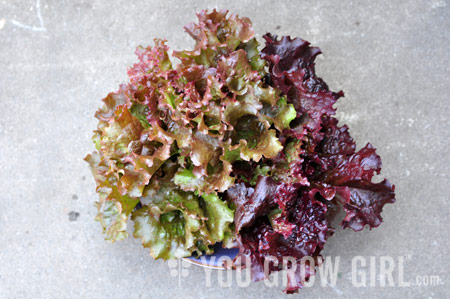
You are looking at one of this year’s serendipitous brainstorms. I feel perhaps a little bit too genius for coming up with it, when really, it’s just an enamel colander filled with ‘Sea of Red’ cutting lettuce and hanging in a wire basket. I quite like it. So much so that I haven’t had the heart to harvest it! Yet.

Here’s how this happy marriage came about. I had this heavy wire hanging basket sitting around, going unused. It’s the sort that is typically lined with coir, which is fine in most gardens but hard to keep hydrated on a hot and sunny roof. While, I’ve found it difficult to use as-is, I’ve kept the basket waiting for a new use to present itself. Despite the issue with hydration, stylishly understated and black hanging baskets made of a sturdy materials are hard to come by so I wasn’t about to get rid of it.

I bought the colander at a local secondhand store with the expressed purpose of growing greens in it. I liked the pairing of butter cream with bright red trim. The holes are small enough to hold soil without adding an extra liner, and the drainage they provide is perfect for growing small greens or herbs.

Photo by Gayla Trail  All Rights Reserved

Once I had planted up the colander, I thought it might be better served sitting up off the ground. Low and behold it fit perfectly inside the otherwise useless wire basket. As an added bonus our digging mammal visitors (squirrels, raccoons, etc) have not been able to get at it, while a second pot of ‘Sea of Red’ cutting lettuce has been dug up several times over the season.

Incidentally, I have experimented with this particular variety by growing the heads spaced at a distance from one another and tightly clustered as you see it here. I prefer it grown together and like the way the spear-like leaves create a literal sea of rich, mahogany that lights up when the sun hits it just so. It’s as satisfying to look at as any flower basket I have grown and I might even eat it for lunch sometime soon before the plants bolt.

Leave a comment

Growing Beans

Photo by Gayla Trail  All Rights Reserved

My second article of this season’s Globe & Mail column was published last Saturday: BEANS! It’s still not too late to get started. When I wrote and submitted the article we were experiencing a very hot and dry spring: great weather for planting beans. Immediately after the article was published the weather turned cold and wet: not so great weather for planting beans. What? Regardless, the beans I planted are popping up through the soil and look great. No rot or germination problems. Get those beans going!

Oh and if you’re wondering what I narrowed it down to: ‘Royal Burgundy’, ‘Dragon’s Tongue’, ‘Trionfo Violetto’, and two types of ‘Yard Long’ beans (green and ‘Red Noodle’). Basically everything I wrote about in the article. Writing the articles tends to renew my own excitement about plants or specific varieties I haven’t grown in a while.

Photo by Gayla Trail  All Rights Reserved

This is me back in January in St. Lucia standing next to a gigantic tripod of ‘Red Noodle’ beans and holding one up against my arm for length.

———————-

While I’m on the topic of the Globe & Mail: I’ll be doing a live web chat tomorrow, Friday, June 11 at noon EST over here.

Read more…

Leave a comment

Grow ‘Sparkler’ Radishes in a Container

Photo by Gayla Trail  All Rights Reserved

The first new radishes have been making their way into our salads over the last week — what a treat! First up is ‘Sparkler’, a tender, two-toned variety that reminds me of a flattened ‘French Breakfast.’ The later is long and elegant but only appropriate for the very deepest containers, while ‘Sparkler’ is short and squat, perfect for window boxes and smaller pots.

Growing Radishes:

The trick to growing tender radishes in pots is to keep the soil moist, but not soggy. Dry soil turns out small, woody radishes. Deeper containers are easier to keep moist. If you are having trouble growing decent radishes, try supersizing your container and growing a smaller variety.

Photo by Gayla Trail  All Rights Reserved

This year I am experimenting with a big wash basin that is about 8 1/2″ deep by 18″ wide. I made lots of holes in the bottom of the container with a big nail and a hammer before filling it with potting soil. I then planted the seeds in concentric circles within the container, spaced about 2 inches apart so the radishes would have room to grow. Approximately 20 or so radishes can grow in there at one time — I could have fit a few more had I not sown a patch of wild arugula in the center for the heck of it.

More About Radishes:

Leave a comment