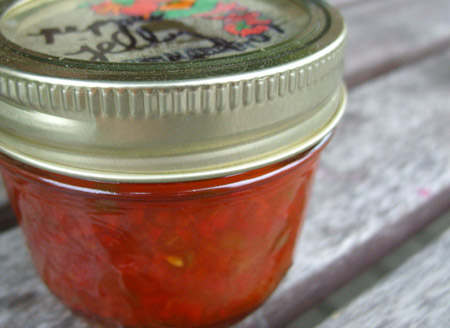
I made this batch into a plain salsa and canned it for use later this winter.
See also: Tomatillo Husks
Leave a commentFor the love of tomatoes, peppers, cucumbers, squashes, potatoes, onions, radishes, peas, beans, broccoli, cauliflower, etc… how to grow them in containers, community gardens, and other small spaces.

I made this batch into a plain salsa and canned it for use later this winter.
See also: Tomatillo Husks
Leave a comment
This piece was originally published in The Globe & Mail over the weekend as a part of my series on kitchen gardening.
Regarding using burlap and burlap sacks: Just to be clear, do keep them away from the crowns of your plants since they can get awfully heavy when wet. In fact, they are best used over the winter to prevent the erosion of large, open patches of soil from which annuals have been removed. Even better still, place the dead plant matter (browns) and some kitchen scraps (greens) underneath the burlap and you’ll have fresh compost on the spot come spring.
———————–
I love a fresh, crisp fall day. Many of us would agree that it would be the best season of the year if not for the fact that it is a stepping-stone to the inevitable: winter.
Who knows what this fall will bring given the wacky weather hijinx we’ve experienced this year. But let’s pretend for a moment that everything will go as planned and there won’t be snow sprinkled on the peppers tomorrow morning (please gods). We can’t control the weather or stave off the inevitable, but as gardeners there are a few methods we can employ to hold back the effects of seasonal change and keep the party going just a wee while longer.
You’re already one step ahead if your garden is a raised bed. They warm up slightly early in the spring and tend to stay warmer as the fall cools down. A thick layer of mulch such as straw, buckwheat hulls, or shredded newspaper keeps the soil and surface roots warm through nippy nights and breezy fall days. An actual blanket made of burlap gets the job done too, but can get awfully heavy when wet so be sure to cut big holes to keep it off the crowns of plants. An even better blanket still is black plastic. The dark colour attracts the sun’s rays and the plastic holds moisture through fluke fall droughts.
In lieu of cumbersome blankets, which can be difficult to maneuver in small spaces, or used alongside them, are an assortment of store-bought and homespun contraptions that can be fitted over individual plants or entire beds to trap warm air and create the effect of a miniature greenhouse. Hoop houses are toasty-warm tunnels made of metal or plastic hoops draped with a clear plastic tarp that let’s light in and keeps warm air from escaping. You can buy them ready made from garden suppliers such as Lee Valley or make your own inexpensively using bendable metal shaped into arcs or dollar-store hula-hoops cut in half. Push the arcs into the soil intermittently to support the length of the tunnel and cover with a big sheet of plastic. Secure the plastic in place by stapling to the sides of raised beds or with clips purchased at the hardware store.
Greenhouses made to cover individual plants are called cloches. Fancy glass cloches are nice to look at but expensive at about $30-40 a pop! Never mind, you can make as many as you like in a variety of sizes for free from plastic water bottles rescued from the recycling bin. Simply cut off the bottom and set the cloche over tender greens or frost-sensitive plants you’d like to keep in the garden just a little bit longer. Keeping the cap in place locks warmth inside, or you can remove it to water your plants and let heat escape on particularly sunny days.
Cold frames are the way to go if you’d like to get a shot at keeping particularly cold hardy greens such as mâche, kale, spinach, and arugula producing food straight through into the winter (and beyond). It’s really nothing more than a low-tech box with a hinged glass or plastic lid. The trick is to dig the box at least a few inches into well-draining soil and give it a south-facing position. Open the lid when it gets too hot, and insulate both the sides and top with newspapers, straw, and old burlap sacks when night temperatures drop below freezing. They’re not exactly practical when growing up on a roof or in pots but compact versions set on top of a planter box will ensure at least a few extra homegrown salads this fall.
Leave a comment
Isn’t this the most beautiful corn you have ever seen? I mean, I’ve seen some beautiful corn before, but the cob in the foreground appears to have been encrusted with precious gems.
Shane, a farmer at my local weekly farmers’ market brought these cobs with him last Thursday for show. He didn’t know the variety names since one of his neighbours grew it. We all stood around oohing and awing and snapping pictures like we had never seen anything like it in our lives.
Because we hadn’t!
As one onlooker remarked, “How does nature make colours like that?”
Happy Thanksgiving Weekend Canada! Or as I am now calling it, Great Excuse to Stuff Your Face Weekend.
And if you happen to know the variety name, inquiring minds would love to know!
Leave a comment
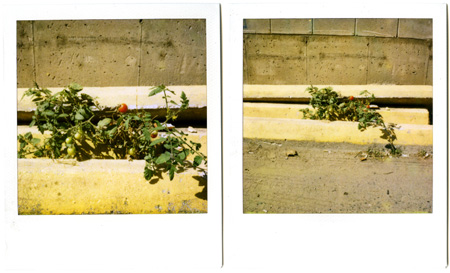
I like all sorts of gardens, no matter where they are made. Here are a few gardens, including a few edible plants, tucked into crumbling concrete crevices in a local alleyway (around Niagara St and Tecumseth in Toronto).


Photos taken by Davin Risk.
Related:

I know it’s been a slow week around here. I’ve been fighting off the worst cold/flu/virus I can remember in recent history and have been in bed all week feeling like utter crap. Today is the first day I have felt confident about sitting up for more than an hour-long stretch or forming complete sentences (sort of). Poor me.
Not the best picture but I am very proud of my little ‘Chinese Ornamental’ hot pepper this year. I grew it from seed in spring 2008 and brought it inside over the winter. This is its second year producing lots of tiny peppers and it won’t be long before I bring it back indoors again.
I grow mine in a very small pot (about 5″ tall) as a test to see how well it will thrive and produce when pushed. Grow yours in a bigger pot and you’ll turn out a bigger plant and a lot more peppers.
Don’t let the word ‘ornamental’ fool you. These diminutive peppers are fiery, but definitely edible. My hot pepper days are long behind me; however, I like to put a few of these in my pickles to give to friends who like theirs spicy.
Leave a comment