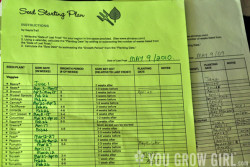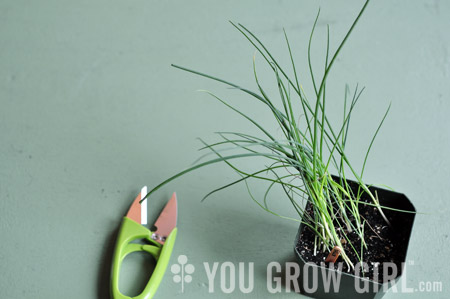
I’m currently in the process of hardening off the first round of onion and leek seedlings in preparation for permanently planting them outside. To recap, here’s the planting calendar that I follow:
Leave a commentGrowing your own plants from seed, buying seeds, trading seeds, and saving your own seeds for the future.

I’m currently in the process of hardening off the first round of onion and leek seedlings in preparation for permanently planting them outside. To recap, here’s the planting calendar that I follow:
Leave a comment
[Giveaway details can be found at the end of this post.]
This week I was a guest on Margaret Roach of A Way to Garden.com‘s radio show. We spoke at length about growing tomatillos as well as other edible crops of the same genus (Physalis). You can listen to that episode over here.
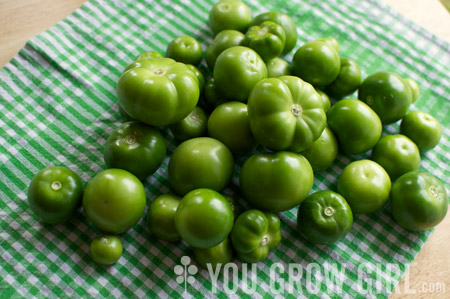
Tomatillos (Physalis ixocarpa) have only recently gained popularity as a backyard garden crop across North America and are definitely worth growing if you’re a Mexican food nut. I first learned of this tomato-like fruit on a trip to southern Mexico many years ago. At first I thought the tangy, green sauce we were served with quesadillas was made of green tomatoes, until I did some research and discovered it was a different fruit entirely. Back at home I started buying salsa verde in cans at a Latin American food store in Toronto’s Kensington Market. I honestly believed for a time that store-bought was good enough and couldn’t be improved until I grew my own and learned just how wrong I was. Like their botanical cousin the tomato (both plants are nightshade or Solanaceae family plants), tomatillos are infinitely better tasting when grown at home organically. They are sweeter, tarter, more flavourful, and complex. They are a surprise.


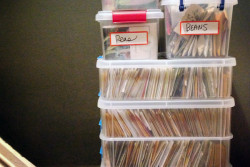
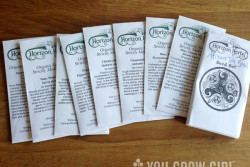
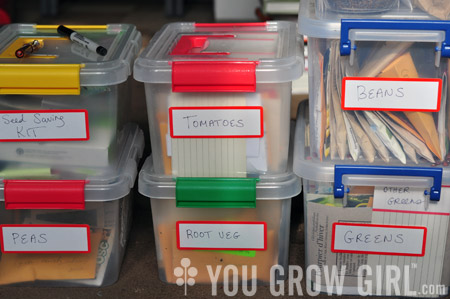
I’ve flirted with and tested out countless cheap and cheerful seed organization systems through the years. From plastic storage bins, to glass jars, wicker baskets, and vintage index card boxes — I’ve tried out every affordable option I could think of and then some. As my rag-tag seed bank has grown, I have had to conjure up new and smarter ways to keep on top of countless little packets.
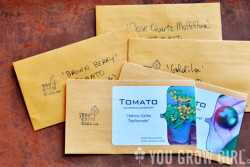
A few weekends ago I realized that once again my seed collection was out of control and needed to be revamped. Years of experience has made it clear to me that I require three systems: One for the plants that are started indoors underneath lights, another for the seeds that are direct sown, and a third for tomatoes.
Leave a comment
While I will always promote gleaning your gardening gear from the recycling bin or second-hand via garage sales and thrift stores, there are times when buying new is required. A lot of gardeners looking to save money have been turning to the dollar store over the past few years, especially since many chains have been expanding their gardening aisles and selection has grown. For that reason I have put together a guide to products that I have purchased in my local stores and have found to be useful and of decent quality. Oddly enough, much of the best garden gear is not found in the actual gardening aisle so it helps to think outside the box and look around the entire store for objects in the housewares, craft, and stationary aisles that might suit your needs.
Recommended Products

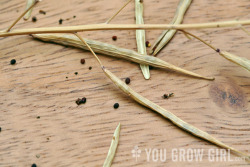
Perhaps it is a small observation, but one worth noting. This morning while working in the kitchen, I witnessed some of the California poppy (Eschscholzia californica) seedpods that I had set aside to fully dry bursting open and spilling their contents all around and onto the floor. The sound that they made as the seeds hit my enamel top kitchen table was audible and I wondered for a moment if it was raining.
Later in the day I went back into the kitchen for my afternoon coffee break and discovered more seedpods had burst and spilled their micro-sized contents all around.
While I was unsure about this particular poppy’s chemical constitution (I am always careful to wash my hands thoroughly after collecting the pods), the sight of them spilling onto the floor did make me pause and consider the myriad of garden collected seeds and seedpods that I have sitting in bowls, trays, and shallow dishes around the house at this time of year. I am used to living with an adult human and a cat who couldn’t be bothered with my strange human messes. But since last January we have welcomed a scruffy dog into our life, and like most dogs she is a living Hoover, vacuuming up anything that seems even remotely edible from any surface within reach. Everything is a potential snack until it has been tested and either rejected or approved. This made me think about those of you with young children who collect and save seeds from your garden. I don’t know how you do it. The task is rife with so much potential for little seeds ending up in little mouths.
I consulted a number of books on my shelves in search of an answer as to California poppy’s toxicity, and found it in Marjorie Harris’ “Botanica“:
Leave a comment