This Time of Year

Oh how I dread this time of year.

It’s cold. So cold. I am a wimp. The days are growing shorter, and darker. My hands are like ice cubes almost all of the time. The days of fresh tomatoes and basil are coming to an end. Sweaters, warm socks, and months of dust are coming out from the back of the closet. My book manuscript, photos, and designs are due soon.

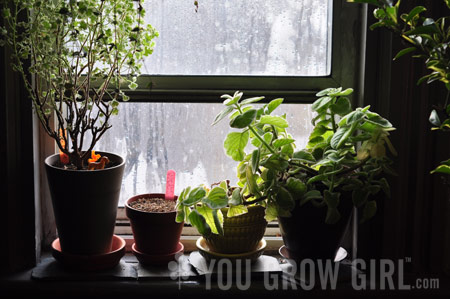
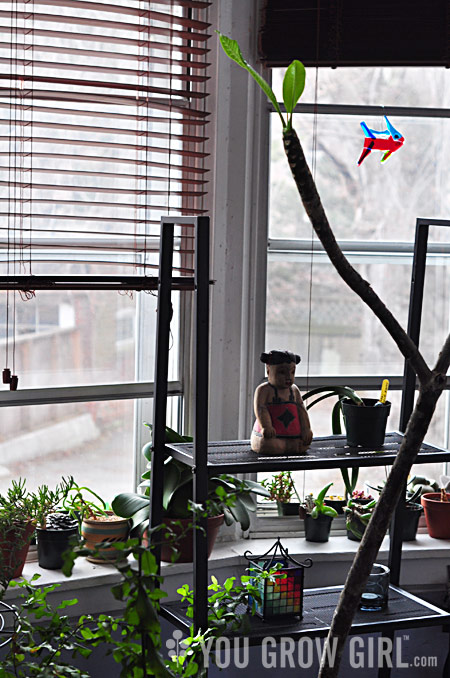
It’s getting cold enough at night now that most of my cold sensitive houseplants need to come back inside for the winter. This process takes time. Lots of time. It involves a lot of repotting, shifting, and rejigging my haphazard indoor growing situations (I can’t give these homemade contraptions a more formal description) to make room for my most beloved plants.

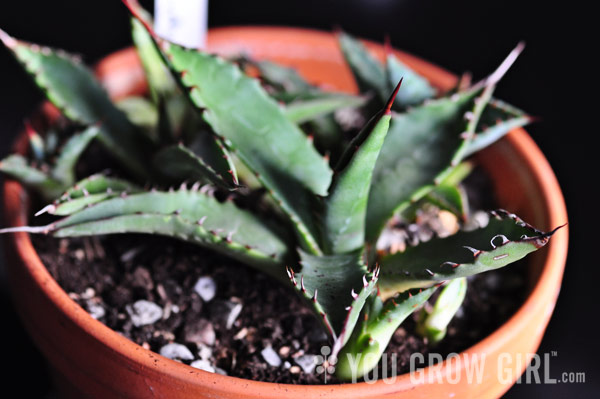
Now is the time when I am forced to make decisions about what stays and what simply can not be shoved into a window or underneath a light. Just how did I end up with 10 agave plants? I often wonder if the local cops have looked up at one of my south-facing windows and considered what goes on there. Surely no one would bother to put forth so much energy, time, and money into growing plants without a street value?

Davin jokes that I need a plantervention. Either that or more space and bigger windows.

One thing I do like about this time of year is taking the time to appreciate the great plants I am growing and seeing them in a new light after they’ve had months replenishing outdoors.

Leave a comment

Flowering Lithops (Yellow)

Back in July I posted two photos of lithops plants my friend Barry grew from seed. Here’s one of the plants blooming for the first time! Worth the patient effort don’t you think?

Read more…

Leave a comment

Medusa Head

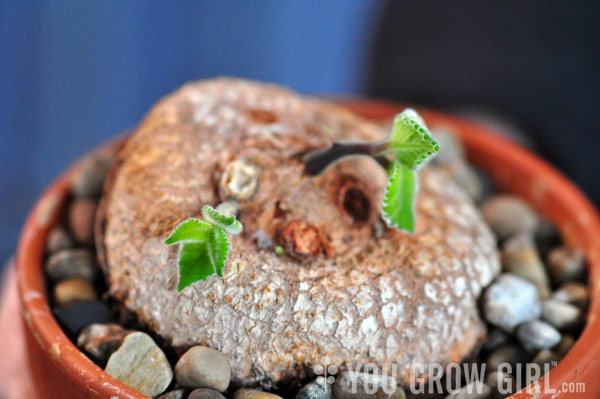
I bought this Euphorbia a few months ago at the local Cactus and Succulent Society show and sale. It’s called a Medusa Head (Euphorbia flanaganii). I knew I had to have one when I saw my friend Barry’s potted up in an old clay mortar (he drilled a hole in the bottom for drainage).

It’s the sort of plant you can only picture as a houseplant. It seems too weird to come from nature, and yet it does… Somewhere in South Africa these are growing wild.

I would love to see that landscape. Wouldn’t you?

Leave a comment

My Sinningia is Blooming!

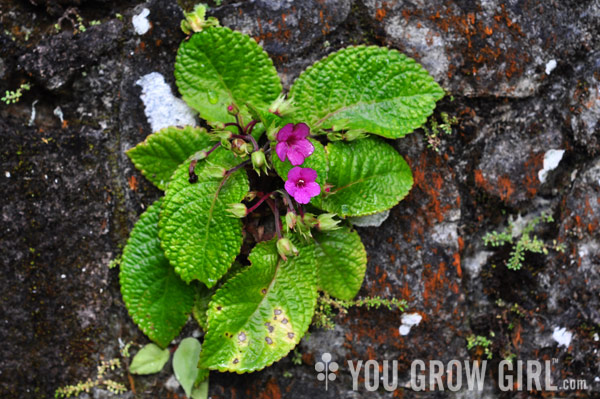
Inspired by a tour of Erika’s unusual houseplants, I bought myself a Sinningia. I purchased it for 2 bucks at the spring Toronto African Violet Society sale, which happened to be taking place at the Toronto Botanical Gardens at the same time as the Ontario Rock Garden Society annual sale, which I was helping out with. This is all by chance, as I am not a member of either group.

But I digress (again). The Sinningia I bought is called ‘Kevin Garnett’. At the time, I had no idea what I was getting, nor a choice for that matter — I was just happy to find one at all, and so cheaply, too. Given a choice, I would have selected a plant that produces a much simpler, red flower. Regardless, I’m happy with this one, despite the fact that it’s not really to my taste. The novelty of keeping it alive and making it bloom hasn’t worn out yet.

At home, I repotted the plant up in a little terracotta pot and placed it alongside my other African Violet Family plants. I used African Violet soil and planted it shallow, exposing the caudex like Erika’s. Mine did not come that way, but I prefer the look.

It is still early days in my Sinningia growing experience and I am not well-read on the subject. To be honest, I’m kind of winging it, going on instinct more than anything else. Whether or not exposing the caudex is good or bad for the plant is beyond me; however, months later and ta-da, my plant is blooming. I must be doing something right.

Comments Off

Echeveria Pot

I love this pot I photographed at Paul and Uli’s garden in Etobicoke a few month back. It uses a tender Kalanchoe as the centre feature and is stuffed full of tender echeveria (the frilled varieties are always my favourite), and pencil cactus (lower right).

This is a pot anyone can grow as long as the potting soil has a bit of grit added to it to help it drain well. Unfortunately, none of these plants will overwinter outdoors in cold climates, but they settle back indoors with little fuss.

I don’t even bother upending the roots. I just cut the stems, let them heal over for a few days (forming a callus over the cut end) and then stick them into some sandy soil. They reroot easily, and cutting them back in this way prevents those long and scraggly bare stems that are inevitable with these plants as they grow and drop their older leaves.

Leave a comment