For the Love of Nasturtiums

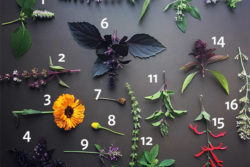
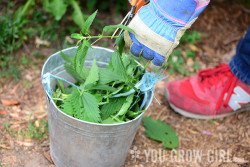
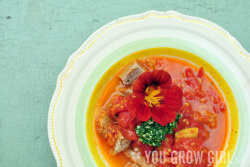
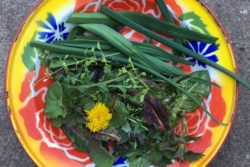
I was on Martha Stewart Radio today to talk about my new book about growing herbs and edible flowers. The question was asked, “What is your favourite edible flower?” and I replied, without hesitation, “Nasturtiums, hands down.

Of course, now as I am typing this, I am hesitating, “But wait… what about roses? You really like roses. Don’t forget violas! You lose your mind over them in the springtime. Scented geraniums… you can’t live without them.” And so on…

Were I stranded on a desert island with only one edible flower at my disposal… I’d probably choose lavender. Okay, bad example.

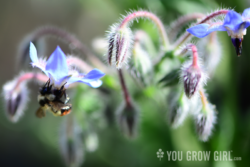
No, really. I often choose nasturtium when asked this question and I think it comes down to the unexpected. Most people expect edible flowers to taste kind of sweet, floral, and a little bit weird, which is how many flowers smell. When I hold out a nasturtium, which does not have a particularly strong smell, and ask a friend to eat it, no one ever anticipates that their tongue will be met with a burst of sweetness and a spicy, radish-like kick.

Nasturtiums are fun, perhaps more-so than other flowers.

Read more…

Leave a comment

Easy Growing Publication Day

Tomorrow is the big day! Tuesday, Feb 7 is the official release date of my new book Easy Growing: Organic Herbs and Edible Flowers from Small Spaces. It’s the day that the book shows up on store shelves, pre-orders are shipped, and the online ordering button is switched from “Pre-Order” to “Order.” I’m not yet aware of all of the stores that will be carrying it, but we have made a list of the major online sellers here. Electronic versions of the book will be released in the near future.

In case you’re wondering about its contents, a “Look Inside” feature has been added to the Amazon ordering page, we have made a short Show and Tell video (seen above), and sample pages have been added to the book’s website.

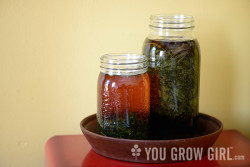
In anticipation of its release, we have also added a number of printable downloads to the website that are related to projects contained within the book. For fun, I made a bonus pdf of a recipe (Spicy Blue Basil Vinegar) that had to be cut from the final print due to space considerations. I know that handfuls of fresh garden basil is a distant dream unless you’re in the southern hemisphere, but I do urge you to make herb vinegars (any herbs will work) when you get the chance. They’re a good way to add some fresh herbal flavour to winter meals. We’re currently enjoying the medley of vinegars I made last fall.

I’m going to be on Martha Stewart Radio tomorrow morning, Tuesday, February 7 at 10:30am EST to talk about growing herbs as well as some of the recipes in the book. If you have satellite radio, you can tune in to hear it at Sirius XM 110.

While I am on the topic of book releases, here’s a peek at the German translation of Grow Great Grub. I can’t wait to see it printed.

Leave a comment

Make Your Own Herbal Bath Tea

This is an old project that I originally posted to this site back in the early 2000′s. It was lost when we switched over to a new design, but I’ve brought it back in time for holiday gift-making. (p.s. the photos are small due to the original page design)

You can expect a few more oldies, but goodies to appear here over the next week.

———————

This is a simple, but satisfying gift to make using herbs grown in your own garden. I’ve been making them for years and can fire off a large batch in one night. It’s the perfect gift for those who bathe — which is just about everyone.

    What You Need:

  • Cotton muslin or pre-made resealable tea bags (large size).
  • Ribbon or string
  • An assortment of herbs (see recipes below)
  • Essential oils (optional)
  • Rolled oats, epsom salts, sea salt (see below).
  • Cellophane bags, cellophane roll, other packaging.

To make the bags you will first require some unbleached cotton muslin. Other cotton fabrics can be used, but I prefer this kind the most because it is dirt cheap ($2.00 and change for a yard or cheaper if you buy scraps from the ends bin) and has an open weave that holds in herbs yet allows their goodness to leach out easily into bathwater. In the past I have purchased ribbon (I’ll explain its use later), but this year I found some nice seam binding tape in earth tones for a very good price (29 cents a yard).

If you don’t want to sew you can purchase special large-sized, sealable tea bags made especially for this purpose. They are relatively cheap to buy and can be sealed with an iron. However, I guarantee you that even the most inexperienced sewer can make this. Keep in mind that it is going to be used a few times and eventually tossed into the compost heap. Precision is not necessary.
Read more…

Leave a comment

Heck Yeah! Mint and Rose Petals in Persian Cuisine

There’s so much that I experience on a weekly basis while at home or travelling that is related to plants and food that doesn’t seem to have a place here… but should. As a result of this oversight, I’ve decided to start a regular feature called, Heck Yeah! that’s devoted to the simple, yet wonderful things that are worth a mention.

The inaugural Heck Yeah! comes from an impromptu dinner I enjoyed last Friday here in Toronto at a Persian restaurant called The Pomegranate. The atmosphere and food was inspiring, most especially the use of herbs. I came away from our meal full of enthusiasm for Persian food and some new ways to use up the herbs I grow in abundance in my garden. Luck was on our side and we arrived hoping for a table just after someone had cancelled. If you’d like to experience the food for yourself, I’d suggest making a reservation. Tables fill up fast.

Please forgive the poor quality of these images. They were taken with my phone’s camera in very low mood lighting.

Doogh

I thought I’d tried every yoghurt-based beverage out there, and then I found doogh. More savoury than sweet, doogh is a refreshing combination of yoghurt and carbonated water, flavoured with dried herbs and spices. I believe mine was topped with dried and ground mint and rose petals, but I have since researched out recipes that include cumin and cardamon. I’m sure there are other secret ingredients and variations as well.

Persian Mint Tea

My friend Jen enjoyed a classic Persian mint tea, which is a simple drink (fresh mint leaves brewed in hot water) made special by this beautiful presentation. We both agreed that when it comes to food and drink, the rituals are as important as the food itself.

Rose Water and Pistachio Ice Cream with Pomegranate

After a large and satisfying meal, I didn’t think I had the room left for dessert, yet I could not walk away without trying the house rose water ice cream. The portion was generous — enough for 4 people — but we managed to devour it all between two of us, and on full stomachs no less.

Roses are an under-used flavour in Western cooking. One of my goals for my forthcoming herbs and edible flowers book, “Easy Growing: Organic Herbs and Edible Flowers from Small Spaces” was to encourage more people to make culinary use of the roses that they grow. A scoop of rose petal ice cream at a night market in Oaxaca, Mexico back in April 2000 was my introduction to this fragrant ingredient and the way I would suggest first trying the flavour if you’re unsure about eating it for the first time.

Leave a comment

Preserving the Harvest Chat Transcript

Probably my favourite part about giving presentations and running workshops is the one-on-one chatting that happens with fellow gardeners and aspiring gardeners afterward. I love those moments connecting directly with other people who share the same excitement and passion. I love hearing about what they’re doing and the look of satisfaction on their faces is contagious.

For that reason Seedchat turned out to be one of the highlights of my week. The transcript is now online, so you can still be in on the conversation even if Twitter isn’t your cup of tea.

I’ve compiled a few of my favourite tips below:

  • Herbs That Dry Easily: Lemon verbena, ‘Dark Opal’ and ‘Purple Ruffles’ basil. We dry and use oregano, marjoram, and thyme year-round in cooking. Lemon balm, mint, anise-hyssop & lemongrass for tea. Also: lavender, calendula petals, rosemary, sage, winter savory, dill seed, citrus peels….
  • Lavender Syrup (you can do this with just about any herb): 1 cup water, 1 cup sugar, handful of lavender flowers. Bring to boil until thick. Let cool. Strain. Refrigerate
  • In response to the high cost of canning jars: Remember that they are reused over and over so your investment will pay off over time.
  • Herbal Vinegar: To a clean jar add: Sprigs of fresh tarragon and a few strips of lemon peel. Top with warm (not boiling) vinegar)

There are several more tips in the transcript including: preserving tomatoes, drying beans, drying herbs, uses for various herbs, favourite tomato varieties, harvesting seed, lots of good canning resource suggestions, thrifting for jars, addressing the fear around canning for the first time, making fermented drinks…

Leave a comment