Kangaroo Apple Flower

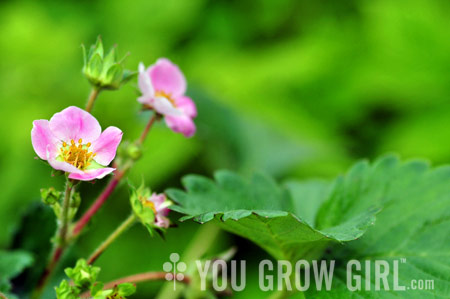
Kangaroo apple (Solanum laciniatum) is another in a line of marginally edible, strange solanums that I am growing this year. I say “marginally edible” because the fruit is edible when ripe and poisonous when green. Still, I’m not convinced it’s worth eating. Edible and worth eating are two different things entirely. Morelle de balbis fruit is edible, but is it worth growing if food is your priority? Not so much. Even still, I am growing that again this year, too.

The kangaroo apple is a subtropical plant that needs warm weather and a long season to produce fruit. I started my seeds very early — as early as January or February. Unfortunately, I can’t remember which and I lost my original tag.

TIP: I write the sow date on the tags when I sow seeds as a way to track each plant’s progress later on. This is especially helpful when growing long season plants like kangaroo apple. If they don’t set fruit in time then I can gauge how much earlier I need to start the following year in order to be successful.

If you’re interested in learning more about this plant, there’s some information on the Australian National Botanic Gardens website and through Tradewinds Fruit.

I purchased my seeds from Solana Seeds in Quebec.

I’ll update you on the progress of this plant as the season develops. I’m very curious about the fruit.

Leave a comment

Morelle de Balbis Fruit

It’s mid-September (let’s pretend I did not say that out loud), and the glorious Morelle de Balbis plant is bearing ripe fruit. This process began a few weeks ago but I withheld my judgement until several were ready for picking.

I’ve had several opportunities to try them now and can report that the taste is, in a word, insipid. I read several descriptions shortly after purchasing the seeds and the fruit I am picking from our yardshare garden does not meet some of the more flattering accounts. They do have a slight citrus note, but watermelon and cherries… Please. Either my palette is unrefined or others’ are overambitious. Mind you I am basing my entire assessment on a single plant grown in a rather wet year, but still.

The texture of the fruit is very similar to a tomatillo or ground cherry. I suspect that cooking might be in order for the remaining harvest. If I can manage to harvest it all. Those spikes are deadly. Like a tomatillo, the husks pull back from the soft part of the fruit as they mature. This leaves a little bit of room to manage them but not much. Davin was unable to pick even one the other day without spearing his fingers on those spines. He claims they are poisoned in some way and that the ensuing welt was bigger and more painful than it should have been for a spine of that size. This is one crop I’d happily leave to the critters, but I doubt they’ll be bothered when there are still so many passive foodstuffs left to steal.

So let’s tally up the score. Litchi tomato is a hostile and belligerent plant that threatens personal injury at every turn and produces tasteless fruit that is damned near impossible to harvest.

Will I grow it again? YES!

Regardless of the outcome I’m glad I tried this plant and will definitely grow it again, especially when I’ve got more space. The flowers are gorgeous and have attracted an abundance of pollinators to the garden. Watching it’s progress has been a delightful experiment and a good start to my explorations in Solanum Family oddities. In the future I will grow it for show only without the expectation of a useful food crop at the end of the season.

Leave a comment

Buried in Bounty


Blackberries and greenberries aka Morelle verte (Solanum opacum)

The harvest is so bountiful this year. It’s no surprise really, considering the weather we’ve had. Dry and hot, then wet, followed again by heat. The plants love it. I collected enough herbs from our community garden plot yesterday to cover the kitchen floor. Literally. I then spent hours preparing it all to preserve by varying methods. Let’s just say, we’re not going to be short on herbs this winter.

If you’re looking for a way to use up some of those baseball bat-sized zucchinis, I highly recommend this zucchini bread recipe from Heidi of 101 Cookbooks. It is a revelation. We’ve made it several times, altering the optional ingredients, and it comes out perfect and incredibly delicious every single time. I will never use another zucchini bread recipe again. Go make some now. You will not regret it.

I made this last batch using a giant roll of cinnamon I brought back from Dominica. Look at the size of it against a typical supermarket piece! In fact, the small, locally purchased piece is probably not cinnamon, but cassia, a cinnamon substitute more commonly found in North American supermarkets. Grinding that big piece of cinnamon was very satisfying, the smell so wonderfully sweet and aromatic. I love that every time I use this spice — which judging by the size of it will be for a very long time — I will be taken back to our trip.

What are you making with your bounty?

Leave a comment

File Under: Weird Food

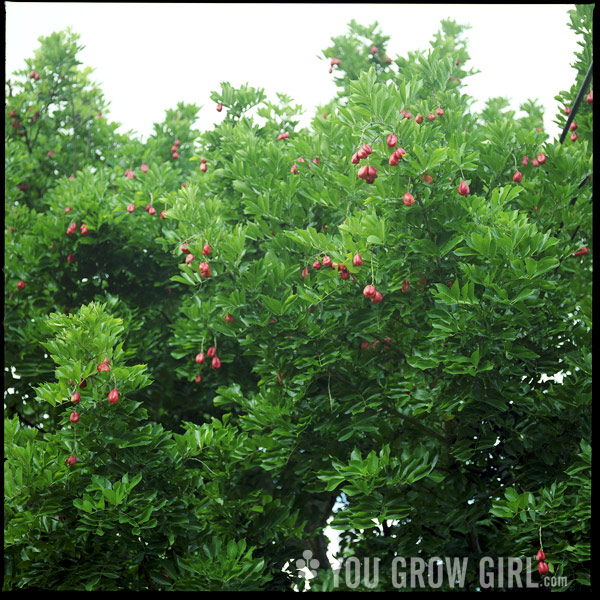
Earlier this year I discovered that the fruit from the Kousa Dogwood tree (Cornus kousa) are edible and I’ve been waiting until the end of summer to get a taste.

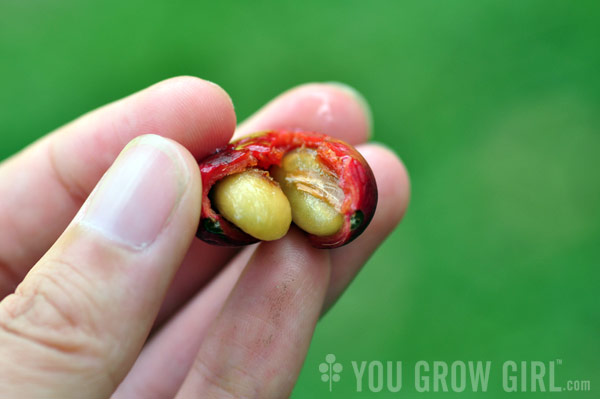
The first fruit on my friend Barry’s tree are starting to ripen and I managed, over the weekend, to collect a few from out of the clutches of the neighborhood squirrels. The fruit are ripe and optimal eating when they turn from green to bright red, and from hard to squishy. You should be able to squish the orange fruit from the centre easily. That happens to be just how I ate my bounty. The skin is unpleasant tasting. It looks like a lychee, with the texture of some of my favourite tropicals, sugar apple and sour sop. The insides are bright orange and soft, with a couple of hard pits. It tastes like papaya.

I’ve read that there is a lot of variation between trees and varieties, so if you have the chance, I’d suggest trying fruit from a sampling of trees. The fruit I ate are small but tasty. They are from a landscape tree that is bred for the flowers, not the fruit. But there are varieties with much larger fruit that are worth searching out if you’re looking for more than a light snack.

Related:

  • Paw Paw (Asimina triloba): A local and unusual tree fruit that is also coming into season.
  • Search this site by the tag, Weird Edibles to find out about other unusual vegetables, herbs, and fruit to grow or forage.
Leave a comment

Elderberries

Photo by Gayla Trail  All Rights Reserved

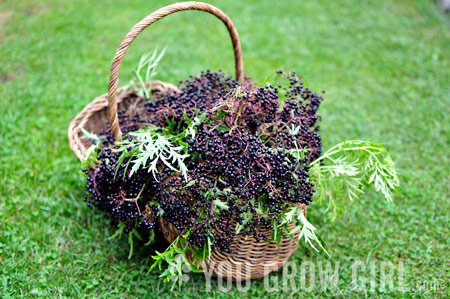
My friend Barry has an elderberry tree in his yard. Last summer he offered up the harvest in exchange for a sampling of the end product. I collected a lot of berries and was a bit unsure about what to do with them. Raw elderberries have a somewhat unpleasant scent and are not edible so it was difficult to commit to a usage without a clear understanding of what I was getting into.

Photo by Gayla Trail  All Rights Reserved

[Please note that while there are elderberries leaves shown in this photo, you should not eat them. They are poisonous!]

In the end, I made cordial. It was pretty good. The berries have an earthy taste. That’s all I can come up with as a descriptor. Earthy. Perhaps a bit pungent. It does taste like berries, I just can’t place a finger on which berries exactly. We dripped it on pancakes, poured a little onto granola and yogurt, and added it to sparkling water on occasion. Elderberries are very high in vitamin C and potassium. Many people use the cordial as a cold and flu elixir, instead of store-bought pharmaceutical cough remedies.

Photo by Gayla Trail  All Rights Reserved

This year I wanted to try using the flowers so I harvested about two thirds of the tree back in June, when the flowers were in season, and left the remainder to develop berries. I had enough to make two batches, so I tried two different methods. Unfortunately, I no longer remember the second (preferred) method nor can I recall what it was that I did or didn’t do that made it better. However, if you’re interested, the first, less preferred method came from the River Cottage Handbook No.2: Preserves, by Pam Corbin.

Photo by Gayla Trail  All Rights Reserved

Photo by Gayla Trail  All Rights Reserved

This year, with only 1/3 the harvest, I made a much smaller batch of cordial, which is fine by me because I think we prefer the elderflower flavor. I have no memory of how I made it last year, but this year I used this recipe from David Lebovitz’s website. Within the notes he makes a remark about straining the cordial a second time through a fine sieve. I’ve found that step to be essential and not overly attentive. Otherwise you end up with a very seedy, crunchy syrup. I didn’t have enough to can so I just sterilized two jars on a low heat in the oven before filling, gave one to Barry, and refrigerated the other.

I also made a quick, single jar batch of mixed berry jam last weekend (pictured). But that’s another story.

———

p.s. The site will be down this weekend while we switch over to a new design and work out all of the inevitable kinks. It’s going to be a bit manic, but I’m so excited! A big change has been a long time coming.

Leave a comment