Looks Like Fall

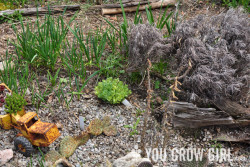
I need some colour today and came upon this image when randomly perusing my photo archives. Doesn’t it look like fallen Autumn leaves?

I took this photo in Thailand, at the Princess Maha Chakri Sirindhon Herbal Garden in Rayong. Tropical trees are not my strong suit; however, I am pretty sure that what you are looking at are the discarded stamens of a Royal Poinciana (Delonix regia) tree. I suppose they could also be fallen Red Powder Puff flowers (Calliandra haematocephala), but the close up photos I took indicate otherwise.

Looking back at the photos I took during our short visit to the garden, nearly all of them are of strange and unidentifiable oddities that were either up in the trees or fallen on the ground.

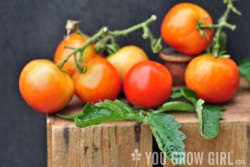
Later, at the gift shop, I bought some corn milk (one of several interesting beverages that I sampled on the trip) and was gifted a tomato face mask by a fellow garden writer also on the tour.

I’ve just added several photos of things I bought in Thailand to the You Grow Girl Flickr stream.

Leave a comment

Hope Into Action

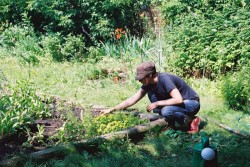
This morning I took advantage of the mild weather to get some chores done in the garden. As I kneeled on the ground planting garlic I thought about my recent trip to Georgia. I arrived in Atlanta the day before the State was set to execute Troy Davis. I’d been following the case through online news outlets, but it wasn’t until the morning of my talk that I realized that the time was set to correspond with the moment I got up to speak at the botanical garden.

This threw me into a tailspin. Should I recognize the moment? In my personal life I would. Yes, people around the world die every minute of everyday, but State sanctioned murder is not the same. Here I was in the place where it was about to happen and at that very moment. Not saying anything felt like intentional avoidance or denial, yet at the same time I was a guest from another country — people had come out to hear me speak about growing food and I did not want to send them home feeling badly, or worse still, judged.

Over the last month or so there had been some online chatter about the role of garden writers. Several people said that garden writers should stick to plants and pretty things and that there is no place for politics. I have already stated my opinion on this topic and find it interesting that it was only a short time later that I was in a position in which it was tested. Where is the line between our personal and professional lives? For me it is very fuzzy and I would not have it any other way.
Read more…

Leave a comment

Venus Fly Trap Bowl

Every botanical garden has their forte, their special something that sets them apart from the others. Prior to any trip that includes a stop at a botanical garden, I tend to scour websites in anticipation of the sort of plantings I will see. However, before my trip to speak at the Atlanta Botanical Gardens last month, I decided not to do any research before hand. I thought it might be more fun to be surprised and wowed without the anticipation that comes with knowing what to expect.

Sure enough, I was absolutely giddy to discover that one of the garden’s claim to fame is their carnivorous collection! I have lots more to share with you, but first is a project that can be achieved at home.

Venus fly traps (Dioneae muscipula) are probably the most well-known carnivorous plant, and are widely available as impulse buys in big box stores and supermarkets. Yet, few of us get to really experience them beyond one small plastic shell packet in a cardboard counter display. The plants are marketed as an enigma, tend not to last long in our dry winter-heated homes and are a little bit intimidating as a result.

They’re a temperate-warm climate plant that prefers high humidity and can withstand short freezes, but can not survive the killing frost we experience here in the North. Venus fly traps love Toronto’s hot, humid summers, but require a chilly, but not freezing, winter dormancy period that fluctuates around the 50 degrees F mark. For this reason I have grown them as an annual in miniature bogs like the one shown above (photographed at the Atlanta Botanical Gardens) through the summer months, but tend to abandon them once the winter comes. In the right climate you can easily achieve the sort of mass planting shown in this bowl as the plants do reproduce readily and will even set seed.

Soil:

I’ve had a lot of luck using a mix that is 1 part sand, 1 part peat (substituting coir), and 1 part perilite.

Planting:

It wasn’t clear to me if the bowl (shown above) had drainage holes or not. In my experience, I have had best results growing venus fly trap outdoors in a pot with holes with a deep, water-filled saucer placed underneath to keep the soil moisture high, yet also allow for drainage through periods of heavy rainfall.

When drainage is not offered, I line the bottom of the bowl with gravel and keep the pot in a sheltered spot where I can control the amount of water it receives. Venus fly traps like wet conditions, but they can still become water-logged and rot if left permanently submerged in water.

————–

I cover growing a carnivorous bog in my first book, You Grow Girl: The Groundbreaking Guide to Gardening, and if you’d like to learn even more on growing all sorts of carnivorous plants, I highly recommend The Savage Garden: Cultivating Carnivorous Plants by Peter D’Amato.

The Carnivorous Plant FAQ has an detailed section on growing venus fly traps, including a few tricks for dealing with dormancy.

Leave a comment

More Water Lilies Than I Have Ever Seen in My Life

Towards the end of our Thailand excursion, we flew to Chiang Mai, a northern city that is situated in the mountains. It was the part of the trip I was most looking forward to and turned out to be the city (next to Bangkok) that I would be most interested in revisiting to explore further.

Our second destination in Chiang Mai (after the Orchid Farm and lunch) was the Queen Sirikit Botanic Garden. Unfortunately, we were allotted a paltry 40 minutes to explore the gardens and greenhouses of this expansive botanical attraction. Note to media tour operators: garden writers require ample time to explore botanical gardens! Imagine a time frame and then double it. No, triple it. Actually, just give us the entire day.

The race was on to see as much as possible before being called back onto the bus. Because time was precious, I chose to focus on a few of the greenhouses and forgo the outdoor gardens. Before heading into the first greenhouse I took in a field of large bowl ponds. Each pond housed a different tropical water lily, in an astonishing array of leaf and flower shapes, sizes, and colours. I had no idea there were so many different types!

Nymphaea ‘Chalong Kwan’
Read more…

Leave a comment

Close, Far, Farthest: Diminutive Orchids

This cluster of hanging baskets photographed in the Tropical High Elevation House at the Atlanta Botanical Gardens harbours a secret. It took three trips to the room before we spotted them.

Read more…

Leave a comment