Making Things Grow

Homage to Thalassa Cruso from Michael Weishan on Vimeo.

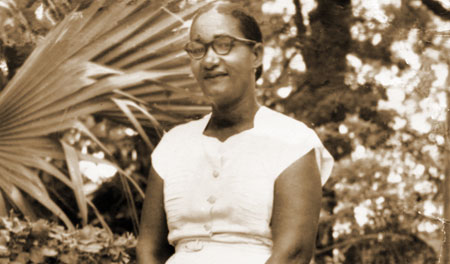
Lately I’ve been thinking about my gardening past: how I got into gardening and the first books, magazines, writers, and television hosts that inspired me. Coincidentally, just yesterday I learned about Thalassa Cruso, the” Julia Child of Horticulture.”

I’ve decided that she just might be my new gardening hero.

Through the late 1960′s Ms. Cruso wrote and starred in a PBS television show called “Making Things Grow.” She is described in the New York Times as a “… witty and acerbic Englishwoman…” and an, “Everygardener, a true amateur who drew her advice from personal experience rather than formal horticultural training.”

Sounds like a plantswoman after my own heart. Now, how do I get my hands on a copy of this series?

Leave a comment

Greetings from Sunny & Oh So Warm Florida

I’m at Disney World right now, where I will be giving talks on growing delicious and gorgeous food in small spaces until Thursday afternoon as a part of the Epcot Flower and Garden Festival.

Yes, you read that correctly. You are not hallucinating. Or perhaps you are? Or perhaps I am. Maybe those bottles of water our liaison gave us when he picked us up at the airport were filled with *Magical* Disney Water and everyone here is participating in a giant group hallucination. Our minds are moving around a giant 50 square mile theme park but our bodies are asleep inside womb-like pods in one enormous room. If that’s the case, it’s all very well constructed because those painful blisters on my toes are terribly convincing.

Regardless, it is a very warm, sunny, and plant-filled hallucination so I accept.

I am told that it continues to be cold and grey back at home in Toronto so I am soaking up as much sunshine, warmth, and colour as I can in the days that remain. Here are a few sights from the first day:

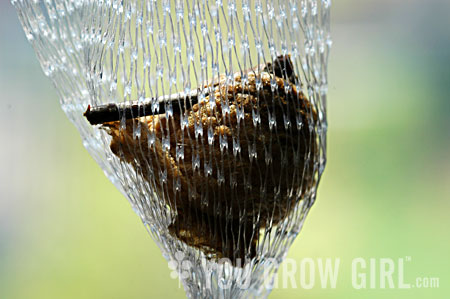
I’ve spotted several tillandsia on this trip — they infest many of the trees — I’m showing you the first because it’s always the most exciting.

This is pink trumpet tree (Tabebuia impetiginosa). Several other people informed me via Twitter that there is a yellow version, too. For desperate, colour deprived Northerners, flowering trees are a religious experience right about now. Davin and I flocked around this one on one of my breaks between presentations like it was one of Epcot’s biggest attractions or a Disney child star roaming the parks. Squeee!!! Eventually a little girl asked her parents what was so special about the tree. They were as confused as she was.
Read more…

Leave a comment

I Need a Shot of Spring Today

Do you become absolutely insufferable through the last dregs of winter? Do you cry, bitch, and moan that spring will never come and you will not make it out alive, not this time? Well then you and I are in the same boat my friend, and this post is for you.

Last April I spoke at the Drawn and Quarterly bookstore in Montreal to promote my book, Grow Great Grub. While there, I took the opportunity to visit my favourite botanical garden, the Montreal Botanical Gardens. If you’d like to see images of the gardens and greenhouse at different times of the year, I have an archive of images from past trips. You can not visit Montreal without visiting the garden!

Magnolia trees in bloom. Enough said.

I love the way the hardy sedum trails over the hard edges of the concrete border, and the little muscari flowers that are popping up within it.

Grecian Thistle (Ptilostemon afer). My love for thistles is expanding.

Read more…

Leave a comment

Keeping Tabs on Monsanto

Seed buying and seed starting season is upon us. It won’t be long now (let’s pretend, even though the snow outside says otherwise) before we’re happily knee-deep into the growing season.

Yesterday, I put out a call on Twitter for an online list or chart of garden companies (as well as makers of garden products) affiliated with Monsanto. Several people replied, hoping to find something similar that they can refer to when making seed and product purchases for their own gardens.

It’s time to have this talk, and even though I have brought it up here and there, I am remiss in having neglected to post about this until now. It seems like many of us are flailing around, trying to make heads or tails of who, what, and where is profiting on our excitement to grow our own food and flowers. Unfortunately, I have been unable to find a more definitive list that covers affiliate companies in the garden product spectrum beyond seeds, but considering the way things are going, seeds are a great place to start and one in which our spending dollars can make an impact.

The following link goes to the Council for Responsible Genetics Safe Seed Resource List that includes all of the US and Canadian seed sellers that have signed the Safe Seed Pledge affirming their commitment to non-genetically modified seed. While you’re there, I would also urge you to read through the CRG’s FAQ that makes an argument for why we should care about genetically modified seed and buying GM-free in the first place.

I was also pointed to another page put together by a concerned gardener that includes a list of some known GM seed sellers to avoid, as well as links to additional articles around the issues with Monsanto.

I’d love to turn this page into a resource that we can all refer back to and am happy to add to it over time. If you know of any interesting articles, companies or products to be avoided, or have anything to add, please comment below.

Leave a comment

Winter Reading

I haven’t done much book buying or reading recently, but it’s been ages since I’ve done a book round-up and there have certainly been books in the months since I last wrote about what I’m reading.

Crazy Water Pickled Lemons: Enchanting Dishes from the Middle East, Mediterranean and North Africa, by Diana Henry – I’ve been obsessed with recipe books featuring food from this region ever since I fell in love with Moro East and later its predecessor, Moro: The Cookbook. These are both fantastic books and I would recommend starting there if you are interested in food from that part of the world.

I was drawn to purchase Crazy Water Pickled Lemons by the title as well as the sound of some of the dishes, most especially Lavender, Orange, and Almond Cake. I thought about making it for months and finally got the chance the other night. Big let down. The flavour combination IS gorgeous, but the cake was way out of balance, using far too much butter. I ended up with a cake that was burned on the outside before it completely cooked on the inside. We’re eating it anyway. Davin likes it and says it tastes caramelized. I think it tastes burnt, and will come up with my own version the next time I make it.

Despite a bad start, I still think the book is incredibly inspiring and worth buying for that reason alone. Diana Henry tells stories about discovering new foods in the Middle East that have reignited my enthusiasm for basic ingredients, like parsley, and sparked new ways for me to think about using those ingredients in my own, less exotic cooking. I am eager to try Stuffed Figs Dipped in Chocolate (they’re stuffed with marzipan!) and Cardamom-Baked Figs and Plums with Burnt Honey and Yoghurt Pannacotta when fig season rolls back around.

Man Eating Bugs: The Art and Science of Eating Insects, by Peter Menzel and Faith D’ Alusio – I bought this book at the thrift store for a couple of bucks just the other day and I am already enjoying it thoroughly. In theory, I’m 100% behind the idea of eating bugs, the hard part is getting beyond the gag reflex to actually do it. Ten years ago, we ate grasshoppers in Oaxaca City, Mexico and really enjoyed them. We bought our first taste in a little plastic baggie. They were fried and coated in chile powder. Later, we tried them sprinkled on top of cactus paddle salad. This was a great salad that we ended up sharing several times over the course of the week we stayed in Oaxaca. The grasshoppers reminded us of bacon bits. At least as far as I could remember the taste of bacon. By that point I had been a vegetarian for over a decade.

I think I could muster up the courage to eat ants and smaller larvae as long as they are dead and buried inside a tortilla and I don’t have to see them. The trick is getting a taste for them before I have to look at what I’m eating. I’m not saying I couldn’t muster up the courage to eat a tarantula or a large, squirming larvae, it’s just that it would take a lot of resolve to do so.

This book has great pictures, but what I’m enjoying most are the stories the writers tell as they travel around the world trying out many of these insects for the first time. It’s fascinating stuff and my curiosity around the strange and intriguing foods people eat is what keeps me coming back to wanting to try more insects. They describe tarantula as oily, but surprisingly un-hairy. It’s the hair that puts me off most, so you never know… perhaps I could try it after-all.

High and Dry: Gardening with Cold-Hardy Dryland Plants, by Robert Nold – I’m borrowing this book from my friend Barry in anticipation of a trip to Denver, Colorado this June, where I will be giving two presentations at the Denver Botanic Garden. I’m really looking forward to this trip. The alpine gardens are supposed to be incredible and I can not wait to make the trek up into the mountains to see them growing in their element.

When it comes to garden books, I prefer those that are photo-heavy, which is the main reason why I go a bit crazy taking photos for my own books. Unfortunately, this book isn’t satisfying in that regard, but it is packed with information that I hope will serve as inspiration when it comes time to choose a few alpines for my new garden this spring.

Black Plants: 75 Striking Choices for the Garden by Paul Bonine – This book was a birthday gift from Barry that I’ve dipped into now and again since last July. It’s not terribly informative, but it’s not meant to be a resource. Instead, it’s the sort of little book that you pick up when you’re looking for something new and intriguing to add to your garden. If you’re into black plants, you’ll recognize a few old favourites and many more that you’ll want to add immediately. The spread on Fritillaria persica is making me regret not buying the bulbs this fall, but I couldn’t justify the expense at the time. Maybe next year.

Toast: The Story of a Boy’s Hunger, by Nigel Slater – I purchased and read this book ages ago, but realized I haven’t talked about it here. Nigel Slater is a writer I look up to. One of my main and perhaps most daunting longterm goals is to write a personal memoir type book around gardening. If I can write one that is half as good as Mr. Slater’s, I’ll be pleased. Toast is filled with touching personal stories that centre around his childhood and adolescence growing up in suburban England in the 1960′s. You’ll love this book.

Leave a comment