I Need a Little Colour Today

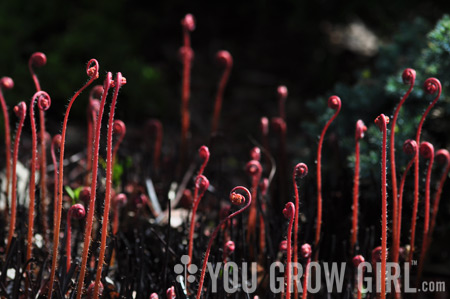
I was saving this photo, taken last May, for a larger piece on growing broom (Genista lydia), but the greyness today has really brought my energy level down to barely subsistence level. I’m practically in a coma at my desk.

I need colour! And here it is.

Leave a comment

Is This Green Enough for You?

I promise this will be my last amaryllis post of the season, if only because I am fresh out of blooming amaryllis to write about. Well, that’s not entirely true. The ‘Nymph’ (or ‘Sydney’ or who knows what anything is anymore since nearly all of my bulbs came misidentified) has a second stalk that will open in the next few days. I promise not to write about it unless it bursts open and spills out a fountain of loose change. Or talks.

Anything is possible at this point.

I know, I know. I’m kidding no one but myself. One day next week the light will hit the new bloom just so and within hours there will be a post. Apologies in advance.

Some of you complained that ‘Green Dragon’ wasn’t really green, it was more or less white with some hints of green in it. I disagree, it was green enough for me, but whatever… Let’s not fight about it. (p.s. You’re wrong.) Instead, I present to you ‘Evergreen’ a green flower that I think we can all safely agree is green.

All of us, that is, except Davin. I suspect he will read this post and try to argue that it is yellow.

Leave a comment

Italian Edibles

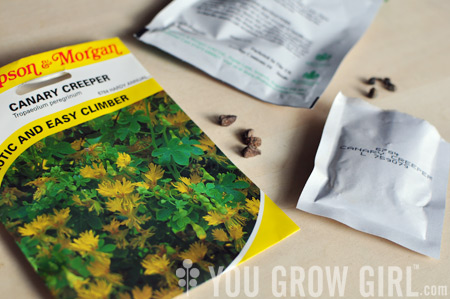
I have begun to purchase seeds for the 2011 growing season, and because I now live in an Italian neighbourhood, I have easy access to Italian edibles. The above photo represents my first, in-store (as opposed to online), impulse seed purchase of the year.

Most of the seeds I bought were varieties of radicchio (Cichorium intybus) aka cicoria, or cultivated chicory. I have grown a few varieties over the years, but was inspired to purchase seed and try out a few more by a recent trip to my local Italian grocer, where I purchased two varieties I had never tried before. The one on top is ‘Rosso di Treviso’ and ‘Catalogna Puntarelle di Galatina’ the bottom is (more info on both to follow).

Radicchio is a bitter green and an acquired taste so it is not as popular in the home garden as it could or should be. Not only are the colourful heads a beautiful addition to the garden, but the plants are perennial, although I have found the second season harvest are sometimes more bitter.

Here’s what I bought the other day:

Radicchio ‘Triestina da Taglio’ – This is described as a cut and come again variety. I have sown other radicchio varieties thickly and grown them in a cut and come again fashion, but it was interesting to find a variety that is especially suited to it. The leaves are green and not particularly exciting, but perhaps it will make up for what it lacks aesthetically in flavour.

Chicory ‘Catalogna Puntarelle di Galatina’ – Large, dense, segmented heads that remind me of conjoined spears of asparagus, with dark, indented, dandelion-like leaves. Very bitter. Over the weekend I prepared it by thinly chopping the whole thing fresh, with a splash of olive oil and lemon juice on top, a dash of Balsamic vinegar, and a pinch of salt. I also tried roasting it whole in the oven, and ate it plain. It was equally good this way, but in the future I think I will reserve young, newly harvested plants for eating fresh.

Radicchio ‘Rosso di Treviso’ – Apparently, there are two types. The one I bought to eat from my local Italian grocer is ‘Precoce’, but the one I bought as seed is ‘Tardivo.’ The latter is said to be the tastier of the two, but I would prefer to grow the first as it is prettier, and I am sometimes too vain about the edibles I give preference to in the garden. Here’s a great article that says much more than I can about the history of the plant, including links to recipes worth trying.

Radish ‘White Tip’ – I have a hunch that this is just another name for a variety called ‘Sparkler’ that looks like a round ‘French Breakfast.’ This is a great short variety, suitable for container growing.

Cucumber ‘Carosello Barese’ – They are described on the package as a hairy cucumber that is crunchy and fresh on the inside, but I found this site, where the author suggests that it may be a melon, not unlike the Armenian cucumber that is eaten as a cucumber (Cucumis sativa), although botanically a melon (Cucumis melo). This should prove to be an interesting addition to the garden, and I look forward to growing, and eventually tasting it.

Leave a comment

Winter Reading

I haven’t done much book buying or reading recently, but it’s been ages since I’ve done a book round-up and there have certainly been books in the months since I last wrote about what I’m reading.

Crazy Water Pickled Lemons: Enchanting Dishes from the Middle East, Mediterranean and North Africa, by Diana Henry – I’ve been obsessed with recipe books featuring food from this region ever since I fell in love with Moro East and later its predecessor, Moro: The Cookbook. These are both fantastic books and I would recommend starting there if you are interested in food from that part of the world.

I was drawn to purchase Crazy Water Pickled Lemons by the title as well as the sound of some of the dishes, most especially Lavender, Orange, and Almond Cake. I thought about making it for months and finally got the chance the other night. Big let down. The flavour combination IS gorgeous, but the cake was way out of balance, using far too much butter. I ended up with a cake that was burned on the outside before it completely cooked on the inside. We’re eating it anyway. Davin likes it and says it tastes caramelized. I think it tastes burnt, and will come up with my own version the next time I make it.

Despite a bad start, I still think the book is incredibly inspiring and worth buying for that reason alone. Diana Henry tells stories about discovering new foods in the Middle East that have reignited my enthusiasm for basic ingredients, like parsley, and sparked new ways for me to think about using those ingredients in my own, less exotic cooking. I am eager to try Stuffed Figs Dipped in Chocolate (they’re stuffed with marzipan!) and Cardamom-Baked Figs and Plums with Burnt Honey and Yoghurt Pannacotta when fig season rolls back around.

Man Eating Bugs: The Art and Science of Eating Insects, by Peter Menzel and Faith D’ Alusio – I bought this book at the thrift store for a couple of bucks just the other day and I am already enjoying it thoroughly. In theory, I’m 100% behind the idea of eating bugs, the hard part is getting beyond the gag reflex to actually do it. Ten years ago, we ate grasshoppers in Oaxaca City, Mexico and really enjoyed them. We bought our first taste in a little plastic baggie. They were fried and coated in chile powder. Later, we tried them sprinkled on top of cactus paddle salad. This was a great salad that we ended up sharing several times over the course of the week we stayed in Oaxaca. The grasshoppers reminded us of bacon bits. At least as far as I could remember the taste of bacon. By that point I had been a vegetarian for over a decade.

I think I could muster up the courage to eat ants and smaller larvae as long as they are dead and buried inside a tortilla and I don’t have to see them. The trick is getting a taste for them before I have to look at what I’m eating. I’m not saying I couldn’t muster up the courage to eat a tarantula or a large, squirming larvae, it’s just that it would take a lot of resolve to do so.

This book has great pictures, but what I’m enjoying most are the stories the writers tell as they travel around the world trying out many of these insects for the first time. It’s fascinating stuff and my curiosity around the strange and intriguing foods people eat is what keeps me coming back to wanting to try more insects. They describe tarantula as oily, but surprisingly un-hairy. It’s the hair that puts me off most, so you never know… perhaps I could try it after-all.

High and Dry: Gardening with Cold-Hardy Dryland Plants, by Robert Nold – I’m borrowing this book from my friend Barry in anticipation of a trip to Denver, Colorado this June, where I will be giving two presentations at the Denver Botanic Garden. I’m really looking forward to this trip. The alpine gardens are supposed to be incredible and I can not wait to make the trek up into the mountains to see them growing in their element.

When it comes to garden books, I prefer those that are photo-heavy, which is the main reason why I go a bit crazy taking photos for my own books. Unfortunately, this book isn’t satisfying in that regard, but it is packed with information that I hope will serve as inspiration when it comes time to choose a few alpines for my new garden this spring.

Black Plants: 75 Striking Choices for the Garden by Paul Bonine – This book was a birthday gift from Barry that I’ve dipped into now and again since last July. It’s not terribly informative, but it’s not meant to be a resource. Instead, it’s the sort of little book that you pick up when you’re looking for something new and intriguing to add to your garden. If you’re into black plants, you’ll recognize a few old favourites and many more that you’ll want to add immediately. The spread on Fritillaria persica is making me regret not buying the bulbs this fall, but I couldn’t justify the expense at the time. Maybe next year.

Toast: The Story of a Boy’s Hunger, by Nigel Slater – I purchased and read this book ages ago, but realized I haven’t talked about it here. Nigel Slater is a writer I look up to. One of my main and perhaps most daunting longterm goals is to write a personal memoir type book around gardening. If I can write one that is half as good as Mr. Slater’s, I’ll be pleased. Toast is filled with touching personal stories that centre around his childhood and adolescence growing up in suburban England in the 1960′s. You’ll love this book.

Leave a comment

Cooking (and Hopefully Growing) Lampascioni

We moved a few months back. Over the last year I’ve received a few threatening emails. I’m not talking about, “You’re a jerk, I hate your stupid website” type emails. No, these threatened my person in a clearly violent manner. I knew that when we moved I’d be more protective about where we lived and I have hemmed and hawed since then about how much information to reveal about my new neighbourhood.

Over the months I’ve discovered that I hate withholding like this. Where I live factors heavily in my gardening experience. As a writer, I am not interested in writing disconnected third person how-to’s. Gardening is a personal experience that is unique to each of us. I am always careful to include the personal, even when I am contracted to write a third person how-to.

Not being able to talk about the neighbourhood has been torture. I find that whenever I have to cut myself off from a topic, that’s the one thing I want to talk about. Keeping these details off the board has created a huge block. There have been times when I felt I couldn’t write about anything at all. So I’ve decided that I will talk about my neighbourhood. I need to protect our safety, but I also need to be free to write.

Now that I’ve got that out of the way… We’ve moved north in Toronto to Corso Italia, a neighbourhood I had not explored in my nearly 20 years in this city. As you can gauge from the name, it’s home to a predominantly Italian population, although I am finding that Brazilian Portuguese are a large group, too. As you can imagine, there are a lot of food gardeners here. There are plenty of front yard food gardens and pots of peppers growing in sunny store windows. Now you know why I gave the new yard an Italian name!

About a month into living here, I discovered a small Italian food grocer that has since become my favourite. On our first visit, I spotted a large bin of bulbs outside the store. When I asked what they were, the grocer replied, wild onion. But they didn’t look like onions. I asked him to describe how they are prepared and he went into a lengthy process of boiling and water changing that sounded daunting. I had to try them!

When I got home, I did a quick search online and discovered that wild onion are also known as Lampascioni or Vampagioli. They are actually a type of muscari (aka grape hyacinth) that grows wild in the Puglia region of Italy. Apparently, when onions were not available, people would dig up the bitter muscari bulbs to use in their place. They became a regional delicacy that are prepared seasonally.

Cooking:

The bulbs secrete a very bitter goo and must be boiled endlessly to make them palatable. That night, I tried cooking up the batch I bought. After cooking, I doused them in salt, vinegar, and olive oil. Mine weren’t bad, but in the future I will change the water a few times throughout the cooking process to further reduce the bitterness.

Within just a month of switching neighbourhoods, I had already learned about a new edible plant. Who knows what I will discover once the growing season starts.

Growing:

I went back to the store a few days later and bought the best looking bulbs I could find in the bin for planting. This muscari (Muscari comosum) has an absolutely gorgeous flower, and the price from a greengrocer is a lot cheaper than one would find in a garden centre. I bought a bag of bulbs for about 3 bucks. I’m not certain these plants can withstand my climate. A lot of the information I found had them hovering around zone 6 and higher. Since we were also planting awfully late in the season (it snowed 2 days after we planted) and in a new garden that is still unfamiliar to me, I set aside more than half of the bulbs and planted them in pots. I potted them in gritty, well-draining soil meant for cactus and succulents and I put them in about 3 or 4 inches deep, and packed them in more tightly than I did outdoors (just a few inches apart). Those plants have been sitting on the floor of my unheated porch, where the soil has likely frozen a few times, if only temporarily.

I can’t wait to see what they do (if anything) come spring!

Leave a comment