Let’s Learn About the Historical Origins of Herbs, Fruits and Vegetables

originsoffruitandve.jpg

Have you ever heard of sea cabbage, a wild cousin of the domesticated brassicas? Did you know that edible bananas are a primitive plant thought to be related to some of the first trees of the primeval forest?

I didn’t either until this weekend when I was finishing up an article on unusual vegetables and decided to fact check some long-ago gleaned historical knowledge against books in my personal library. What began as a quick check turned into a much longer read.

originsoffruitandve2.jpg

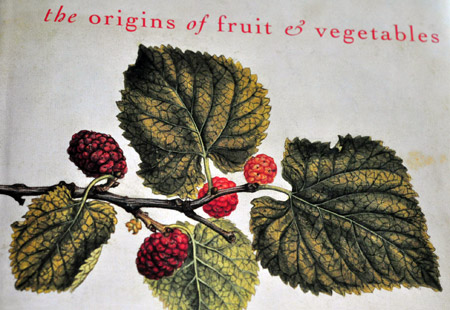
The first book I pulled out is called The Origins of Fruit and Vegetables by Johnathan Roberts (in case you’re wondering mine cost $22US, not $472 YIKES). I think I’ve had this book in my possession since it was first published in 2001, and while I have flipped through the pages of historical prints and food-based artwork more than once, I’m not certain of just how much I have actually read. If you’re interested in plant history and ethnobotany, this book is a great place to start. It’s not exactly a definitive tome on the subject but it’s a beautiful book that provides just enough insight to draw you into searching out more. It also gives you something to talk about in mixed company. Now if only they’d make a gardener’s trivial pursuit for geeks like me.

vanilla_herbal.jpg

Next week I am off on a month long journey to The Caribbean. As you can imagine I am extremely excited about food and plants. One of the plants I am most stoked about seeing up close and personal is the vanilla orchid. I have actually seen the vining plant growing in the greenhouse of a botanical garden, but I have never seen one growing outdoors and in bloom nor smelled the scent of its flowers. Or touched a green pod straight off the plant for that matter. Everything about the vanilla from its history to the process of growing and fermenting the beans fascinates me to no end. I found a book at a used bookstore last week that indulges everything one could want or need to know about vanilla. I plan to read it during the first part of my trip to get in the mood to see vanilla towards the end. Vanilla: The Cultural History of the World’s Favorite Flavor and Fragrance, written by Patricia Rain, the self-proclaimed Queen of Vanilla is indeed what I would call a definitive tome on the subject, covering everything including a sampling of interesting new ways to use vanilla in cooking. If the beans are affordable and customs allows me to bring some back, I plan to get a whole bunch as gifts for friends. I’d also like to try my hand at making homemade vanilla extract to give as gifts. I am after-all going to be visiting places known for both decent rum and vanilla production. I should be able to produce a quantity of excellent extract affordably. I think I’m going to need bigger luggage.

A third book, one that I have gone to many times and have even posted about here is Herbal: The Essential Guide to Herbs for Living by Deni Bown. I bought my copy back in 2002 after much deliberation. At $58.00 the book is not exactly cheap but I promise you it is worth the dough if you are curious about the historical background and usage of the herbs you like to grow or are seeking inspiration to try a few exotics. The book does contain some growing information but is not meant as a gardening primer. I’d suggest Exotic Herbs by Carole Saville, or New Book of Herbs by Jekka McVicar if you’re looking for more definitive growing considerations for a wide variety of common and unusual herbs.

Leave a comment

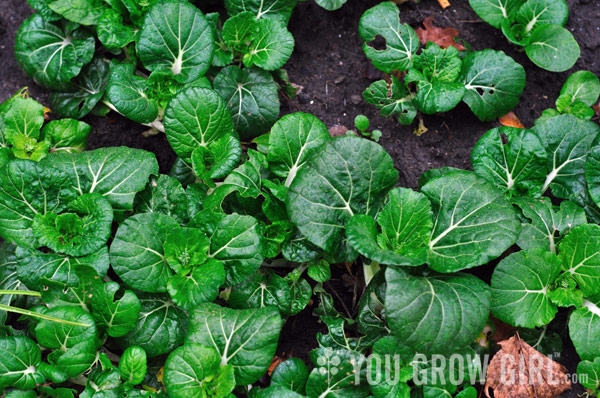
Bok Choy

Photo by Gayla Trail  All Rights Reserved

It has been an unseasonably warm November here in Toronto. I’ve enjoyed an education in observing how trees and plants are reacting to an extended period of warmth, not to mention the thrill of coasting all the way into late November without a single flake of snow. JOY!

Meanwhile, my own gardens are continuing to produce healthy greens, broccoli, herbs, and flowers like we’re living on the west coast. I’d have a bigger crop had I not shut down earlier than usual in preparation for my time away or if the squirrels would ease up on the persistent digging, eating, and general ruckus. They were, and continue to be, more destructive than ever this year. I caught one hanging off of my giant cape gooseberry yesterday afternoon. It was attempting to steal fruit, which incidentally is still growing. In any other year that plant would have hit the compost heap ages ago.

Amazing.

Comments Off

Letting Go

Photo by Gayla Trail  All Rights Reserved

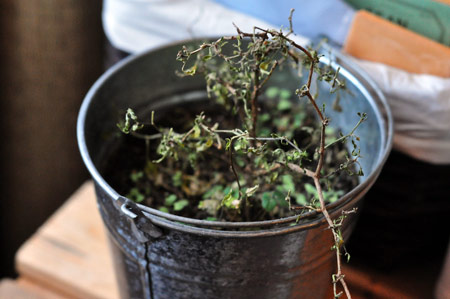
A sad mess of dessicated branches soon to meet the compost bin is all that remains of my beloved ‘Chinese Ornamental’ hot pepper plant. I had grown fond of this little hot pepper plant and was sad to let it go.

I started the plant from seed two years and lovingly nurtured it through the dry, dark days of winter to bring it outdoors in the spring. The plant began as an experiment in how productive this variety could be in cramped quarters, but it’s resiliency and determination won my heart. My little plant turned out quite a harvest in its first year, despite life in a 5″ pot. Following its first winter indoors, the plant produced new growth, bloomed, and eventually turned out a fine second crop of teeny little hot peppers. Those hot peppers have since been harvested, dried, and divided up into little envelopes as gifts for gardening friends. The cycle is complete.

However, I didn’t intend to write a eulogy about my dead ‘Chinese Ornamental’ hot pepper. My real intention for this post is to talk about letting go of plants.

At the end of any gardening season, I dutifully bring all of my houseplants indoors for the winter, adding in a couple of tender herbs or hot peppers that I’d like to try my hand at keeping inside. Over the last decade I’ve gleaned a lot about strategies for keeping certain plants alive in a dry, sunless apartment and which varieties can tough it out better than others through these seasonal experiments. It’s also good fun and makes the long winter without a functioning outdoor growing space tolerable.

I’m going on a month-long trip very shortly and can’t expect the friends who will be taking care of my plants to put the same effort into dutifully watering and tending to the sixty odd plants that currently live here. Keeping track of the widely varying moisture needs of each plant will be torture for them, let alone the fear of killing any of my most beloved and needy babies. I can’t expect that a certain percentage of my plants will make it through this period alive. Short, week-long trips have always resulted in some inevitable loss. I’m afraid to imagine what kind of deaths an entire month away will bring.

One of my early strategies for dealing with this period away was to repeat the mantra, “No new houseplants!” throughout the growing season, the idea being that I would not bring any new plants into the fold and potentially reduce the number my friends would be left to care for during the month we’ll be away.

How successful do you think that strategy was?

At last count the total number of new houseplants brought home between the months of May and October 2009 total just under 20. In my defense, there seemed to be a lot of temptations out there this year and a particularly high number of friends getting rid of this and that. I wasn’t about to turn away gems like this and this. And this plus, you know, 16 others.

Before bringing the outdoor plants in, I always do a big shift around and cleanup of my indoor growing spaces to make room for the plants that are migrating back inside. Not surprisingly, this year’s clean up took nine hours from start to finish. Nine hours! I will admit that I put a bit more effort into carefully nurturing each plant this year as a strategy for counteracting the difficulty they will soon face. And it was quite therapeutic.

When it came time to decide which plants were going to make it back into the warm cocoon indoors, I had to be brutal and make up for the 20 new plants that had stealthily crept into my life. And so the little ‘Chinese Ornamental’ plant that could had to go as well as many other hot pepper plants and herbs. In a feat that goes completely against my nature to keep on trying with even the most hopeless plants, I managed to toss out a few succulents that had been clinging to life for far too long. It was easier than I imagined and I’ve already forgot which plants they were. Yet for some reason I can’t forget the spider plant I cruelly discarded ten year ago.

A pachypodium that I’ve been itching to see the back of for the last five years is on my currently hit list, if only I can absolve the feelings of ruthless abandonment in time for my impending departure. After all, one less plant for my friends to care for could result in one more, much-loved plant surviving my time away. You think?

Which plants did you let go of this year?

Leave a comment

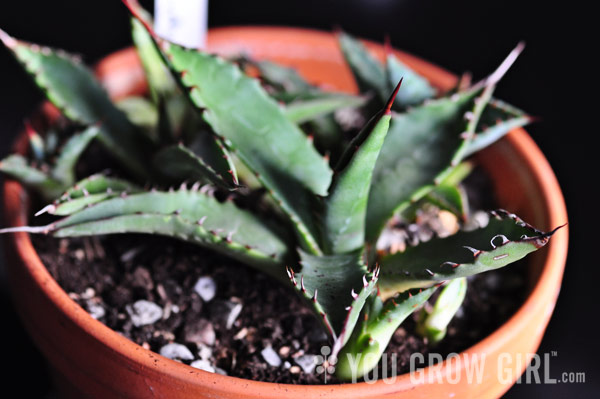
Agave chrysantha

Photo by Gayla Trail  All Rights Reserved

About a month ago, my friend Barry gave me a small pup-filled pot identified as Agave chrysantha; however, online searches have not brought up any descriptions that match the rust-coloured spines that my little plants feature. I’ve also checked my trusty identification book, Succulents: The Illustrated Dictionary with no luck.

The trouble is that many pup-sized agaves just don’t look like their mature counterpart. I’m going to have to separate my little pups into their own containers and let them grow up a bit before coming to any real conclusions about their parentage. I’ll get back to you on that in 2-5 years. Housebound agaves are not particularly fast growers.

In the meantime I can’t help but speculate and am beginning to think that they might in fact be younger, misidentified agave potatorum because they look a lot like my slightly older plant but with less wave in the leaves and spines. At least that’s what I hope they are — it’s a fabulous plant.

Playing plant detective is fun. I’m ready for my nerd badge.

Meanwhile, the agave bug really has come back to infect me recently. I just can’t get enough of them.

Leave a comment

Pawpaw

Photo by Gayla Trail  All Rights Reserved

Until very recently, pawpaws have been one of those mythical fruits that I’ve known about for ages, but have never seen in person. Until just a few years ago I was under the mistaken impression that they are native to the Southeastern United States, but not available here. Chalk it up to geographical ignorance; I should have paid more attention during Geography class.

I now know that there are pawpaw trees that not only thrive in our slightly cooler climate, but at least one, Asimina triloba, that is native to this region. Imagine that? While it is widely known that I am a winter wimp that should start complaining about the cold and the hardships endured any day now, the fact is that this part of Canada is not the Yukon. We have a nice long growing season and our summers are as hot as can be, just hot and long enough to grow some pretty fantastic tomatoes, peppers, and even tomatillos that typically require a long season.

Contrary to popular belief, we do not receive our mail by dogsled, nor do we live in igloos.

In fact, I live in south end of Toronto, closest to Lake Ontario (one of the Great Lakes) and as a result enjoy both the snuggly benefits of the concrete jungle and a warming lake effect. I grew up in the Niagara Region, a part of this province that is widely known as a fruit and wine producer. Niagara is one of the warmest parts of this region, the result of sitting between several bodies of water including two Great Lakes and underneath an escarpment.

When I first heard about pawpaws in this region, I was told they are primarily found in Niagara. Since then they have enjoyed a renewed interest from Toronto backyard gardeners looking to plant native fruit trees, and are beginning to pop up all over the place. These days everyone seems to be talking about pawpaws.

Photo by Gayla Trail  All Rights Reserved

I was pleasantly surprised when they showed up at The Dufferin Grove Farmers’ Market last Thursday. The price was high (about $4 for 2), but worth it to finally get a taste of this mysterious fruit. I bought two: one that was ripe and ready for eating, and an unripe specimen for picture-taking.

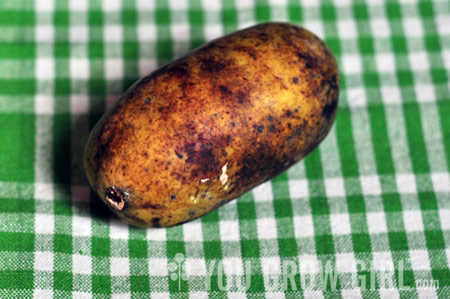
A ripe pawpaw is not particularly pretty to behold. It is mushy and brown-black with a strong fragrance that reminds me of a cross between mango and bananas with a hint of pear thrown it. It’s no shock that pawpaws have a familiar, tropical smell since they are related by family to sweetsop (one of my very favourite tropical fruits) and custard-apple. They taste like they smell, although both of mine have had a bitter aftertaste that wasn’t very appealing. Despite an initial letdown, I’m willing to give it one more shot since there is always the chance that it was a bad year or a bad crop. I never give up on a fruit entirely until I’ve tried it at least three times to be fair.

Having never grown pawpaw myself, I don’t know much about their cultivation needs (perhaps some of you with personal experience can chime in), but I do know that if you want to produce a decent crop, you’ll need to make room for two trees. I’ve heard they are not easy to germinate but my friend Barry managed to germinate an entire tray of seedlings so it is certainly possible.

I gave the seeds away from my first plant and will happily give away the 10 seeds from my second fruit to the first two interested readers. Let me know in the comments and I’ll email you back for your mailing address. They’re gone. Thanks.

Leave a comment