Growing an Edible Strawberry Pot

Photo by Gayla Trail  All Rights Reserved

Strawberry pots have a bad reputation in the gardening world. They have poor water distribution and tend to dry out quickly. Sometimes they’re ugly. Or the pockets are too small. Or the pockets don’t have a lip, making holding soil in at planting time nearly impossible. The good ones are expensive to buy, if you can find one. I once spent an inordinate amount of money taxiing around the city in search of the right pot for a workshop. Three inferior pots and more money than I care to think about later and I was eventually forced to call a friend and beg to borrow hers. Is it borrowing if you never give it back? And four years have passed?

Despite their faults, I’ll be the first to stand up for strawberry pots. When they’re good, they’re really good. A good strawberry pot is an excellent way to grow food in vertical space. It’s especially useful when all you’ve got in the way of good light is a tiny patch on the balcony. Growing vertically allows you to get as much as you can out of that tiny patch. And they look pretty darn nice too. I like to fill mine with drapey plants that cascade over the sides. The trick to using them is in choosing the right kind of pot, and the right plants for that pot.

So what features qualify a strawberry pot as good?

  1. Large Pockets: Big pockets make planting the pots up a whole lot easier. Anything under 3″ is impossible to work with. How do they expect us to shove roots through a tiny hole? And why do I feel so dirty typing that? The lip also supports the roots while the plant gets itself established and provides more root space between plants. Lipped pots are also easier to water since the water has time to soak in rather than running straight out of the holes. When watering these pots I often direct the flow to the top of the pot and then to each pocket individually. That way I know that the plants aren’t sitting there in dry soil while only the top and middle of the pot gets wet.
  2. Pockets with Lips: Lipped pockets have a slightly raised side that keeps soil in while the roots grow. Eventually the roots will develop and hold everything in. My trick for pots with lips is to shove a bit of coir liner in there to stabilize the soil. I’ve also covered the hole with landscape fabric or newspaper before adding soil. Then I just cut an X and poke the roots through. It’s a bit of a juggle but it works.

Photo by Gayla Trail  All Rights Reserved
The pockets on this pot do not have lips but it makes up for it in larger pockets and a larger pot size.

  1. Ceramic Pots: Ceramic pots are the best of the bunch. They’re also the most expensive, but worth it. They hold water better than terra cotta and look a whole lot classier than plastic.

Photo by Gayla Trail  All Rights Reserved

My favourite strawberry pot (the infamous “borrowed pot”). Note the ceramic glaze, and large pockets with big lips that are staggered around the circumference of the pot. This version, planted up several years ago is holding the classic herbal mix with the largest plant, rosemary, in the top. Now, if only the pot were not white. I hate white!

  1. Staggered Pockets: Most pots have pockets that are staggered around the pot at different levels so that plants are equally distributed around the pot and not sharing space. But I have one pot that is shallow with pockets that are all at the same level. When I pot it up, which is basically never, the plants grow crowded and compete for space. Bad design.
  2. Big Pots: Bigger strawberry pots stay wet longer and provide more root space for plants. This is especially important if you’re trying to grow something edible. Don’t bother messing with those little pots they’ve got in the impulse buy section of the garden centre unless you plan to use them for drought tolerant succulents or some small thyme plants. That said, I have been hunting for a simple, small pot for years with no luck. But I plan to grow thyme in it.

What plants work best in strawberry pots?

Photo by Gayla Trail  All Rights Reserved

Well, strawberries for one. I grow a strawberry-filled strawberry pot every year. The roots are small and fit easily into just about any sized pot. If you’re interested in trying something new, look for varieties with colourful flowers (pink is common) or variegated leaves.

Herbs are another good option. Stick to drought tolerant herbs such as thyme, oregano, or marjoram if you’re growing in a smaller pot. Big pots can support a wide assortment of herbs. I grow a different mix every year, starting with cool season plants early in the spring and then switching them out for tougher, heat-loving plants that can take a bit of neglect once the summer kicks in. One of my favourite pots stick to one type of herb with a different variety in each pocket. I grew a mint mix last year that was stunning once the plants started to trail and produce flowers. It was nice to have so many different varieties of mint on hand to pinch off for tea.

Lettuce and other assorted greens will grow well if you start your pot early in the spring while the temperatures are cool. Create visual interest by growing varieties with different shapes, colours, and textures in each pocket. The pot show at the top of this page is filled with strawberries with a dark, frilly ‘Red Oak Leaf’ lettuce in the top.

I’ve included a printable list that will help you get started in choosing the right plant for your conditions as well as herbal mixes that will grow well together.

The Famous Watering Trick, Modified

As mentioned above, strawberry pots are known for having water distribution problems. One trick many gardeners have turned to is to insert a piece of PVC pipe with tiny holes drilled throughout, down into the centre of the pot at planting time. When you pour water into the pipe, the water flows down and trickles through the holes, allowing water to reach all nooks and crannies in the pot.

It’s a good idea, but it does not come without problems:

  1. PVC pipes cost money.
  2. PVC isn’t a particularly safe plastic to have around food.

To avoid these problems, I’ve been utilizing my own modified version that has served me well for several years:

  1. Scour recycling bins for plastic water bottles that are long, tall, and thin. Look for a bottle that is nearly as tall as your pot.
  2. Using the tiniest drill bit you can find, make lots of holes all around the bottle.
  3. At planting time, bury the bottle in the centre of the pot, with the top just sticking up above the soil line. Try to hide it behind some foliage.
  4. When watering, direct the flow into the bottle and fill. Now, cap it off. Capping the bottle seems to restrict the flow, giving the entire pot the chance to soak up the water, instead of sending it straight down to the bottom of the pot.
Leave a comment

Last of the Mache

Photo by Gayla Trail  All Rights Reserved

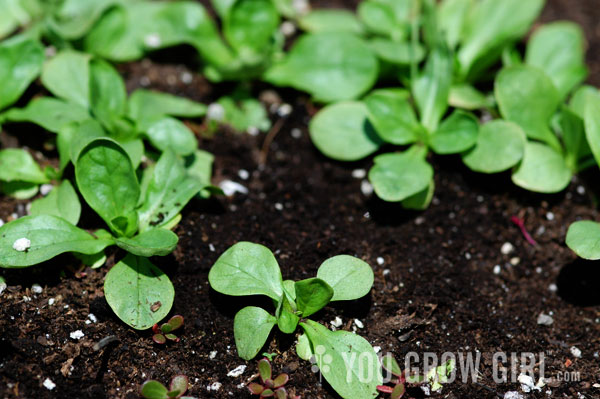
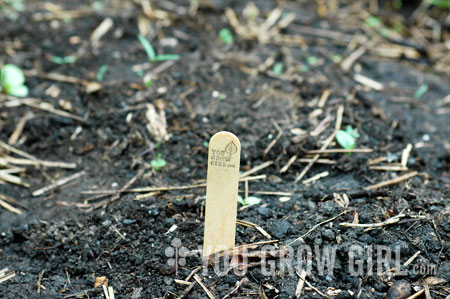
I think my mache crop is on its last legs this spring. I did not start early enough this year and missed out on at least one additional harvest. Mache likes to germinate in cooler temperatures and the last few seeds I sowed in the empty spaces don’t seem to have done anything. I’ll sow it again in the early fall, which tends to be the time of year that it prefers anyways.

I’m a bit sad to see it go. Mache is our very favourite green. I used to think it was over-rated until I discovered the secret — salt the fresh rosettes lightly and pair it with sweet fruit and little bits of a sharp cheese. Yum. I could go for that right now but it’s only 10am.

Note: The little red-tinged plants in the foreground are purslane (Portulaca olearacea) seedlings. Purslane is considered a weed since it self-seeds, but I always encourage it to come up in my pots. This is another excellent and highly nutritious green that I harvest and eat in the same way I prepare the mache. Simply cut the entire plant off at the root and eat it whole, uncooked.

Comments Off

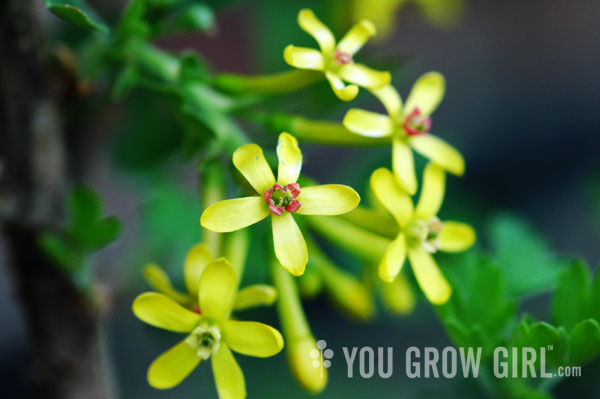
American Black Currant (Ribes odoratum) ‘Crandall’ Flower

Photo by Gayla Trail  All Rights Reserved

Can you believe these flowers belong to a black currant bush?

It recently occurred to me that I have a red currant bush and a gooseberry bush, but do not have a black currant bush. This despite the fact that I like the idea of gooseberries and red currants more than I like to eat them. Black currant on the other hand is divine.

Anyways, I actually do sort of have a black currant bush growing in my community garden plot right now. I say sort-of only because I’m not entirely sure it’s a black currant. A seedling that looks like a black currant came up as a volunteer a few years back so I stuck it in a corner and let it grow, waiting to find out what it is and hoping that it is indeed a black currant. I have absolutely no idea where the plant came from. Two years in and it is now taller than my gooseberry bush and continues to look like a black currant with the possible exception of the leaves that seem a bit too big, but it’s hard to say because some varieties do have slightly bigger leaves. Also, while at the garden centre, I noticed jostaberry, which is not unlike a black currant bush but with larger leaves. So perhaps it is a jostaberry. But who can know? Until it flowers and produces fruit, I remain in the dark. That could take another few years yet, but I like a good mystery and am willing to wait it out despite a lack of space.

Meanwhile, I have been longing for a real and true black currant and had decided I was just going to suck it up and get one. And then I almost didn’t, again. Because the bushes at the store were $14.99 each and not particularly big. And because I am cheap and figured I should just wait until the fall when they are on sale, which is how I got the gooseberry bush. However, while browsing the selection I found this one, called ‘Crandall’, with beautifully ornamental yellow and orange flowers. That sealed the deal.

You’ll note that ‘Crandall’ is not a regular black currant (Ribes nigrum), but is another species, Ribes odoratum. Apparently the berries have a spicy or clove flavor, and I can tell you that the flowers certainly do. Unfortunately, I did not choose well for my small community garden plot and managed to find the largest bush going (4ft at maturity). Some people say you need two bushes to produce fruit but other more reliable sources say you don’t. I guess I’ll find out soon enough.

And there you have it. I am now the proud, albeit tentative owner of a black currant bush. Jam to come in another 12 to 24 months.

Leave a comment

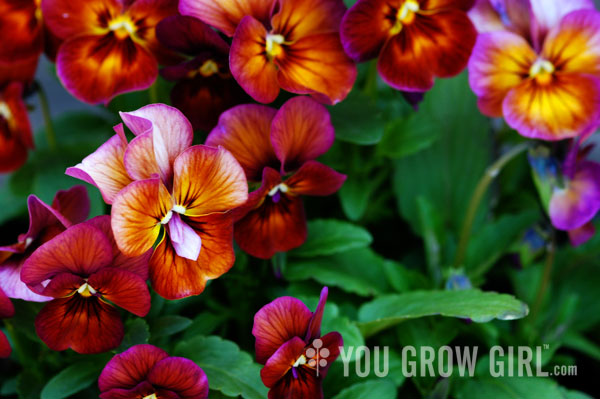
Viola ‘Mulberry’

Photo by Gayla Trail  All Rights Reserved

These deep, lush violas are my favourite variety of the season. I bought this plant from Colette at Urban Harvest. They weren’t cheap, but they were worth it. They seem to be healthier than my other violas with very dark green leaves and lots of flowers that keep coming.

I generally don’t grow violas from seed since they’re so affordable, but am going to try to save these and see what I get next year.

Leave a comment

The Dirt on Soil

Photo by Gayla Trail  All Rights Reserved

My most recent Globe & Mail food gardening article is up on the website. This week’s topic was on how to get good soil whether you’re growing in-ground or in containers.

It looks like the previous week’s article is also still available online. That one was on seeds that you can start late in the season.

And while I’m on the topic of published articles: if you’re in the Southeast and Mid-Atlantic United States I have an article and photograph on green gardening in the current (Summer 2009) issue of Breathe Magazine.

Leave a comment