Beautiful Sundew

droseracapensis.jpg

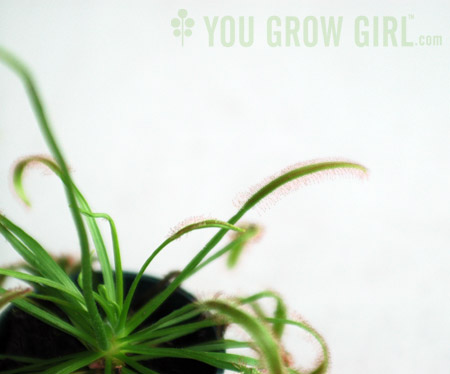
Cape Sundew (Drosera capensis)

Guess who bought 3 different sundews and a Pinguicula at The Montreal Botanical Gardens gift shop? I could not resist setting up a quick photo shoot yesterday afternoon before repotting them into nicer containers. Delicate and deadly sundews are my favourite carnivorous plants but are particularly difficult to find for sale here in Canada. In fact the last time I was able to purchase a sundew was on my last trip to this very greenhouse in 2004. At $5.99 a piece I could not resist buying one of each kind they sold.

droseracapensis2.jpg

Venus fly traps, on the other hand are easy to come by, sold as a novelty plants at fall fairs and the impulse sections of home renovation stores but I do not care for them, finding them particularly difficult to keep alive for more than a few months stretch. If you’re going to choose a carnivorous plant to grow on a windowsill I recommend little bitty sundews. I find them to be more forgiving than flytraps and their jewel-like, dew-speckled leaves are a whole lot more interesting too.

Happy Halloween!

Leave a comment

Cactus Ghouls

cactusghouls.jpg

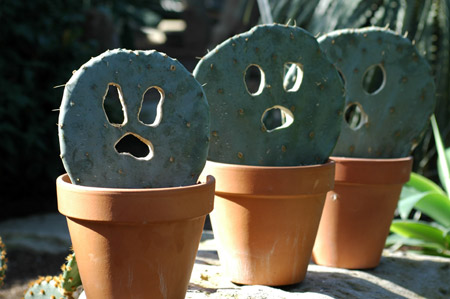
I have so much to tell you about last week’s trip to the Montreal Botanical Gardens but I can’t seem to wade through the millions of photos and thoughts without first showing you one of the silliest, most ridiculous crimes ever perpetrated on a plant for human amusement and seasonal decor.

Leave a comment

Giant Loofah

One of the things I love best about this site is checking out the fantastic gardening projects members of this site share via the forums. Last week, while making my morning rounds, I came across this fantastic, Godzilla-esque loofah (aka luffa) grown and recently harvested by forum user rachelanderson.

Isn’t it incredible?! There’s enough sponge there to wash dishes and scrub backs for years to come. I would suggest she enter some kind of local Fall Fair event with that thing. I’m afraid of Rachel’s mega-sized loofah, a trait that marks it as a potential candidate for first prize in The US of A or Canada where something as exotic as a loofah is bound to confuse and delight.

A loofah sponge is not the easiest product to successfully bring to full term in cooler climates. The plant needs about 110 days to go from vine, to flower, to fully mature fruit. I’ve covered growing loofahs in the past (page 164 of the You Grow Girl book) and even though I know a thing or two about the process I have never grown anything worth holding up alongside Rachel’s sponge. Her success is so inspiring, I just had to know her secret so I emailed her hoping she would be willing to offer up some tips.

Here’s what she said:

  • She lives in West Virigina, somewhere between USDA zones 5 and 6.
  • She shares a garden plot with her dad. They used a giant plastic sheet as mulch that was installed in the spring before any weeds had a chance to come up.
  • She started the seeds in potting soil around mid-May and planted the seedlings in the garden when they were big enough to make the move.
  • They put rock dust on the plants in the morning before the dew dried to keep the bugs and deer from eating them.
  • They did not use any fertilizers.
  • She attributes most of her success to the plastic mulch which kept weeds from stealing soil nutrients from garden plants. I’m going to add that the mulch probably helped to prevent drought and warmed up the soil earlier, keeping it warmer for a longer length of time.

Thanks Rachel! Your loofah is certainly inspiring and dare I say, ummmm… enviable.

Leave a comment

No Basil Left Behind

withbasilharvest.jpg

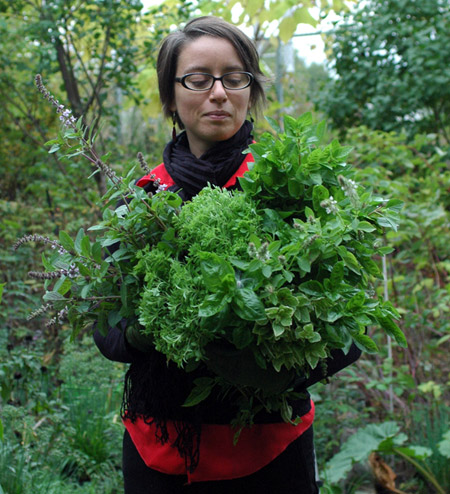
Proudly cradling the basil harvested from my community garden plot. Varieties include: ‘African Blue’, ‘Purple Ruffles’, ‘Sweet Basil’, ‘Genovese’, ‘Columnar’, ‘Spicy Globe’, ‘Mrs. Burns Lemon Basil’, ‘Dark Opal’, and ‘Pesto Perpetuo’ (a variegated variety).

I reluctantly harvested the remaining basil plants from my community garden plot last weekend. With the temperatures dipping low it was time to take the plunge or risk losing all that lovely fresh basil to the frost. I am yet to harvest the remaining plants growing in containers on my rooftop deck but we are enjoying nipping out for fresh leaves to put on sandwiches and in salads so late into the fall season. Really with such a mild fall I am shocked that we have been able to hold out for so long. Basil is notorious for hating cold, wet weather and has never made it this far into the Fall (in my memory) before turning black and flopping over in defeat.

Between last weekend’s mad pesto/pisto making operation, and the basil I have been drying in bunches since mid-summer, I’d say we’re pretty well stocked until the first plants are ready to be pinched back next summer. I think this may be the first time that I’ve been able to look into the freezer and say with a sense of authority that the bounty is good.

The following is a very short clip revealing how frugal I can be about the basil. What can I say, each leaf is like a tiny nugget of gold!

Leave a comment

Over-wintering Hot Peppers (Part 2)

variegata_pepper.jpg

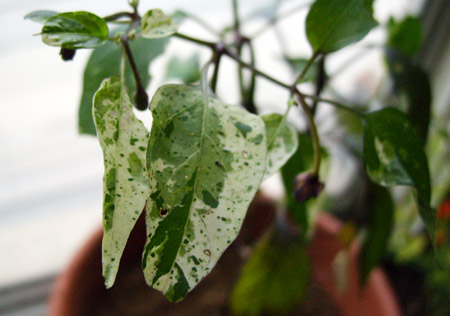
Earlier this Fall I wrote about bringing your hot pepper plants indoors for overwintering. I’ve put together a short 2 minute clip showing how I dug up a ‘Variegata’ hot pepper plant from my community garden plot and transplanted it into a pot to spend the next 7 or so months indoors.

There are lots of different ways to over-winter peppers — some take space into consideration and involve pruning the entire plant back and storing in a cooler location, while the method I am using is about enjoying attractive plants as houseplants until they can be put back outdoors in the late spring to begin a new season of pepper production. By my method your plant isn’t likely to produce fruit during the cold months but should produce lots of pretty foliage to look at.

    Here are a few extra tips:

  • Soil: When transplanting from and in-ground garden gently remove as much soil from around the roots as possible and transplant into a container of potting soil. The soil from your garden will become compacted in a pot, eventually smothering the roots and preventing drainage and air circulation.
  • Fertilizing: Peppers do not require much in the way of fertilizing. Be very sparing and apply fertilizers that are slightly higher in nitrogen keeping in mind that the goal is to produce healthy leaves, not bare fruit. I think a sprinkling of vermicompost at transplant time is just enough. Anything too high in nitrogen will enourage a lot of leggy, tender growth, just the kind of foliage aphids are most attracted to.
  • Pests: And while we’re on the subject of aphids, chances are you will get a few or a lot this winter. A good spray in the shower or kitchen sink is the best chemical-free way to get them off your plant for good. So is keeping your plant as healthy as possible.
  • Peppers like sun and warmth: Keep your plant in the sunniest window you’ve got. If the windowsill gets too cold and drafty move your plant as far away as possible while still providing optimum light. If that’s not enough try setting them underneath grow lights. You can also try setting your pepper’s pot on a crocheted windowsill cozy or pot coaster. Heating mats are great too but I usually wait to bust mine out until closer to the start of the growing season, otherwise the warmth prompts the plant to get active before the light is bright enough to sustain that level of activity.
  • Peppers Prefer a Bit of Drought: Water less often then you would outdoors — with less drying heat and light your plant will require less moisture. Peppers like a bit of drought so test the soil with your finger first to see that it has dried out slightly before giving it a drink.
  • Shock: Some leaves will turn yellow and drop off shortly after transplanting or bringing indoors. This is quite normal. If this continues, prune back bare branches and remove any remaining fruit and flowers so your plant can concentrate on producing foliage, not reproducing. You should see some fresh leaves spring up in the coming weeks. I’ve had peppers that looked to be on their last legs come back strong as soon as the warmth and sun came back in the spring. Give your plants some time, it will be worth it for that early season bumper crop. Of course some plants just don’t overwinter well, period. Give it a go, if it doesn’t work out chalk it up to experimentation and move on.
Leave a comment