Garden Centres of America Interactive Map

This interactive map is a neat online gadget that allows you to locate garden centres and nurseries in your area. I can see the value in something like this when you’re visiting a new area or new in town. I mean, it took me years to dig up a fairly large garden centre within the downtown core of my own city, and while on speaking trips I am often stuck spending hours searching online and through phonebooks. The drawback to this service — other than the fact that it is U.S. only and some of us, cough, are Canadian — is that only addresses and phone numbers are listed. No additional information is available unless the store pays to have that added and we all know from experience that all garden centres are NOT created equal.

Maps that I can see coming in handy while on the road include: biodiesel fuel stations, vegetarian food restaurants, craft shops and thrift shops.

Comments Off

Falling in Love with Grassland

I am finally accepting the fact that winter is coming and I had better enjoy fall (despite all of this horrible rain) while it lasts. One of the gifts gardening has given me is the ability to look at the landscape and plant life around me with new eyes. I started to look with a new perspective as a way to better understand my plants and their needs. I have found that closely observing a plant growing in the wild has lead to really “getting” something that was formerly unclear or missing in my care of a specific plant. And watching the way the plants grow and spread in different conditions has inspired me to rethink the way I design and plan a garden. But over time I also found that a little bit of knowledge can turn a landscape that was formerly dull, overlooked, and taken for granted into something fascinating and full of wonder. Those tiny observations seem to create a domino effect to learn more. I should add that photography has only added to that because as my way of seeing has changed, so has my approach to documenting what I see changed.

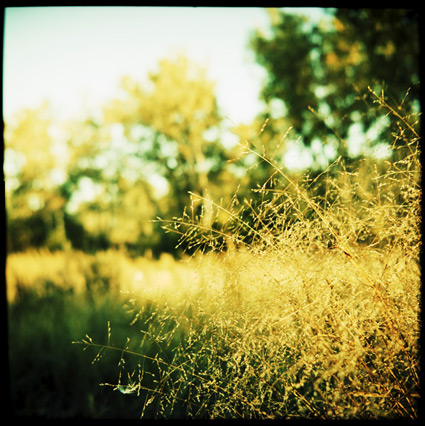
It may seem cheesy — y’all aren’t going to laugh at me right(?) — but I have fallen in love with the grassland, beach, and marsh areas on The Toronto Islands and have taken to documenting the changes that occur there with the seasons. It’s fascinating to see how the plants differ growing in such sandy soil. I like the stark, vertical direction of the landscape. Plants seem to grow up rather than overtly puffy or outward. I am slowly learning the identities of some of the previously unknown plants. I took the majority of these pictures on a beautiful Fall day a couple of weekends ago. If you know the name of a plant or disagree with my identification please post.

Panic Grass

    Panic Grass (Panicum virgatum) aka Switch Grass

grasses5.jpg

    I believe this is the same plant, taken last year.

Marsh Bullrush

    Bullrush (Typha latifolia) aka Common Cattail

grasses1.jpg

    It seems like they’ve been revitalizing this beach area. Further up the hill there are several native wildflower species that I don’t recall previously.

Mullein

    Mullein (Verbascum thapsus). One of my favourite local herb plants used for throat conditions and coughs. It is also a beautiful and very structural plant that looks great in the winter. A few have grown as volunteers in my street garden and I have let them go since they also do very well in drought conditions.

Milkweed

    Milkweed (Asclepias syriaca) They grow all over one particular section of the beach, putting out their fluffy seeds at this time of year and then remaining as clusters of sculptural shells. I had pickled, immature milkweed pods a few years ago and they were very tasty.

Solidago

    Goldenrod (Solidago) These also grow on the beach among the milkweed. They are very short and tiny in comparison to the goldenrod that pops up wild in my street garden.
Leave a comment

Garlic Lessons Learned

Guest post by Emira Mears

The only remaining bulbs I had on my list to plant for the Fall was my garlic. Planting out the garlic required a bit more preparation as I had to clean up some space in my veggie beds getting rid of finished beans, cukes and some arugula that had bolted and I swear was making a run for the basement door, before I would have room to put the garlic in.

This will be my first time growing garlic and so far I’ve already learned a lot. For starters, I ordered way too much (so if you’re in Canada and would like some lovely garlic to plant let me know via ourdomicile at gmail dot com and perhaps we can work something out in the way of a trade) getting a bit confused by the whole bulb vs. clove business when I placed my bulb orders. You see, it was obvious to me when they arrived, but for some reason not so obvious when I placed the order that five bulbs of garlic meant five bulbs full of a bunch of wee cloves that then get broken up and planted individually. But I was thinking more along the lines of 5 bulbs = 5 bulbs to plant like with my tulip order and so foolishly ordered 10 thinking that was quite conservative. I now have planted about 40 cloves of garlic and have some extras for those who are interested.

Anyway. I woke up to another sunny day yesterday and decided I would use the opportunity to get my garlic in the ground. I did a bit of web searching and discovered that there are all kinds of opinions about what one has to do to grow good garlic. Many of the web sites I read stressed the difference between “growing garlic” (which is apparently easy) and “growing good garlic” which is apparently trickier. I followed the advice of a few handy tips I read online and soaked the cloves in a mixture of baking soda (1 heaping tablespoon for one bowl containing the cloves of 5 bulbs) and water for a few hours to make it easier to slip off the skins and apparently to help kill any fungus that might be on the cloves. I also read suggestions to add liquid seaweed to this mixture to help feed the garlic but I didn’t have any around the house and I was feeling mighty impatient (and like this may be my last sunny Sunday of the season). I then prepped the soil, turning it over well and adding some compost. After that I undertook the very laborious task of peeling the skin off all those cloves which took a fair while, and then drained the baking soda liquid off to replace it with a quick soak in some 100 proof vodka. This was recommended as a further way to ensure any fungus on the garlic was killed, and given the wiff of garlic/vodka I got as I was planting these little nuggets I’d say that was successful.

I planted them at a 2″ depth about 4″ apart and was careful to mark all my spots so I don’t dig them up again next Spring. I’ve also read in numerous spots now that applying some mulch to the ground for the winter is a good idea to help keep them warm. I had been planning on mulching my veggie beds anyway to help keep weeds down and add nutrients so now I’ve got an extra incentive. If even half of my garlic comes up we’ll be doing pretty well, which is great as I use a lot of it in the kitchen and even more when I’m preserving in the Summer. I’ll let you know how it goes and if I suspect any of these tips were useful, but I’m afraid you’ll have to sit tight for a good six months or so to find out.

Leave a comment

Grow This – Grape Hyacinth (Muscari)

Muscari - Grape Hyacinth

Famous for candy-sweet cobalt blue blooms that resemble tidy clusters of pint-sized grapes, muscari is a versatile, carefree spring bloom. Pack a punch and plant bulbs in eye-catching “rivers” or clustered together in problem areas under trees and in rock gardens. This hardy bulb will even survive in the toxic soil beneath black walnut trees!

Muscari stay in bloom for weeks and multiply effortlessly. Grow white muscari (Muscari botryoides ‘Album’) to use in a spring wedding bouquet or slip a handful of wispy M. comosum ‘Plumosum’ into a vintage medicine bottle. Or better yet, grow my personal favourite M. latifolium whose elongated, bi-colored flower spikes have a dark blue base that ascends to a light blue/lavender top.

———–

With fall bulb planting season in full swing, I couldn’t help posting this little blurb I wrote for the April 2006 issue of Budget Living Magazine that never was. I just love the pretty little delicate blooms of muscari. I have a tendency towards the tiny little bulb plants that naturalize on their own. There is a garden I pass regularly on my travels that is really just a little teeny patch underneath a magnolia tree that comes to life in the spring with an assortment of small flowering bulbs, arranged very carefully for maximum impact as the garden cycles from one flower and is replaced by another. I literally find myself stalking that little garden every spring and was relieved to finally meet one of the owners last year and lay to rest any fears about my weekly presence crouched down with an assortment of cameras in front of their house. They have video surveillance in front!

Leave a comment

Grinding Herbs

Guest post by Amy Urquhart

Today I got around to grinding up my dried herbs. Why? Because I found a great deal on a coffee bean grinder at Loblaws…$9.99! It worked really well.

Each weekend lately I’ve been harvesting from the garden whatever edibles I can. I managed to bring in almost all of the sage I had growing, along with all of the thyme and a bunch of mint, too. I hung them up in little bundles on an old wine rack in our laundry room. Today I found they were all nice and crunchy, so I brought them upstairs to the dining room, rolled up my sleeves, and got to work separating all those mint and sage leaves from their stems. The sage leaves came off very easily with a satisfying little snap as they popped off the stem. The mint was a bit more problematic, though. I basically just had to crunch whatever I could into a bowl. The stems were much more unwieldy. This is an herb that would do better if you cut the leaves off the stems before drying.


Herbs ready to be ground.

At some point I hope to get ahold of an old window screen, so I can spread leaves out on it for drying. For now, the hanging bundle method will have to suffice.

The new grinder did a bang-up job of whizzing catnip, mint and sage. I kept the catnip and mint around the consistency of tea (since I intend to use the mint as tea) but ground the sage as finely as I could. It smelled wonderful, and I inhaled a little catnip, but found it extremely satisfying to pour the contents of the grinder into a Ziploc bag, marking the contents as I went. I feel like I’ve moved on to “Advanced Gardening” now that I’m harvesting everything!

Of course, Farley had to help, too.


He just has to get in the middle of everything!

Leave a comment